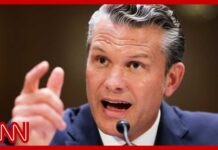
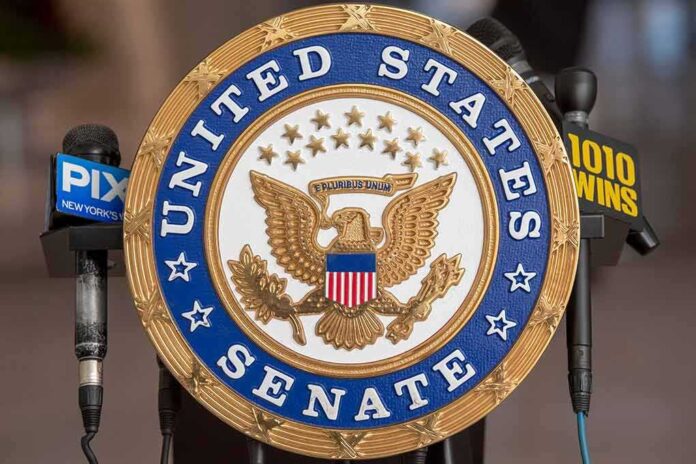
Senator Hawley’s aggressive push for new shutdown funding bills has ignited a high-stakes fight over runaway government spending, putting Democratic leaders squarely in the spotlight as fiscal accountability takes center stage.
Story Snapshot
- Sen. Josh Hawley is leveraging the threat of a government shutdown to force Democrats into negotiations and highlight fiscal irresponsibility.
- The Government Shutdown Prevention Act of 2025 introduces automatic funding reductions, intensifying pressure on Congress to rein in spending.
- Democrats face mounting criticism for defending high-cost social and infrastructure programs amid rising national debt.
- Federal workers and essential services risk disruption as budget talks stall and shutdown threats escalate.
Hawley’s Confrontational Approach to Spending
Senator Josh Hawley (R-MO) has publicly vowed to “hold Democrats’ feet to the fire,” distinguishing himself from more cautious colleagues by threatening a government shutdown to force negotiations over federal spending. This approach comes as the 119th Congress faces deadlocked budget talks, with fiscal year 2026 appropriations stalled and Democrats defending costly social initiatives. Hawley’s stance resonates with conservatives frustrated by years of overspending and perceived lack of accountability, framing the shutdown threat as a necessary tactic to restore discipline to Washington’s budget process.
Hawley vows to hold Democrats' 'feet to the fire' with new government shutdown funding billshttps://t.co/AIX7AbkFD0
— Senator Hawley Press Office (@SenHawleyPress) October 22, 2025
The Government Shutdown Prevention Act of 2025, introduced by Sen. Rand Paul with Hawley’s support, proposes automatic continuing appropriations at 94% of the prior year’s funding, with further cuts every 90 days until Congress passes a full budget. This legislative maneuver forces both parties to confront the impact of unchecked spending by threatening incremental reductions that could affect agencies and programs nationwide. Hawley’s rhetoric and strategic use of new bills highlight the urgency of fiscal reform, drawing attention to the growing national debt and the risks posed by continued partisan gridlock.
Background and Historical Context
Government shutdowns have become entrenched as leverage in budget battles since the 1980s, with notable incidents in 1995-96, 2013, and 2018-19. These shutdowns disrupt federal agencies and essential services, directly affecting employees and the public. The current scenario builds on a legacy of partisan standoffs over spending and debt limits, amplifying frustration among Americans who regularly witness brinkmanship rather than meaningful reform. The Democratic majority in the Senate and the closely divided House set the stage for heightened conflict, as both sides defend priorities that reflect deep ideological divides over the role and size of government.
Persistent gridlock has encouraged lawmakers to deploy shutdown threats more frequently, with the 2018-19 episode—the longest in history—serving as a cautionary tale about the repercussions for workers, contractors, and vulnerable recipients of government services. Legislative attempts to prevent shutdowns through automatic resolutions have largely failed in past Congresses, making Hawley and Paul’s renewed efforts both timely and controversial. Conservatives point to these precedents as evidence that tough measures are needed to halt the cycle of overspending and restore fiscal order.
Impacts on Federal Workers and the American Public
The threat of a government shutdown carries immediate and long-term consequences for federal employees, contractors, and recipients of public services such as Social Security and veterans’ benefits. In the short term, furloughs and pay delays disrupt livelihoods, while delayed payments to contractors threaten cash flow for businesses dependent on government work. Broader economic impacts include potential GDP slowdowns and market volatility as uncertainty grows. Over time, the normalization of shutdown brinkmanship erodes public trust in government and sets a precedent for future fiscal standoffs, challenging the very principles of stability and accountability central to American governance.
Conservative analysts argue that automatic continuing resolutions, like those proposed in S.499, can enforce spending discipline and protect taxpayers from unchecked budget increases. Critics, however, warn that repeated shutdown threats harm ordinary Americans and undermine government efficiency. The current debate reflects a clash of values—individual liberty and limited government versus expansive social programs and federal oversight. As Hawley intensifies his campaign for fiscal reform, the battle over shutdown tactics is set to shape the future of government spending and accountability in Washington.
Sources:
Congress.gov summary of S.499, Government Shutdown Prevention Act of 2025
Congress.gov summary of S.3012