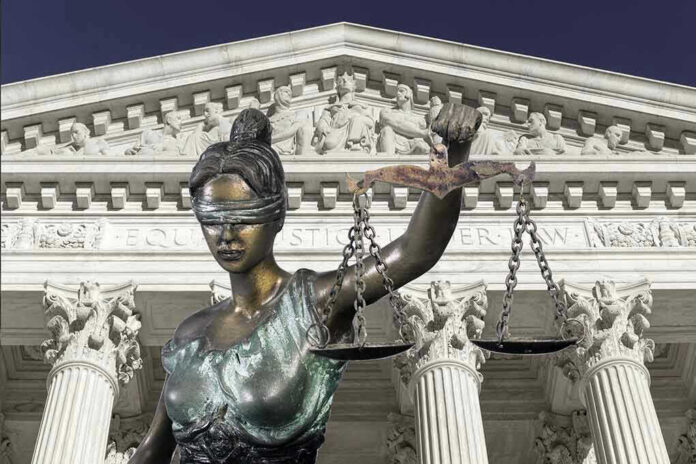
patriotwise.com — When a Justice Department lawsuit scares a D.C. bar lawyer off a Trump-linked case, it looks less like “equal justice under law” and more like the powerful circling the wagons around their own.
Story Snapshot
- The Trump Justice Department has sued D.C. bar authorities over efforts to discipline former senior official Jeffrey Clark for 2020 election conduct.[1]
- The lawsuit argues that state bar discipline for official acts unlawfully lets local regulators control federal executive branch lawyers.[1]
- Critics say the move undermines long‑standing rules allowing state bars to hold government attorneys to basic ethics standards.[2]
- Amid this fight, at least one D.C. bar lawyer has withdrawn from a politically charged Trump‑world case after public accusations of partisanship.
Justice Department Sues D.C. Bar Over Trump-Era Election Lawyer
The United States Department of Justice has filed a civil complaint targeting nearly every District of Columbia entity involved in disciplining lawyers, including the Office of Disciplinary Counsel, the Board on Professional Responsibility, and the D.C. Court of Appeals.[2] The suit focuses on efforts to sanction Jeffrey Clark, a former Assistant Attorney General accused of using his federal position to push 2020 election claims in Georgia. The complaint seeks to “nullify” what it calls an unlawful prosecution of Clark.[1]
Federal officials argue that disciplining Clark for advice he gave during internal deliberations about alleged election fraud improperly allows a local bar to regulate executive branch decision‑making.[1] Justice Department lawyers say punishing “recommendations, factual assertions, and legal advice during confidential internal agency deliberations” would chill candid counsel to the president and attorney general.[1] To many Americans already skeptical of unelected “experts,” this sounds like Washington insiders insulating themselves from any outside accountability, even when their choices touch democracy’s core.
What Is Actually at Stake in the Jeffrey Clark Disciplinary Fight
According to legal commentary and video analysis, Clark helped draft a letter on Department of Justice letterhead urging Georgia legislators to question or overturn certified 2020 results based on unsupported fraud claims.[2] D.C. disciplinary authorities have pursued sanctions on the theory that such conduct involves dishonest or misleading statements in an official capacity.[2][3] At least one committee has already recommended suspension or disbarment, though the full findings and evidentiary record are not included in the public summaries we have here.[2][3]
The Justice Department’s lawsuit does not really contest whether Clark’s election‑related claims were accurate; it attacks who gets to judge him. The federal complaint frames the bar case as a Supremacy Clause and Article II violation, insisting that punishing a former federal official for on‑the‑job conduct effectively lets local authorities regulate the presidency itself.[1] That argument sits uneasily next to the McDade‑Murtha Amendment, which commentators say affirmatively requires federal prosecutors to obey state ethics rules.[2] The clash is less about one lawyer than about whether government attorneys sit above ordinary professional standards.
Bar Withdrawals, Partisanship Claims, and Public Distrust
Separate reporting describes how a D.C. bar lawyer withdrew from a disciplinary case involving conservative activist Ed Martin after public controversy over the lawyer’s partisan social media posts. That withdrawal, prompted by questions about fairness, is now being cited by some as proof that D.C. bar enforcement can be politically skewed. At the same time, other Trump‑aligned attorneys, including Rudy Giuliani and John Eastman, have faced discipline in various jurisdictions for election‑related conduct, reinforcing a sense on the right that ethics rules are being used selectively.[2]
For many on the left, the Clark case symbolizes a different failure: the belief that powerful lawyers helped sell false narratives about the 2020 vote and are still evading professional accountability. For many on the right, the Justice Department lawsuit looks like a necessary shield against what they see as “weaponized” blue‑city institutions.[1] Underneath those partisan reactions is a shared worry: when disputes among elites hop from bar committees to federal court, ordinary citizens are left wondering whether any of these institutions would ever defend them with the same urgency.
Why This Fight Matters Beyond Trump and Clark
Legal scholars and watchdog groups have warned for years that both Republican and Democratic administrations try to insulate their lawyers from outside oversight.[3] Critics say the Justice Department has long been tempted to treat internal review as enough, resisting state bar scrutiny even when misconduct findings emerge.[3] The Clark lawsuit accelerates that trend by seeking a court ruling that would limit state authority over federal attorneys whenever they can claim their actions were “official.” For citizens on both sides, that looks like one more carve‑out for insiders.
DOJ lawsuit targeting bar officials over Jeffrey Clark disbarment will be overseen by Trump critic known for sarcastic opinions https://t.co/4eG3myaGWB
— john tessandori (@JTessandor56099) May 15, 2026
Americans frustrated by unequal justice see a familiar pattern here: one set of rules for regular professionals who can lose their license for crossing ethical lines, and another for senior government lawyers whose decisions can influence wars, prosecutions, or elections. The D.C. case highlights a basic question about the constitutional order: do professional codes and local institutions still have any real power to check national elites, or will the same officials who helped create today’s problems also decide whether their own conduct can be judged at all?
Sources:
[1] Web – Justice Department Files Complaint Against D.C. Bar Disciplinary …
[2] YouTube – 5.14 DOJ Sued a Bar Association
[3] Web – Proposed Rule, DOJ “Review of State Bar Complaints and …
© patriotwise.com 2026. All rights reserved.