President Trump’s claim that China stole data on 220 million American voters has turned a long‑running fear about “rigged elections” into a full-blown clash between the White House and the nation’s own intelligence agencies.
Story Snapshot
- Trump says newly declassified intel shows China took 220 million U.S. voter files starting in the 2020 election cycle.
- U.S. intelligence assessments released in 2021 say no foreign actor altered technical parts of the 2020 vote, including voter rolls or results.
- Declassified reporting does show Chinese intelligence accessed and analyzed some state voter registration data in 2020, but as opinion research, not proven ballot fraud.
- The fight over these claims feeds broad public distrust in elections and deep worries that powerful “elites” hide the truth for political gain.
Trump’s accusation: a massive voter data breach by China
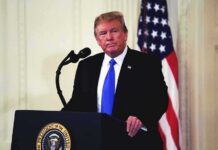
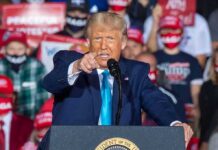
President Donald Trump used a rare primetime address from the White House to claim that China carried out “the largest compromise of election data in history.” He said newly declassified documents show the Chinese government gained illegal access to about 220 million U.S. voter files over several years, beginning in the 2020 election cycle. According to Trump, those files include names, addresses, party preferences, and other data needed to register and possibly target or fake ballots.
Trump argued that U.S. spy agencies first learned in 2020 that voter registration data from many states had been bought, stolen, or hacked by China, but then buried the truth. He framed this as proof of a “deep state” cover-up that kept him, Congress, and the public in the dark while foreign powers toyed with the American vote. The White House and allied media outlets described the released documents as “shocking” evidence and tied them to his push for a new “Save America Act” with strict voter ID and tight limits on mail ballots.
What official intelligence reports actually say about 2020
The 2021 Intelligence Community Assessment on foreign threats to the 2020 election, declassified and posted publicly, tells a very different story. That report states there were “no indications that any foreign actor attempted to interfere in the 2020 U.S. elections by altering any technical aspect of the voting process,” including voter registrations, ballots, vote counts, or results. A separate joint summary from the Department of Justice and Department of Homeland Security likewise found no evidence that any foreign government changed votes or blocked tallying.
Those same documents do note that Russia, Iran, and other actors probed election-related systems and compromised some networks, but analysts concluded those intrusions did not harm the core integrity of voter data or vote counting. Election security officials after 2020 went even further, calling that election the “most secure in American history” and saying there was no sign that voting systems were compromised. Multiple court cases and recounts in key states also failed to find large-scale fraud in the 2020 vote, despite heavy pressure and dozens of lawsuits.
What is known about China and U.S. voter data
Trump’s claim is not happening in a vacuum. A declassified report on Chinese and Russian exploitation of U.S. data, released in 2022, confirms that Chinese intelligence accessed voter registration data from several U.S. states in April 2020. Analysts wrote that Beijing appeared to be analyzing public opinion ahead of the general election, using voter rolls as one more dataset rather than as a direct tool to change votes. Another declassified National Intelligence Council memo reportedly described Chinese agents studying voter data from multiple states during the 2020 cycle.
These findings show that Chinese intelligence was inside at least some voter-related systems, and that U.S. agencies knew about it as early as spring 2020. That reality supports concerns on both the left and right that powerful officials sometimes sit on sensitive information, whether for secrecy, politics, or bureaucracy. But so far, none of the released documents back Trump’s specific number of 220 million stolen files or his charge that China manufactured illegal ballots to swing the election. Intelligence and law enforcement have not publicly traced such a large breach or tied it to changed votes.
Elite conflict, media battles, and public distrust
Democrats on the House Intelligence Committee warned before Trump’s speech that he was “weaponizing declassified intelligence” to justify new voting limits and to relitigate his 2020 loss. They said no agency had provided them any evidence that foreign actors altered votes in 2020 and stressed that earlier assessments remain in force. Some election observers and media analysts described the prime-time address as part of a broader “election denial” movement that has used fraud claims to question unwelcome results since at least 2016.
July 16 – President Trump delivered a primetime address Thursday night focused on election integrity, while also touching on the ongoing situation with Iran.#trumpspeech #kayhanlife pic.twitter.com/myz75MdhUV
— Kayhan Life (@KayhanLife) July 17, 2026
At the same time, many conservatives point to redacted reports, late disclosures, and selective media coverage as proof that establishment figures—inside agencies and big newsrooms—protect their own power first. Research shows that repeated, unproven claims of voter fraud can sharply reduce people’s confidence in elections, even when they still support democracy itself. Surveys in recent years find that large numbers of Americans, on both the right and the left, believe serious fraud is possible or likely, despite the lack of evidence at scale.
Why this fight matters beyond 2020
For older conservatives already angry about globalism, rising costs, and a sense that borders and laws are not enforced, Trump’s message reinforces a belief that foreign regimes and domestic “elites” are working together against regular Americans. For many liberals upset about election denial, deportations, and cuts to social programs, the same speech looks like a way to lock in power by making it harder for some citizens to vote. Both sides, though, share one deep fear: that the federal government is failing to guard either their votes or their privacy.
Experts across the political spectrum agree on one hard truth. Modern voting systems and databases can never be made perfectly safe from cyber threats. Strong post-election audits, clear public reporting, and honest communication from intelligence agencies are needed to keep trust from collapsing further. The new China claims, the push for tougher voting rules, and the resistance from intelligence officials will keep testing whether those responsible for protecting elections care more about the public’s trust—or about their own grip on power.
Sources:
youtube.com, politico.com, reuters.com, npr.org, stylemagazine.com, trumpwhitehouse.archives.gov, wbaltv.com, dni.gov, intel.gov, int.nyt.com, gottheimer.house.gov, 2021-2025.state.gov, pmc.ncbi.nlm.nih.gov, misinforeview.hks.harvard.edu, cambridge.org, eipartnership.net, brennancenter.org
© patriotwise.com 2026. All rights reserved.