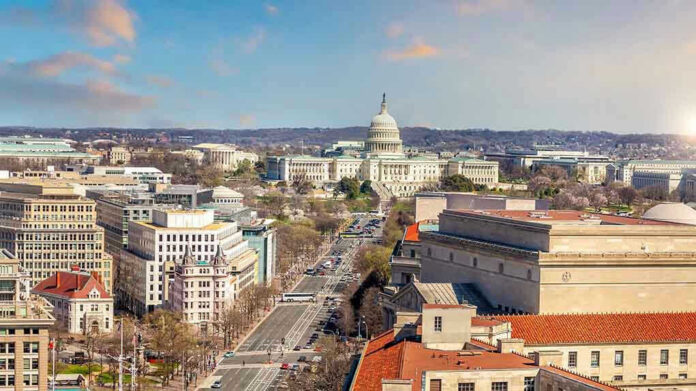
Washington’s July 4 centerpiece was branded the largest fireworks show in U.S. history and locked down like a Super Bowl, while doubling as a Trump rally.
Story Highlights
- Organizers planned 850,000 fireworks shells across 10 launch sites, billed as the largest ever.
- The event was designated a National Special Security Event, triggering sweeping security steps.
- Extreme heat forced a later start time and raised safety questions for families.
- President Trump promoted the celebration as a “Tribute to America” and a rally.
What Officials Planned On The National Mall
Organizers said the Fourth of July program would feature more than 300 members of United States military bands, orchestras, and ceremonial units. They planned patriotic music, flyovers, and a staged program backing a large fireworks display. Freedom 250, a White House-backed public-private partnership, promoted the schedule and branding across platforms. Coverage from national outlets described a multi-hour lineup aimed at a prime-time climax on the Mall. These elements set expectations for a large, formal showcase of patriotism in the capital.
Freedom 250 and local timelines billed the fireworks as the largest in history, with about 850,000 shells launched from 10 sites around Washington, and a start time near 10:30 p.m. USA Today and local guides echoed that scale and timing in previews of the event. If accurate, the figure would dwarf recent shows and require extensive staging. The claim fueled excitement for some and sticker shock for others who questioned cost and oversight.
Security And Heat Shaped The Experience
Authorities designated the celebration a National Special Security Event, the same security class used for inaugurations and Super Bowls. That label brought layered checkpoints, restricted items, and a heavy federal and local law enforcement presence. Some families welcomed the safety focus. Others worried the intense posture, paired with fencing and road closures, would make the people’s celebration feel off-limits and controlled by distant decision makers, not the public it was meant to serve.
Forecasts of extreme heat forced organizers to delay public entry to 5 p.m. and push the program to 7 p.m., with fireworks slated late in the night. The Hill reported heat advisories and the revised schedule, as well as concerns that restrictions on common items might deter attendance in triple-digit temperatures. Local timelines confirmed the late fireworks target even as the heat risk rose. The timing solved sun exposure for some visitors but created travel and health trade-offs for others.
Political Framing Collided With Unity Messaging
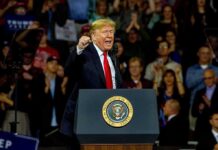
President Trump promoted the celebration as a “Tribute to America” and also framed it as a rally, merging official ceremony with campaign-style energy. His announcement invited people who like airplanes, fireworks, and the president to attend. Critics said this turned a national anniversary into a partisan event, while supporters argued a sitting president highlighting the military and American pride fit the holiday. The White House-aligned Freedom 250 label reinforced the political spotlight, for better or worse.
Media reports described pushback from artists and political figures, and noted sparse early crowds at the associated Great American State Fair, complicating claims of a wall-to-wall national embrace. Former Republican congressman Adam Kinzinger and Democratic strategists questioned the planning and the tone. Their critiques resonated with Americans on both sides who feel big shows often mask deeper problems like living costs, health bills, or a sense that insiders benefit first.
Why This Matters Beyond One Night
The event illustrates a bigger truth about national rituals in a polarized era. Scholars and analysts note that major anniversaries often become contests over the meaning of patriotism and history. Competing celebrations this year, including White House-backed Freedom 250 and other America 250 efforts, reflect the absence of a shared national story. That split helps explain why a fireworks show can feel like a referendum on identity as much as a party.
Donald Trump marks the country's 250th anniversary on Saturday with a political rally on a fenced-off National Mall in Washington, capping a weeks-long celebration that has been widely criticized as divisive.https://t.co/Q1zWjYKGEf
— CjC (@cxcruz1) July 4, 2026
For citizens, two questions cut through the noise. First, were promises met on safety, transparency, and scale, including the 850,000-shell claim? That is measurable and should be verified after the fact by officials and independent reviewers. Second, did the program welcome the full public, or narrow it through rules, branding, and late hours during dangerous heat? The answers will shape trust in future national events and whether Americans see them as theirs, not the government’s alone.
Sources:
reuters.com, latimes.com, wtop.com, usatoday.com, cnn.com, facebook.com
© patriotwise.com 2026. All rights reserved.