President Trump, China’s Xi, and Russia’s Putin will hold a first-ever three-way meeting in China to talk nuclear weapons, marking a rare chance to cool a dangerous arms race.
Story Highlights
- The White House confirmed a trilateral leaders’ meeting in China next week.
- Trump plans to discuss reducing nuclear weapons with Xi and Putin.
- Officials signaled expectations for symbolism and agenda-setting, not a quick deal.
- The last U.S.-Russia treaty limits expired, leaving no caps on the biggest stockpiles.
White House Confirms Unprecedented Trilateral Summit
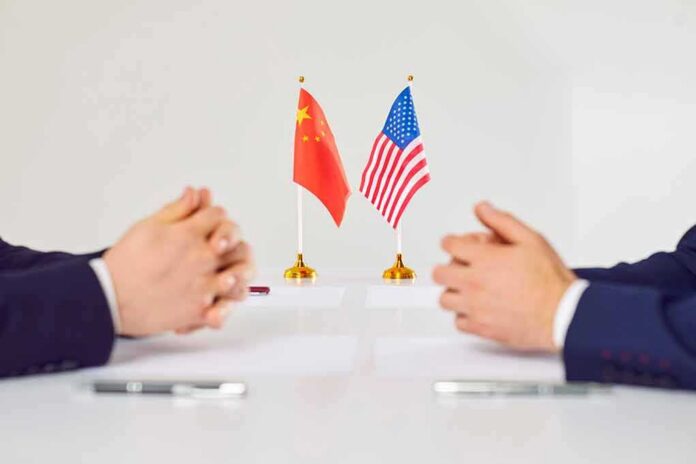
The White House said President Trump will meet Chinese President Xi Jinping and Russian President Vladimir Putin at the end of his China trip next week. Officials described it as the first leader-level, three-way session among the world’s largest nuclear powers on the sidelines of the Asia-Pacific Economic Cooperation summit in Shenzhen. The White House said Trump will raise nuclear weapons reduction during the talks, putting arms control at the center of the agenda.
Reporters previously quoted Trump saying he expected to meet Xi and Putin at the China summit. He said the talks would address denuclearization and wider security issues. News outlets have also reported the planned timing around the Shenzhen gathering and described the sit-down as a historic first for the three leaders together. The meeting location on the margins of Asia-Pacific Economic Cooperation underscores both the diplomatic stakes and the tight window for progress.
Focus on Nuclear Risks After Treaty Limits Lapsed
The United States and Russia hold the world’s largest nuclear arsenals, while China’s stockpile is growing from a smaller base. The final treaty capping U.S. and Russian deployed forces expired, leaving the two biggest arsenals without binding limits for the first time in decades, which raised global risk. Analysts say China keeps far fewer warheads than the United States and Russia, which shapes Beijing’s approach to talks and leverage in any three-way framework.
Past arms control gains took years of technical talks, strict data exchanges, and on-site inspections, not one-off leader meetings. U.S.-Soviet and later U.S.-Russian deals worked when both sides agreed to clear limits and strong verification rules. That history suggests this summit can set direction and signal intent, but any real cut in warheads will likely require months or years of expert negotiations and detailed verification steps to lock in changes that last.
What Each Side Wants—and Why It Matters at Home
Trump’s team wants to slow a new arms race and bring China into a broader framework. Beijing has argued that the United States and Russia should first reduce their much larger stockpiles. Moscow seeks recognition of parity and security guarantees. These aims collide with hard math and mistrust, yet they also reveal a shared interest in avoiding spiraling costs and risk. That overlap is why a leader-level push now could still lay groundwork for later steps.
🇺🇸🇷🇺🇨🇳Trump announced a meeting with Putin and Xi Jinping as soon as next Thursday
The meeting will take place on November 19 in Shenzhen, on the sidelines of the APEC summit, the U.S. president said.
▪️Sources say the summit is expected to address controls on the use of… pic.twitter.com/i1BL53nQEq
— Ignorance, the root and stem of all evil (@ivan_8848) November 14, 2026
Americans across party lines worry that global power games raise prices, drain budgets, and put families at risk. Many also see elites making decisions far from public view. This summit will test whether top leaders can deliver anything more than a photo. Clear commitments to real talks, working groups, and timelines would be a start. Even small steps toward limits and transparency could reduce danger, save money, and prove that government can still do big things when it matters.
Sources:
reuters.com, kyivindependent.com, ibtimes.sg, afsa.org, osti.gov
© patriotwise.com 2026. All rights reserved.