
President Trump’s new executive orders revive a fight over birthright citizenship and put federal agencies on a tighter clock to police who gets to belong at birth.
Quick Take
- The White House says the orders target children of unlawful entrants, temporary visitors, foreign-linked parents, and birth tourism.
- The administration frames the move as an interpretation of the Fourteenth Amendment, not a simple policy change.
- The orders direct federal departments to tighten citizenship-document rules and curb birth tourism.
- The fight now sits inside a long legal battle already tested in court and in the Supreme Court.
What Trump Signed
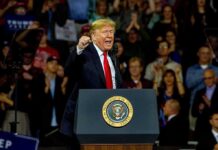
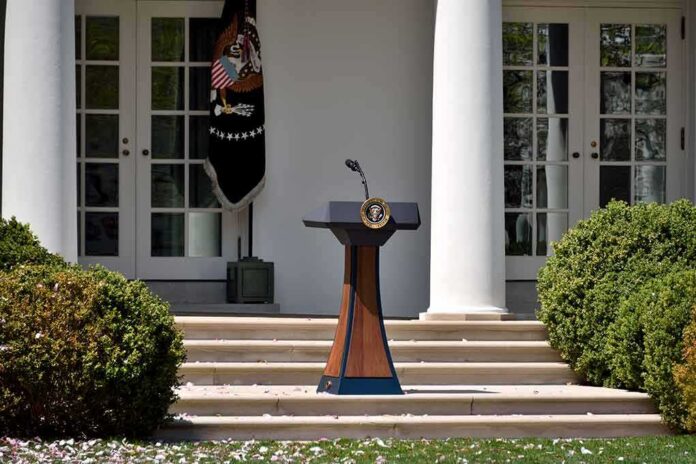
On Thursday, President Trump signed two executive orders aimed at limiting birthright citizenship and stopping birth tourism. The White House said the first order covers several narrow categories of children, including some born to parents who are unlawfully present or lawfully present only on a temporary basis. The second order directs the Secretary of State and the Secretary of Homeland Security to use visa and enforcement tools to block travel for childbirth.
The administration says the changes are meant to protect the “meaning and value” of American citizenship. In the White House’s view, the Constitution’s Citizenship Clause does not automatically cover every child born on U.S. soil. Trump has also argued that the policy is meant to stop people from using pregnancy travel to gain an immigration benefit for a child.
How the Orders Work
The first order does not try to erase citizenship across the board. Instead, it lists categories the White House says are outside birthright protection. Those include children born to mothers who were unlawfully present, mothers who were present only temporarily on visas, and some children tied to foreign-government or terrorist-linked situations. The order also tells federal agencies not to issue documents recognizing citizenship to the affected children.
The second order focuses on birth tourism. According to the White House and news reports, it tells federal officials to tighten screening, deny visas when childbirth is the reason for travel, and step up enforcement against the industry that helps foreign visitors arrange births in the United States. Trump told reporters that the practice is widespread, though the materials provided do not include audited national counts proving that scale.
The Legal Fight Behind the Move
The orders land in a legal fight that has followed birthright citizenship for generations. Supporters of the administration argue that the phrase “subject to the jurisdiction” leaves room for a narrower reading of the Fourteenth Amendment. Opponents say the Constitution, as long understood after United States v. Wong Kim Ark, protects almost everyone born on U.S. soil, with only limited exceptions for diplomats and invading forces.
President Trump just signed executive orders cracking down on birth tourism and limiting automatic citizenship for certain children of foreign nationals.
The orders target the practice of pregnant women traveling to the U.S. solely to give birth, so their child gets citizenship,… pic.twitter.com/ebD2E3t2uo
— NRAW (@unownz2pd) August 7, 2026
The Supreme Court already reviewed the dispute in Trump v. Barbara, and the case drew immediate nationwide attention because it touched both constitutional law and immigration control. Court materials show the administration defended the order as a legal interpretation of the Citizenship Clause, while critics said it amounted to an executive rewrite of constitutional membership. That clash now defines the broader political fight, with each side accusing the other of using government power to stretch the rules.
Why It Matters Beyond the Courtroom
The issue reaches far beyond legal theory. Birthright citizenship sits at the center of arguments about borders, family policy, federal power, and the meaning of American identity. It also feeds a larger public distrust that cuts across party lines: many voters see Washington as willing to bend the rules for favored goals while ordinary families face rising costs and falling trust in institutions. The new orders tap into that anger, even as they deepen a constitutional fight that is still not settled in the political arena.
Sources:
youtube.com, reuters.com, congress.gov, scotusblog.com, journals.law.harvard.edu, bbc.com, brennancenter.org, fedsoc.org, npr.org
© patriotwise.com 2026. All rights reserved.