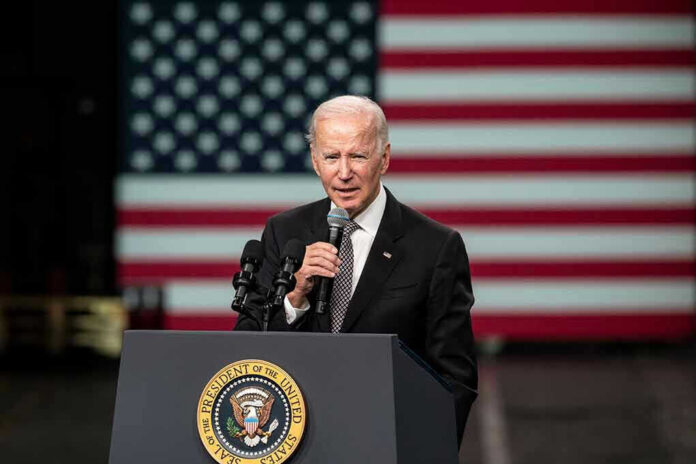
Jill Biden’s startling admission that she feared Joe Biden was “having a stroke” during the 2024 debate reignites unanswered questions about transparency, fitness, and media spin.
Story Highlights
- Jill Biden said she thought Joe Biden “was having a stroke” while watching the 2024 debate [2].
- The debate performance damaged public confidence in Biden’s fitness, according to Brookings analysis [1].
- The debate video remains the primary record for judging the episode’s severity [3].
- No publicly released medical documentation confirms a stroke, leaving a vacuum filled by narratives [2][3].
Firsthand Remark Raises Health and Transparency Questions
CBS News reported that Jill Biden, reflecting on the first 2024 presidential debate, said, “I don’t know what happened,” adding that as she watched she thought, “Oh, my God, he’s having a stroke” [2]. That eyewitness statement from the closest possible observer underscores how abnormal the performance appeared in real time. While her fear does not prove a diagnosis, it validates what millions of viewers suspected: something beyond ordinary debate jitters might have been in play that night [2].
The absence of a named physician publicly confirming or denying a neurological event has prolonged the uncertainty. CBS’s account relays Jill Biden’s fear and subsequent reassurance that doctors said he was fine, but it does not provide a direct, on-the-record medical ruling from a treating clinician or contemporaneous records from the debate venue or campaign [2]. That information gap has allowed competing political narratives to thrive while concrete, clinical facts remain out of public reach [2].
What the Debate Footage Shows—and What It Cannot Prove
The full 2024 debate video is the central piece of observable evidence. Viewers can scrutinize pauses, halting delivery, and visible confusion to form judgments about severity and cause [3]. However, footage alone cannot establish a medical diagnosis. Without vital signs, neurology screening, or medication logs, observers are limited to inference. That limitation explains why the debate became a proxy fight over credibility—campaign assurances on one side and public doubt fueled by what people saw on the other [3].
Independent political analysis captured how the event reshaped perceptions. The Brookings Institution concluded the performance “threatens his ability to win,” emphasizing that the display raised broad doubts about fitness and campaign viability rather than merely producing a bad news cycle [1]. Political scientists have long noted that high-visibility missteps can harden elite and media narratives even when underlying vote shifts are limited. In Biden’s case, the performance amplified existing age and stamina concerns [1].
Competing Explanations, Missing Records, and the Voter’s Dilemma
Campaign-aligned explanations floated at the time—such as illness, fatigue, or preparation choices—remain unverified in the public record and do not resolve whether an acute episode occurred. Jill Biden’s statement adds weight to concerns by confirming that even family members suspected something severe in the moment, yet the published accounts still stop short of a clinical conclusion [2]. That split between perception and proof leaves citizens to weigh visible evidence against opaque institutions that have not shared full documentation.
For voters who prize accountability and honesty from leaders and media alike, the path forward is straightforward: demand original-source transparency. Public release of debate-night medical notes, timelines, and on-the-record statements from attending personnel would clarify whether stroke-like concerns were considered, tested, and excluded. Without those disclosures, speculation persists, and the public must navigate a thicket of narratives rather than verified facts—an unacceptable norm when presidential capability is on the line [2][3].
Why This Still Matters Under Today’s Leadership
In 2026, with the Trump administration accountable for federal transparency standards, this episode remains a case study in how secrecy fuels distrust. Conservatives who lived through years of media deflection and selective outrage see a familiar pattern: visible evidence prompts serious questions, institutions reveal little, and commentary fills the gap. Restoring trust requires consistent rules—full medical transparency for all presidents and candidates when public performances trigger legitimate health concerns [1][2][3].
Give me a break. You never questioned Biden's health or mental acuity, even after the debate where Jill Biden stated she wondered if he was having a stroke. (And then went to Waffle House rather than Walter Reed).
— SacraBos (@SacraBos) June 3, 2026
The principle is simple and constitutional in spirit: an informed public can self-govern only when facts, not spin, carry the day. Jill Biden’s candid fear, the debate footage, and the documented political fallout together justify renewed calls for records, not rhetoric. Until responsible parties put medical clarity on the record, Americans should keep pressing for answers—and refuse to let partisan filters bury the truth about a moment that shook public confidence [1][2][3].
Sources:
[1] YouTube – “Is he having a stroke?”
[2] Web – Biden’s debate performance threatens his ability to win | Brookings
[3] Web – Jill Biden says she was “frightened” by Joe Biden’s 2024 debate …
© patriotwise.com 2026. All rights reserved.