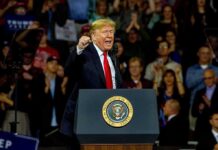
Trump’s quiet decision to board an aging Air Force One instead of his new Qatari “palace on wings” came after officials say Iran’s proxies were hunting not just a president, but his plane.
Story Snapshot
- Trump left Turkey on the older, battle-tested Air Force One instead of the new Qatar-gifted jet as Iran tensions spiked.
- Unnamed officials say U.S. and Israeli intelligence warned of an Iranian proxy plot to assassinate Trump, prompting the Secret Service to push for the swap.
- Trump publicly denied security was the reason, insisting he sent the new jet ahead so troops in Britain could see it.
- The episode exposes how modern presidents juggle classified threats, high-tech hardware, and public skepticism in real time.
How a routine departure turned into a high‑stakes security call
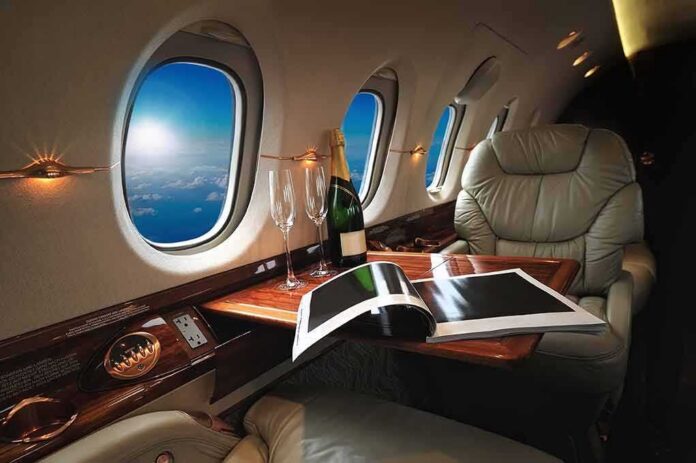
President Trump arrived at the NATO summit in Turkey aboard his new Qatar-donated Air Force One, a retrofitted luxury Boeing widebody he had proudly showcased days earlier. As the summit wrapped, the plan was simple on paper: fly that same new jet home. Then Iran reentered open conflict with the United States, missile strikes resumed, and the threat picture around Ankara changed fast. Within that shifting backdrop, the Secret Service and national security staff reassessed not the optics, but the risk of putting the commander in chief on an untested platform inside Iran’s reach.
Multiple reports say officials picked up intelligence pointing to Iranian proxy forces looking for a shot at Trump and his aircraft while he was still in Turkey. According to The New York Times and outlets summarizing its scoop, “multiple people briefed on the matter” said U.S. officials judged the threat credible enough that the Secret Service urged Trump to leave on the older, fully hardened Air Force One. That older jet had decades of proven defensive systems and command functions, from missile diversion equipment to mature secure communications. The new Qatar jet’s exact protective suite was still murky and, by some accounts, incomplete.
Competing explanations: security risk versus showcase flight
Trump did not publicly announce, “I switched planes because of an assassination plot.” Instead, on the flight and in press chats, he pushed a different story. He told reporters the change was “for old time’s sake,” said the new aircraft was going ahead so troops in England could tour it, and flatly denied that security concerns involving Iran drove the decision. When pressed about threats, he did not say they were false. He said he was “number one on the kill list for Iran” and moved on. That mix of denial on motive but admission of being a prime target leaves a gap between what he told the public and what security professionals say they told him.
From an American conservative and common‑sense standpoint, the official version fits the facts better than the showcase spin. You do not bench a brand‑new, highly advertised presidential toy in full view of cameras unless something serious shifted. You especially do not do it at the last minute, in a foreign capital inside hostile missile range, if all you care about is letting soldiers “see” the plane later. Career security staff are paid to care less about ego and more about survivability. Their reported insistence on the older jet looks like classic belt‑and‑suspenders caution, not media theater.
What intelligence reportedly said about Iran and the new jet
Israeli outlets, citing United States officials and a Wall Street Journal report, added a sharp edge to the picture. They say Israeli intelligence warned Washington that Iran had drawn up a new assassination plan targeting Trump, timed to his travel from Turkey. Some officials told the Journal they did not see that plot as fully credible, but when you combine proximity to Iran, active strikes, and fresh foreign intelligence, the bar for risk tolerance drops. In that context, the reported view inside the Secret Service and White House Military Office was simple: the new plane lacked the same proven defensive package as the legacy Air Force One, so you do not test it on a night like that.
🇺🇸🇮🇷🇹🇷🇮🇱 | New York Times: A credible threat from Iranian proxies is what prompted President Trump to change the Air Force One he took off on from the NATO summit in Ankara earlier this month, according to several sources familiar with the matter.
Trump was supposed to return… pic.twitter.com/GzqpuBPPCN
— Eli Afriat 🇮🇱 (@EliAfriatISR) July 24, 2026
Here is where the story gets messy in the public record. The Times, The Week, NBC News, and others point to a security decision “taken with an excess of caution,” built on protective intelligence and hardware gaps. Trump, speaking on the record, offers a non-security motive while refusing to clearly say, “There was no threat.” Critics can latch onto that gap and argue the press overplayed anonymous sources. Supporters can just as easily point out that when it is your life on the line, you follow the Secret Service’s advice whether or not you like how it looks on television.
A bigger pattern in how presidents travel under threat
This dispute fits a broader pattern in modern presidential travel. Whenever a president suddenly changes planes, routes, or motorcades, the public usually sees three things at once: anonymous officials citing classified threats, a president offering a softer or more flattering public explanation, and no declassified evidence that settles the argument. Ordinary citizens must weigh which version lines up with human nature and institutional behavior. Naming Iran’s “kill list” while pretending a plane swap was just a nostalgia tour is exactly the kind of mixed messaging that keeps doubts alive.
From a common‑sense, security‑first lens, one point stands out. The older Air Force One has long been engineered as a flying bunker and command center. The Qatar gift, however luxurious, was still new to that role. On a calm day, with no active shooting war and no fresh assassination chatter, testing that upgrade may be acceptable. On a day when Israeli and American sources say Iran’s proxies are looking for a chance, putting the president on the older, fully hardened jet is not paranoia. It is prudence. Whether Trump liked the optics or not, his security detail treated his life as more important than his brand.
Sources:
cbsnews.com, nytimes.com, theguardian.com, defensenews.com, pbs.org, youtube.com, theweek.in, nypost.com, reuters.com
© patriotwise.com 2026. All rights reserved.