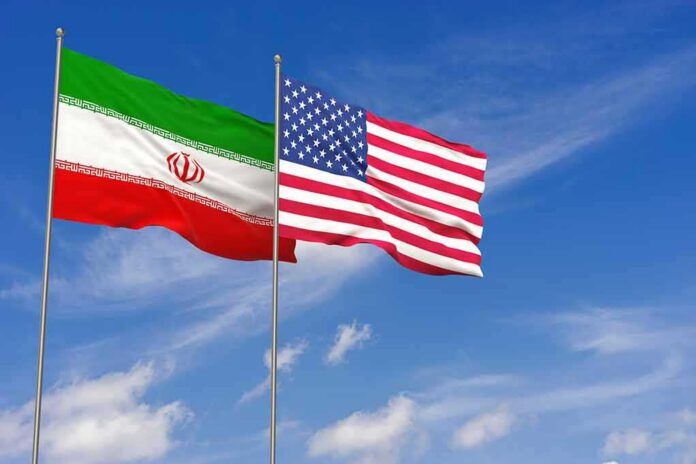
President Trump vowed to stop Iran from getting a nuclear weapon, then backed that pledge with strikes that began a war and left the core question still unsettled: how much damage did the program really take?
Quick Take
- Trump repeatedly said Iran could not have a nuclear weapon and tied that warning to military action.
- The United States and Israel launched strikes on Iran on February 28, 2026, with the stated aim of blocking a bomb program.
- International inspectors reported damage at some sites, but they also said they could not fully verify Iran’s enrichment status.
- Months later, U.S. intelligence and the International Atomic Energy Agency still described limited change and major uncertainty.
Trump’s vow became wartime policy
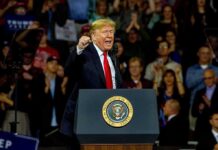
Trump made Iran’s nuclear program a public target long before the strikes began. In repeated remarks, he said Iran “can’t have a nuclear weapon” and warned that if talks failed, Iran would “get hit really hard.” Those statements framed the issue as a direct test of U.S. power and set clear expectations that pressure would not stop at threats alone.
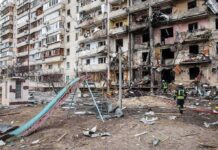
That warning turned into action on February 28, 2026, when the United States and Israel launched military operations against Iran. The congressional research summary says the campaign began with the stated aim of preventing an Iranian atomic bomb, and Reuters reported that the war was presented the same way. The public message was simple: deny Iran a weapon, even if that meant war.
Damage was real, but the stop was not confirmed
International reporting shows that the strikes did hit parts of Iran’s nuclear network. The International Atomic Energy Agency reported damage at entrances to the Natanz enrichment facility and said there was no increase in radiation levels at the affected sites. The agency also said it did not see damage to facilities containing nuclear material, which matters because that leaves open the possibility that key stockpiles and equipment survived.
That gap in access became the main problem for anyone trying to declare success. Reuters reported that the agency could not verify whether Iran had suspended all enrichment-related activity and did not know the location, size, or composition of parts of the stockpile. When inspectors cannot confirm those basics, claims of a finished job rest more on confidence than on proof.
Month by month, the record stayed uncertain
Later reporting did not show a clean rollback of Iran’s program. Reuters said on June 4 that the International Atomic Energy Agency’s first report since February showed no major change in its assessment, despite months of war. Reuters also reported in May that U.S. intelligence believed the time Iran would need to build a nuclear weapon had not changed since the previous summer, which suggests delay, not elimination.
President Trump's problem dealing with the Iranian regime is that as a civilized Western man, he cannot conceive of the leaders of a nation not giving a damn about their own people.
He thinks, you know, these guys are assholes, but we need to end this conflict, so let's give… pic.twitter.com/KL18MHb4Yv
— Bill Mitchell (@mitchellvii) August 8, 2026
Arm control experts added another check on the administration’s claims. The Arms Control Association quoted International Atomic Energy Agency Director General Rafael Mariano Grossi saying, “we don’t see a structured program to manufacture nuclear weapons” in Iran. That does not mean Iran lacked dangerous capability. It does mean the public case was about preventing breakout capacity, not shutting down an active bomb factory already in motion.
Why the story still matters
The Iran fight shows how quickly wartime politics can outrun hard verification. Trump’s team used threats, negotiations, and force to push a stated nuclear goal, but the public record still does not show a verified end state. Damage was reported. Deterrence was claimed. Yet the most important facts about enrichment, stockpiles, and hidden work stayed partly out of view, which is exactly how big powers keep control of the story.
That uncertainty helps explain why this issue keeps pulling in both supporters and critics of the government. Backers of hard power see a president willing to act where past leaders hesitated. Skeptics see the same old pattern: bold promises, heavy force, and incomplete proof that the problem was truly solved. For readers across the political map, the deeper concern is the same — citizens are asked to trust official victory claims before the evidence is fully visible.
Sources:
feedpress.me, reuters.com, ans.org, understandingwar.org, criticalthreats.org, aljazeera.com, congress.gov, npr.org, facebook.com, en.wikipedia.org, cnbc.com, themiddleeastinsider.com, fdd.org, armscontrol.org, cnn.com
© patriotwise.com 2026. All rights reserved.