
Hours before major U.S.–South Korea war games, President Trump ordered the Pentagon to cut them back as “costly” and needlessly “hostile.”
Story Highlights
- President Trump said he told his defense chief to “substantially reduce” the joint drills with South Korea.
- Trump argued the exercises are expensive and send the wrong signal to North Korea.
- The order came on the eve of the Ulchi Freedom Shield exercises scheduled for Aug. 17–27.
- Drills were planned to test counter-drone, cyber, and GPS-disruption scenarios, among others.
What The President Ordered And Why It Matters
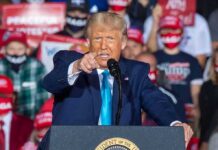
On Aug. 16, President Trump said he directed his defense secretary to “substantially reduce” joint military exercises with South Korea. He tied the move to cost and signaling. Trump said the drills are expensive and send a “hostile” message to North Korea when he wants a different tone. He also praised Kim Jong Un’s behavior toward the United States during his time in office, which he framed as “respectful”. The White House has used similar cost arguments in past years.
The timing added urgency. The order came one day before the annual Ulchi Freedom Shield drills, which were set for Aug. 17 to 27. Reporting described a robust training plan focused on real threats. Forces planned to practice countering drones, handling cyberattacks, and managing disruptions to satellite navigation signals. Past coverage noted live-fire precision training and rapid equipment distribution, showing a readiness focus that allies often see as vital to deter North Korea.
What Was Scheduled On The Ground
South Korea and the United States had prepared an 11-day exercise cycle with thousands of South Korean troops and a range of scenarios. The drills were designed to test command and control, logistics, and joint responses to evolving North Korean tactics. Reuters described modules for counter-drone defense, cyber defense, and responses to GPS jamming, all areas where North Korea has probed in recent years. These events are a regular feature of alliance planning and readiness on the peninsula.
North Korea’s state media had already denounced the planned drills before Trump’s order. Pyongyang often labels these exercises as invasion rehearsals. That pattern has held for decades. The denouncement this year fit the usual script and arrived days ahead of the start window. Supporters of strong exercises argue the training helps deter North Korean aggression. Others argue large drills can lead Pyongyang to escalate, which makes diplomatic progress harder.
What We Know And What We Do Not
The president’s statement is clear: he wants a substantial reduction. The available reporting does not include a public Pentagon directive spelling out which parts of the August drills would be cut or changed. It also does not show an official execution order from United States Forces Korea on the same day. That leaves details like which units, live-fire events, and timelines affected still unclear in open sources.
Trump’s cost claim echoes earlier debates over spending on exercises. However, the reporting does not include a dollar estimate for the Ulchi Freedom Shield package or a savings figure from a reduced plan. Without a budget breakdown, the public record shows the cost argument but not the math behind it. In past cycles, allied militaries have adjusted “size, scope, volume, and timing” to align training with diplomatic goals while trying to keep core readiness intact.
Why This Fits A Long Pattern
United States–South Korea drills have always served two roles at once: training and signaling. Military leaders use them to keep forces sharp and to prove the alliance can fight as one. Politicians use them to send messages to North Korea. That double role means cutbacks can be read as either smart diplomacy or risky weakness, depending on the moment. Research shows both effects can happen, based on timing and scope.
South Korea hopes for talks between US and North Korea after Trump downsizes military drills https://t.co/KABM8mlOvV
— News 19 (@whnt) August 17, 2026
For readers worried about waste, this move aims to trim costs without scrapping defense ties. For readers worried about deterrence, it raises fair questions about readiness and resolve. This is the hard balance in security policy. When drills shrink, planners often shift to simulations and targeted training to cover gaps. The coming days should show how commanders adapt the August plan and how Seoul responds, as allies try to hold both readiness and diplomacy together.
Sources:
internazionale.it, reuters.com, axios.com, abcnews.com, bloomberg.com, military.com
© patriotwise.com 2026. All rights reserved.