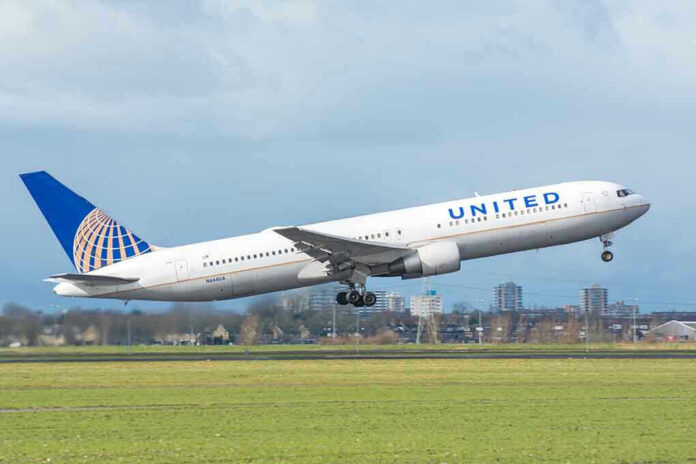
A collision between two United Airlines jets at San Francisco International Airport reveals troubling vulnerabilities in ground safety protocols and equipment reliability, raising urgent questions about oversight at one of America’s busiest travel hubs.
Story Snapshot
- United Airlines Boeing 737s collided during pushback at SFO, possibly due to tug equipment failure.
- The incident caused significant operational disruption but no injuries; both planes sustained damage.
- The FAA launched an investigation, highlighting concerns about ramp safety in non-towered areas.
- Experts and passengers question whether crowded airports and underregulated ground procedures put safety at risk.
Unusual Ground Collision Raises Safety Concerns at SFO
On September 1, 2025, two United Airlines Boeing 737 MAX 9 aircraft collided on the ground at San Francisco International Airport during the pushback phase, a period not typically associated with high risk for such incidents. United Flight UA1871, headed for Denver, struck the tail of United Flight UA796, which was stationary and preparing to depart for Boston. The event unfolded in a non-towered ramp area, meaning air traffic controllers were not actively guiding the aircraft at the time. Both planes were immediately halted and returned to their gates, and all passengers deplaned without injury. The Federal Aviation Administration (FAA) and United Airlines quickly announced investigations, while passengers faced delays and operational chaos. This rare incident spotlights not only equipment reliability but also the effectiveness of current ground procedures at major U.S. airports.
San Francisco International Airport, one of the nation’s busiest, is no stranger to high-density ramp operations and complex ground movements, especially during peak travel periods like Labor Day. The collision—linked to possible tug equipment failure—highlights how increased congestion and tight schedules can elevate the risk of operational lapses. Historically, ground collisions are rare but do occur, often the result of miscommunication, equipment faults, or human error. Aviation experts point to a recent Delta incident in Atlanta as a reminder that even routine phases like pushback can carry serious risks when coordination falters or equipment is not properly maintained. These events, while typically resulting in minor damage and delays rather than injuries, can erode public confidence in air travel safety.
Key Stakeholders and Their Responsibilities
Multiple parties share responsibility for ground safety: United Airlines, the FAA, airport operations, and the ground crew conducting pushback procedures. United Airlines must minimize disruption, ensure passenger and crew safety, and comply with regulatory scrutiny. The FAA holds federal regulatory authority and is tasked with determining the cause of the incident and enforcing safety standards. Airport operations at SFO are responsible for maintaining a safe operational environment, while ground crews and tug operators are expected to follow strict protocols to prevent such occurrences. Passengers, meanwhile, expect safe and timely transport, and their experience is directly affected by the competence and coordination of these stakeholders.
Power dynamics are clear: the FAA’s regulatory authority supersedes all, while United’s management and safety teams handle the immediate operational response and public communication. The outcome of the investigation may determine whether further regulatory or procedural changes are needed. The incident also places ground crew actions—potentially involving procedural lapses or equipment oversight—under intense scrutiny, raising the stakes for all involved in ramp safety.
Industry Expert Reactions and Broader Implications
Aviation experts like Max Trescott observe that while such collisions are “somewhat uncommon,” they are not unprecedented. Most ground accidents involve an aircraft rolling into a tug, usually resulting in less damage than a plane striking another aircraft. The fact that this event occurred in a non-towered area—without direct controller oversight—raises questions about the adequacy of ground safety protocols and the reliability of critical equipment. Industry professionals emphasize the need for robust communication, regular equipment checks, and clear procedures, especially as airport congestion increases. The incident may prompt both short- and long-term changes, including stricter oversight of ground operations, improved tug maintenance, and potential regulatory reforms affecting how airlines and airports manage ramp safety.
In the short term, passengers and crews faced delays, disrupted travel plans, and anxiety about operational safety. United Airlines must absorb costs for repairs, re-accommodate affected passengers, and manage potential reputational fallout. Over the longer term, the FAA’s investigation could lead to industry-wide reviews of ground handling practices, renewed emphasis on training, and possibly new safety advisories or mandates. For conservative readers, this incident serves as a cautionary tale about the dangers of bureaucratic complacency and the importance of holding both private and public entities accountable to the highest standards of safety and responsibility.
United plane at San Francisco airport collides with another jet while pulling back from gate
Flights bound for Boston and Denver involved in tail collision during pushback from gatehttps://t.co/Swkpcr2dLu— Right Wing Nest (@RightWingNest) September 3, 2025
As investigations continue, all major details have been corroborated by multiple independent outlets, with no significant contradictions in the reporting. Passengers can be assured that federal oversight remains vigilant, but the event should spark renewed demands for transparency, accountability, and common-sense reforms to airport safety protocols—without the burden of bloated bureaucracy or leftist agendas that too often distract from core operational priorities.
Sources:
Ground collision between two United aircraft at San Francisco airport – AirLive
United flights SFO incidents – San Francisco Chronicle