A California judge’s unusual move to float a plea deal directly to a defendant—sidestepping prosecutors—has reignited fears that politics and opacity are warping justice in volatile protest cases.
Story Snapshot
- A judge in the Paul Kessler death case reportedly proposed a plea deal from the bench, raising separation-of-powers concerns [2].
- Defendant Loay Alnaji faces involuntary manslaughter and battery charges and has pleaded not guilty [1][5].
- Prosecutors say evidence supports criminal negligence; defense argues minimal contact and intervening causation [6][1].
- The case mirrors broader disputes over causation and accountability in protest-related fatalities [4].
What The Case Is About And Where It Stands
Ventura County authorities charged Moorpark College professor Loay Abdelfattah Alnaji with involuntary manslaughter and battery in the November 2023 death of 69-year-old Paul Kessler, who suffered fatal head injuries following a confrontation at dueling Israel-Hamas protests in Thousand Oaks, California [1][4]. Prosecutors contend the evidence supports criminal negligence; Alnaji has pleaded not guilty and remains free on bond [6][5]. A judge later ruled Alnaji must stand trial after a preliminary hearing reviewed testimony and video exhibits [2].
Disappointing update in trial over killing of Paul Kessler. You wonder if this hadn’t been a Jewish victim who was killed by a Palestinian activist for supporting Israel if the judge would’ve been so lenient. Thx to @VenturaCountyDA for standing strong. https://t.co/2lA262LeXn
— Henry Stern (@HenrySternCA) May 5, 2026
Law enforcement and prosecutors have emphasized that the charging decision focused on conduct and evidence, not hate-crime allegations, which they said lacked sufficient proof at the time [6]. Inside Higher Ed reported prosecutors’ theory that reckless conduct created a high risk of great bodily injury, consistent with California’s involuntary manslaughter statute [7]. The case’s posture—serious charges but contested intent and causation—has drawn intense attention from community groups across ideological lines [1][7].
Why A Judge-Floated Plea Deal Stokes Distrust
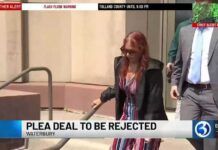
ABC News reported that during a hearing, the judge directly proposed a plea arrangement from the bench, an approach that appeared to bypass the district attorney’s office and alarm some observers about judicial overreach in a politically charged case [2]. While judges can comment on settlement prospects in some contexts, plea bargaining typically remains between prosecution and defense. Any perceived deviation—especially in a case closely watched by polarized communities—risks deepening public skepticism toward even-handed justice [2].
Critics argue such judicial intervention can tilt leverage, pressure defendants, or sideline elected prosecutors who are accountable to voters for charging decisions. Supporters counter that docket management and resolution incentives are common in busy courts. The friction underscores a larger frustration shared by many Americans: when processes look ad hoc or opaque, people suspect favoritism, backroom deals, or elite immunity—concerns that intensify when protests, identity, or geopolitics frame the incident [2].
The Core Dispute: Contact, Causation, And Criminal Negligence
Prosecutors say the available evidence supports involuntary manslaughter and battery, signaling a belief that Alnaji’s actions created a substantial risk culminating in Kessler’s fatal injury [6]. Defense counsel has argued the contact was minimal—described as swatting at a phone—and that Kessler’s collapse followed after several seconds, suggesting intervening factors beyond a single blow caused the deadly fall [1]. The preliminary hearing outcome requiring a trial indicates the court found probable cause, not a final judgment on guilt [2].
Neutral context from local reporting places the dispute within a pattern seen in protest-related deaths, where defense strategies often stress fall mechanics, medical vulnerability, or delayed response to contest causation [4]. CBS Los Angeles confirmed Alnaji’s not-guilty plea and the case’s continuing path through the courts, maintaining the presumption of innocence while leaving critical factual questions to a jury [5]. The legal stakes are high: a verdict will hinge on precise fact-finding about force, timing, and foreseeability under California law [5].
What To Watch Next For Accountability And Transparency
Community trust may hinge on three developments. First, whether prosecutors publicly clarify their stance on any future plea terms to dispel perceptions of backroom bargaining [2]. Second, whether trial evidence—videos, witness accounts, and medical testimony—resolves the competing narratives about contact and causation [2][6]. Third, whether the court addresses concerns about bench-driven negotiations in politically sensitive cases, reinforcing clear boundaries between prosecutorial discretion and judicial case management [2].
Sources:
[1] Manslaughter charges filed in death of Paul Kessler – LA Times
[2] Demonstrator to stand trial in the death of Jewish man at November …
[4] Authorities Explain What Led To Manslaughter Charges in Paul …
[5] Man accused of killing Jewish protester in Thousand Oaks pleads …
[6] Professor’s lawyer says video footage will clear his client charged in …
[7] California professor charged in Jewish protester’s death