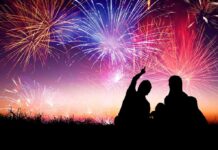
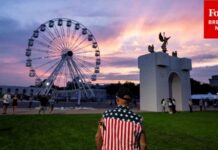
As President Trump spoke on the National Mall under a blazing heat wave, Washington’s biggest-ever July 4th fireworks show unfolded inside a security bubble that many Americans on both the right and left now see as a symbol of a government that serves itself first.
Story Snapshot
- Trump’s “Salute to America” speech and fireworks marked America’s 250th birthday with record-setting scale and security.
- Extreme heat, air quality warnings, and schedule changes showed how fragile even “carefully planned” national events have become.
- Massive security and restricted zones fueled the sense of a capital city turned fortress, far from everyday Americans.
- Media outlets framed the event as a power move by Trump, deepening public distrust in both the press and political leaders.
What Actually Happened on the Mall
On July 4, President Donald Trump headlined a “Salute to America” celebration on the Washington Monument grounds, part of the Freedom 250 campaign marking 250 years since independence. Organizers billed the show as the world’s largest fireworks display, with about 850,000 to 860,000 individual pyrotechnics planned for a 40-minute show, roughly double the length of a normal Washington, D.C., Fourth of July display. Trump told supporters he would give a long speech even in 107-degree heat “to show that I can do anything,” tying his personal stamina to national strength.
The day was not as simple as a patriotic party. Freedom 250 and federal agencies had to push back public entry from early afternoon to 5 p.m. after a dangerous heat wave settled over the region, bringing triple-digit temperatures and forcing changes or cancellations to other America 250 events. A National Park Service memo, reported by one outlet, warned that the volume and length of the fireworks could worsen air pollution and urged people to limit exposure, even as the show was marketed as a once-in-a-lifetime celebration.
Security, Crowds, and the “Fortress” Capital
The federal government designated the celebration a National Special Security Event, which meant the United States Secret Service took the lead and coordinated security across many agencies. Thousands of National Guard troops, local police, and federal officers were deployed in and around the National Mall, with fenced perimeters, magnetometers, and tight access points that reshaped the city’s usual open feel. One magazine described Washington as turning into a “fortress,” reflecting how national events now often look more like high-risk summits than community gatherings.
Official plans projected crowds as high as 150,000 people, but reporters on scene noted that the brutal heat could keep many families away or shorten their stay. During an earlier rehearsal, a set piece reportedly almost fell, raising quiet questions about safety even as spokespeople insisted the site was secure and thoroughly inspected. The event took place near the Reflecting Pool, which had already drawn attention for algae problems and an expensive renovation, feeding a narrative that Washington spends big to fix visible problems while ignoring deeper issues facing working Americans.
How Media Framed the Event and Why It Matters
National outlets split sharply on how to describe the night. One network report said Trump was using the fireworks and long speech to “dominate the celebration narrative,” suggesting he was less interested in unity than in personal branding and political power. Another major magazine said he had essentially “commandeered” the nation’s birthday party, implying that what should have been a shared civic moment was turned into a stage for one man and his movement.
For conservatives who are tired of what they see as globalist priorities, political correctness, and climate rules that raise energy costs, the event looked like a needed reminder of pride in country and military—something they feel elites mock or minimize. For liberals who worry about nationalism, fossil fuel use, and the widening gap between rich and poor, the giant show, the air pollution warnings, and the expense of security reinforced the sense that the system honors symbols more than struggling people. Both sides, in different ways, saw proof that the political class treats the capital as its own protected arena.
Heat, Health, and the Bigger Pattern of Fragile “Normalcy”
The same extreme heat that forced changes to Freedom 250 plans also disrupted other July 4 events across the city, including parades and concerts, showing how even routine traditions are now at the mercy of weather and safety concerns. Research has found that big Fourth of July celebrations can shape political views over a lifetime, often in ways that lean slightly toward Republicans, which helps explain why parties fight so hard over control of the story told on this day. When the celebration itself becomes contested, many Americans feel the holiday is being pulled out of their hands.
"Trump administration diverts $90M of national park fees into DC fireworks and fountains — at 6X the usual July 4 cost" – Moneywise #SmartNews https://t.co/nJWw5K5mq5
— JoEllen brackin (@pirateonboard) July 4, 2026
At the same time, environmental groups highlighted the air quality risks and huge fireworks count as signs that leaders ignore the long-term costs of short bursts of spectacle. For people on both the right and the left who already believe that Washington is run by a small group of elites, the mix of record-breaking fireworks, fortress-style security, and life-threatening heat felt less like a tribute to self-government and more like a reminder of how far the federal government has drifted from the everyday struggles of citizens who simply want safe communities, fair opportunities, and a future their kids can afford.
Sources:
youtube.com, cnn.com, theatlantic.com, npr.org, washingtonpost.com, freedom250.org, today.com, instagram.com, en.wikipedia.org, nypost.com, facebook.com
© patriotwise.com 2026. All rights reserved.