
One short video claim has turned into a larger fight over who started the latest round of missile fire.
Quick Take
- Iranian state media released footage it said showed missile launches toward American targets, but the claims were not independently verified.
- United States Central Command said its strikes answered Iranian attacks on shipping and military positions in the region.
- Iran said the United States struck first and that its own fire was retaliation.
- Reports from Kuwait and Bahrain said incoming drones and missiles were intercepted, and no major damage was confirmed.
What the Video Appears to Show
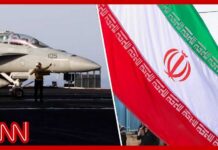
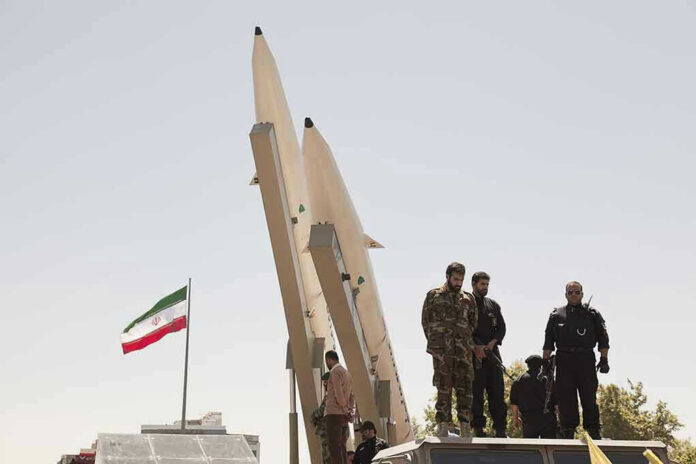
Iran has released footage it says shows missile launches against United States forces, part of a wider message that Tehran is answering American strikes. The material follows days of sharp exchanges in the Gulf and a fresh wave of claims from both sides about who broke the ceasefire first. The video itself may support Iran’s narrative, but the authenticity and battlefield effect of the footage have not been independently verified.
The timing matters because the video is not just battlefield content. It is also a political signal. Iranian media used the footage to present the attacks as planned retaliation, while United States officials described them as aggressive moves tied to shipping attacks and regional threats. That gap has become a core problem in the story: each side is selling a different version of the same conflict, and neither has given outside observers a full independent record.
Why the Strike Claims Matter
United States Central Command said American forces struck Iranian military sites after attacks on commercial shipping and on regional positions. NBC News reported that the Pentagon described the American strikes as a direct response to Iranian aggression, and that the Iranian Revolutionary Guard Corps then said it had targeted American positions in the region.[2] CBS News and other outlets reported later Iranian attacks on Bahrain and Kuwait, with officials saying most incoming weapons were intercepted.[3]
That pattern explains why the video is drawing attention beyond social media. If Iran is trying to show strength, the footage helps it project resolve at home and across the region. If the United States is trying to show restraint and precision, the same video can be used against that message. The public record now shows competing claims, but not a clean, shared account that settles every launch, interception, and impact.
What Can Be Confirmed So Far
What can be confirmed is narrower than the headlines suggest. Reuters-style summaries and television reports say Kuwait and Bahrain faced incoming drones and missiles, but local defenses intercepted much of the fire. One report said Kuwait’s air defenses stopped incoming Iranian drones and missiles, while Bahrain said drones targeted the country and that the attack posed a serious threat to civilians.[4] Another report said Iran’s military did not name the exact targets it claimed to hit.[3]
That leaves the central question open: does the video prove successful retaliation, or only prove that Iran wanted the world to think so? The available reporting supports the fact that missiles and drones were launched and that the region remains on edge. It does not fully prove the reach, damage, or exact military value of the launches shown on camera. For readers, that is the key point. The footage is real as a message, but its wider claims remain disputed.
Why This Story Resonates on Both Sides
Many Americans see this kind of conflict as another sign that the federal government is telling competing stories while the public is left guessing. Supporters of a hard line on Iran see proof that Tehran keeps pushing, while critics of Washington see a cycle of strikes, counters, and vague official language. In that sense, the video reflects a broader problem: leaders on all sides are using military claims to shape opinion faster than facts can be checked.
US and Iran tit-for-tat strikes are escalating
Iran launched multiple drones & missiles towards Bahrain and Kuwait, where US bases are, US official tells @ABC. So far, no reported US casualties or damage
That came after the US struck Iran's missile/drone storage locations pic.twitter.com/tZxk9IHdC1
— Selina Wang (@selinawangtv) June 28, 2026
The bigger issue is not one missile clip. It is the trust gap behind it. When governments, military spokespeople, and state media all push their own version first, the public gets fragmentation instead of clarity. That leaves room for fear, anger, and more escalation. It also explains why a short video can matter so much in a crisis: it becomes evidence for one side, propaganda for the other, and confusion for everyone else.
Sources:
[2] Web – June 27, 2026 — US launches more strikes on Iranian sites – CNN
[3] Web – U.S. launches additional Iran strikes as tensions flare up over Hormuz
[4] Web – Iran launches drone, missile attacks targeting Bahrain, Kuwait …
© patriotwise.com 2026. All rights reserved.