On America’s 250th birthday, Washington, DC’s sky turned into a record‑chasing blaze of color even as storms, evacuations, and politics tried to steal the show.
Story Snapshot
- Freedom 250’s “Salute to America” fired over 850,000 effects from 10 launch sites, aiming to be the largest fireworks show in history.
- President Donald Trump’s late‑night National Mall speech pushed past severe weather delays to keep the semiquincentennial celebration alive.
- Evacuations, canceled flyovers, and re‑screenings fed public anger and media stories of chaos, even as a 40‑minute finale lit up the capital.
- Both fans and critics see the event as proof that national milestones now double as battlegrounds over who owns the story of America.
A fireworks show built to break records
Freedom 250 organizers designed the July 4 “Salute to America” display to be bigger than anything the country, or the world, had ever seen. Plans called for more than 850,000 pyrotechnic effects, nearly 100 times the usual 10,000 shells used at traditional National Mall shows. Fireworks would launch from ten locations, including the Lincoln Memorial Reflecting Pool, eight barges on the Potomac River, and sites in West Potomac Park, creating a wide wall of color over the capital. Contractors said the show would run about 35 to 40 minutes, roughly twice the standard length and aimed directly at topping the Philippines’ 2016 record of about 810,000 fireworks.
Organizers tied the massive display to a broader patriotic story about America’s 250th anniversary. Freedom 250, a White House‑backed project championed by President Trump, framed the event as “the most ambitious fireworks presentation ever attempted,” with a live, patriotic music score and a free show for crowds expected to reach or exceed one million people on the National Mall. Aerial program planners promised “the greatest aviation spectacle in history,” with hundreds of planes scheduled to fly from afternoon into late evening, turning the sky itself into part of the celebration. Together, the air show, fair, and fireworks were billed as proof that the American Dream and American power were still alive and on full display.
Storms, evacuation, and a race against the clock
Severe storms hit downtown Washington just as crowds gathered, turning the planned timeline into a scramble. The National Park Service, Secret Service, and other agencies ordered an evacuation of the secured area on the Mall at about 7 p.m., sending thousands of people toward shelters and Metro stations. Gates did not reopen until around 9:45 p.m., nearly three hours after the shutdown, and everyone returning had to pass through security screening again, creating long lines and frustration. Reports described shelters reaching capacity, crowds arguing with officers, and some people refusing to move, feeding a sense that federal planners could keep people “safe” but not necessarily make the day feel smooth or welcoming.
The weather chaos pushed every major part of the schedule deep into the night. Trump’s speech, originally set for 9:45 p.m., was delayed until about 11:15 p.m., with the president speaking for roughly 40 minutes as lightning and rain finally moved away. Some planned military flyovers were canceled outright as conditions worsened, cutting into what had been advertised as an all‑day aerial show. For families and older attendees, the shifting times meant longer waits on their feet, more heat and humidity, and a late finish that stretched the limits of public transit and security staffing. Many left with two mixed memories: a huge patriotic spectacle and a sense that government logistics had once again struggled under real‑world pressure.
Trump’s speech and a midnight sky of fire
President Trump used his National Mall address to tie the fireworks to a broader message about American strength, winners, and a revived American Dream. Standing before the monuments, he praised veterans and the nation’s founders, while also attacking communism and warning about threats to freedom, a mix that some listeners saw as turning a shared civic holiday into another partisan moment. Major networks noted his claims that “the American Dream is back” and highlighted how the show fit into his larger “America First” narrative, which appeals to many conservatives but worries liberals who see rising inequality and harsh immigration enforcement. For many in the crowd, though, the speech signaled that the day would not be canceled and that the finale would go forward despite the storm.
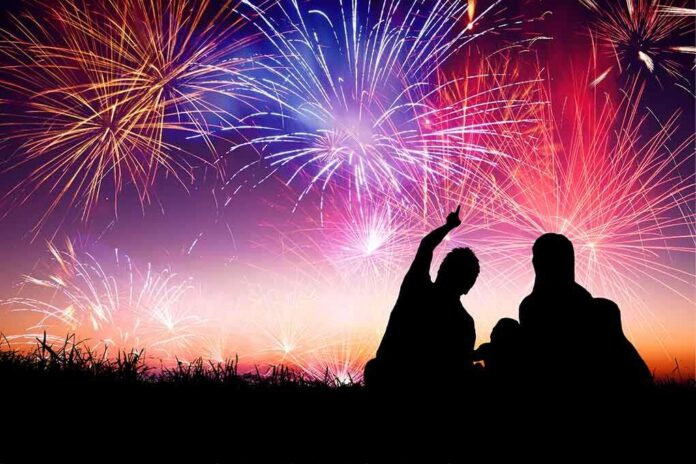
Moments before midnight, the sky finally delivered the night’s promised climax. After Trump finished speaking around 11:53 p.m., the long‑planned barrage of shells and effects began, stretching for about 35 to 40 minutes over the National Mall. Fireworks fired in tight rhythm from barges on the Potomac, the Reflecting Pool, and West Potomac Park, choreographed to a live soundtrack performed by the Joint Armed Forces Orchestra made up of musicians from across the United States military. Viewers watching from DC and around the country saw a vast curtain of color and sound that organizers and some outlets said may have set a new Guinness World Record, though no formal certification has yet been confirmed.
Media narratives, mistrust, and a shared sense of failure
Coverage of the event quickly split along familiar lines, deepening the feeling that even national birthdays are now culture‑war battlegrounds. Freedom 250 and supportive outlets stressed the record‑size fireworks, the free public access, and the message that America remains a “nation of winners,” fitting a long pattern where large Fourth of July events boost Republican‑leaning pride and participation. Many major media organizations, however, led with “weather woes,” evacuations, and last‑minute delays instead of the show itself, mirroring research that news tends to highlight logistical breakdowns more than symbolic success at political events. For conservatives who already distrust “elite” media, this looked like another attempt to downplay a patriotic win.
Liberals frustrated with Trump’s presidency and with “America First” policies viewed the day differently, pointing to chaotic scenes, canceled flyovers, and partisan lines in the speech as proof that the event put politics over unity and safety. A viral video from one public television news program even promoted “politics‑free” alternative celebrations while calling Freedom 250 “political,” framing DC’s show as a campaign‑style rally rather than a shared civic moment. Still, beneath the arguments, people on both sides share a growing belief that the federal government struggles to manage big national projects without confusion, delay, or mixed messages. The night’s storms exposed that weakness in real time: agencies protected people from lightning but could not protect the celebration from becoming another symbol of a system that feels clumsy, divided, and distant from everyday citizens.
Sources:
facebook.com, cnn.com, cbsnews.com, fox5dc.com, npr.org, bbc.com, nbcnews.com, freedom250.org, youtube.com, instagram.com, apnews.com, newswise.com
© patriotwise.com 2026. All rights reserved.