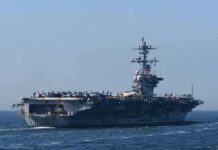
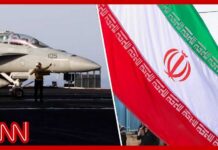
As U.S. strikes on Iran enter an eighth straight night, President Trump now says the latest wave was carried out “in honor” of fallen Americans, while both sides trade fire over control of one of the world’s most important oil chokepoints.
Story Snapshot
- U.S. Central Command confirms an eighth consecutive night of strikes on Iranian military sites, ordered by President Trump.
- Targets include coastal surveillance, air defense, drone and missile storage, and maritime assets tied to the Strait of Hormuz.
- Trump and Pentagon leaders claim Iran’s forces are being “badly damaged,” but Iran keeps firing back across the region.
- The fight over the Strait of Hormuz fuels fears of another endless war run by distant elites, with heavy costs for ordinary people.
Trump orders more strikes as campaign against Iran intensifies
U.S. Central Command reported that American forces carried out another round of strikes on Iran late on July 18, marking the eighth consecutive night of attacks under President Trump’s orders. Military statements say U.S. aircraft and missiles hit Iranian coastal surveillance sites, air defense systems, maritime facilities, and missile and drone storage locations. The Pentagon’s stated goal is to weaken Iran’s ability to attack ships and threaten traffic in the Strait of Hormuz, a narrow waterway that carries a large share of global oil.
President Trump has framed these strikes as part of a wider push to destroy Iran’s missiles and navy and stop it from ever getting nuclear weapons. In earlier remarks, he said the war was “nearly complete” and claimed Iran’s military had been largely dismantled. Defense Secretary Pete Hegseth and top commanders describe a carefully planned campaign aimed at command-and-control nodes, launch sites, and surveillance networks, meant to leave Iran unable to respond effectively. These claims paint a picture of decisive victory, but key details remain hard for the public to independently verify.
Fight for the Strait of Hormuz keeps escalating
U.S. officials say the latest phase of the war was triggered by Iranian attacks on commercial tankers moving through the Strait of Hormuz, a critical route for world energy supplies. Central Command statements describe the strikes as direct retaliation for these attacks and as an effort to “degrade Iran’s ability to attack commercial shipping and innocent civilian mariners” in the area. Reports from multiple outlets say U.S. forces have hit roughly 170 Iranian military targets near the strait across recent operations, focusing on surveillance, communications, air defense, mines, drones, and missile sites.
Iran has not stopped firing in response. Iranian forces and aligned groups have launched missiles and drones toward U.S. bases in Kuwait and Bahrain and against U.S.-allied Gulf states. Some reports note damage to civilian infrastructure, including a water reservoir in an Iranian city that left residents without water for a time. This tit-for-tat pattern means that, even as Washington claims control over key sea lanes, ships, bases, and cities across the region remain under threat. For many Americans watching from home, the picture looks less like a clean win and more like yet another open-ended war that never quite ends.
Big claims of “victory” meet long history of stalemate
Trump and some U.S. officials say Iran has been “very badly damaged” and has “almost nothing left militarily,” echoing past promises to eliminate the threat “once and for all.” But recent fact-checks and historical reviews show that similar claims about Iran’s nuclear program and military were overstated in the past. After earlier strikes on nuclear sites, independent inspectors and Pentagon assessments said Iran’s capabilities were severely hurt but not “obliterated,” with programs delayed rather than destroyed. Iran has a record of moving assets underground, shifting tactics, and using proxies to keep fighting even after heavy losses.
US strikes Iran, 1 soldier killed. Trump: "Very hard tonight." Defense officials: No imminent attack. #Iran #USMilitary
See the full story stack + source links: https://t.co/tOjWlc0lmL pic.twitter.com/YD2t4WEOqa— AFBytes (@AF_Bytes) July 20, 2026
This war fits a pattern seen since the 1980s: the United States uses its powerful air and naval forces to score clear battlefield wins, but Iran adapts and the larger standoff continues. Analysts argue that while U.S. strikes can blow up radar sites, ships, and missile launchers, they rarely force lasting political change in Tehran or secure long-term control over places like the Strait of Hormuz. For Americans of all political stripes, that raises hard questions. Are these massive operations really making the country safer, or are they deepening another costly Middle East quagmire that mainly serves the interests of entrenched elites and defense contractors?
Shared public worries about endless war and unaccountable power
Across the U.S., many conservatives see the strikes as a tough response to decades of Iranian attacks and terrorism, yet they also fear another dragged-out conflict that drains resources while problems at home go unsolved. Many liberals worry about civilian deaths, regional instability, and the risk that war decisions are being made far from public oversight, with little debate in Congress or clear endgame. Both sides increasingly share a broader concern: that the federal government and its national security establishment act on their own, trading blows overseas while everyday Americans face rising prices, weak trust in institutions, and a shrinking sense of control over their own future.
The fight over Iran and the Strait of Hormuz shows how high-level decisions by a small group of leaders can place U.S. troops, global energy markets, and regional civilians in danger, often with limited transparency. The strikes may weaken Iran’s ability to threaten shipping in the short term, but history suggests they are unlikely to settle the conflict by force alone. As the bombs keep falling night after night, many citizens on the left and right now wonder whether Washington’s war planners are solving the problem—or repeating the same old cycle while ordinary people bear the costs.
Sources:
facebook.com, cnn.com, aljazeera.com, npr.org, reuters.com, washingtonpost.com, apnews.com, youtube.com, cbsnews.com, usatoday.com, mesc.osu.edu, dornsife.usc.edu, brookings.edu
© patriotwise.com 2026. All rights reserved.