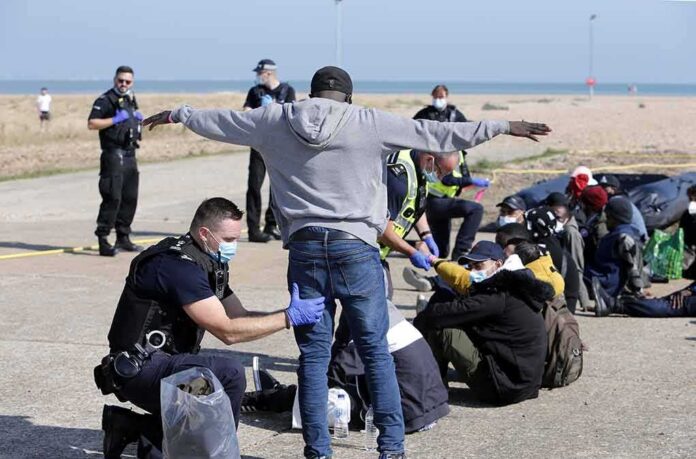
Thousands of migrants crossed into Spain’s North African enclave of Ceuta in a sudden surge that forced emergency action from Madrid and local officials.
Quick Take
- Ceuta’s leaders said the enclave faced an **“absolute humanitarian and social emergency”** after the influx.
- Authorities said reception centers were overwhelmed, and Spain sent troops and police to the area.
- Reporting said many migrants arrived by swimming from Morocco or crossing at low tide.
- Published accounts disagreed on the total count, but all pointed to a fast-moving border crisis.
Ceuta Faces a Sudden Border Surge
Authorities in Ceuta said between 1,500 and 2,000 people entered over 10 days, while hundreds more arrived on Thursday alone. Reuters said the surge triggered military support, and local leader Juan Vivas called the situation a “total humanitarian and social emergency.” The scale of the arrivals turned a border crossing into a live test of Spain’s ability to manage migration, security, and basic services at the same time.
BBC reporting said some 6,000 migrants reached Ceuta in a single day in an earlier phase of the crisis, including about 1,500 minors. Reuters later reported Spain’s Interior Ministry estimated about 49,000 crossings into the enclave over 24 hours, a figure that showed how rapidly the situation was being measured and remeasured in real time. Those wide gaps matter because they shape how the public sees the scale of the breakdown.
Pressure on Shelters and Border Forces
Local authorities said reception centers were overwhelmed, and Al Jazeera reported that the government of Ceuta asked for an emergency response. The Guardian said officials described hundreds of people sleeping on the streets, which fits the broader reports of overstretched shelter capacity. Reuters and other outlets said Spain reinforced the area with military units, police, and border guards as officials worked to restore control.
The pattern in Ceuta was not just about numbers. It was also about speed. Reporting described migrants swimming from Morocco, crossing by land at low tide, or climbing fences near Tarajal. When arrivals pile up that fast, local systems can fail before national agencies fully respond. That is why the story quickly moved from a border issue to a wider question about state capacity and public order.
Politics, Messaging, and the Limits of the Evidence
The strongest confirmed facts are the surge itself, the emergency response, and the strain on shelters and police. Some reports used sharper language than others, with local police warning of “collapse” and some outlets describing “chaos,” while other coverage stressed humanitarian needs and repatriation talks with Morocco. That mix shows how the same event can be framed as a security failure, a humanitarian crisis, or both.
🌍 Anadolu’s Morning Briefing
🗞 Spain calls mass migrant influx into Ceuta 'attack,' says almost all have returned to Morocco
🗞 FIFA's Infantino scraps World Cup stake sale plan amid backlash, resignation
🗞 US, Israel weigh major strikes on Iran's energy… pic.twitter.com/L29YlPA5WA
— Anadolu English (@anadoluagency) August 1, 2026
What is clear is that Ceuta became a symbol of a bigger European problem: border systems can be overwhelmed in hours, while governments argue over who is responsible and how hard a response should be. The reporting also shows the limits of live crisis coverage. Counts changed from outlet to outlet, and some of the most dramatic claims were not consistent across the available reports.
Sources:
townhall.com, lemonde.fr, english.elpais.com, reuters.com, bbc.com, theguardian.com, euronews.com, aljazeera.com
© patriotwise.com 2026. All rights reserved.