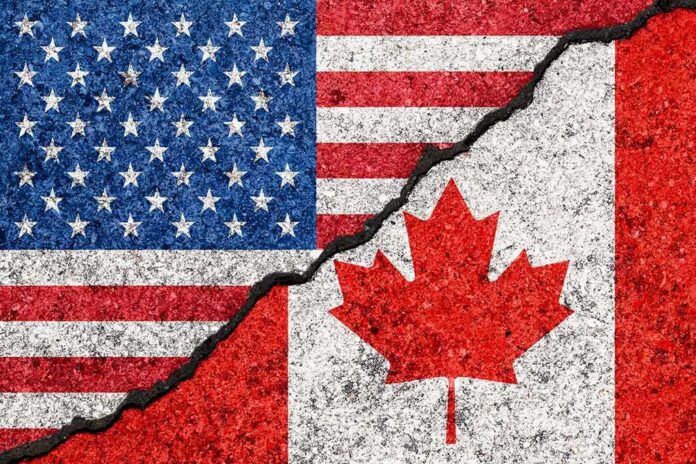
Justice Department antitrust staff were told to halt cooperation with Canada this week, pulling a routine law-enforcement channel into a wider trade fight.
Story Snapshot
- Wall Street Journal reported an internal email ordering a pause in U.S.-Canada antitrust work.
- Reuters linked the move to escalating U.S.-Canada trade tensions and new tariffs.
- A 1995 cooperation pact shows the pause touches long-standing cross-border enforcement ties.
- The Justice Department later disputed that cooperation had been halted, adding uncertainty.
What Happened And Why It Matters
Wall Street Journal reporting said a senior official in the Department of Justice’s Antitrust Division emailed staff to stop all joint case work and policy talks with Canadian counterparts. Reuters summarized the pause and tied it to a heated trade dispute between Washington and Ottawa. The direction reportedly told staff to stand down and “circle back” if guidance changed, signaling an indefinite hold. The Department of Justice later denied it had halted cooperation, creating a conflict in accounts.
The timing follows a breakdown in trade talks and new tariffs, which raised tensions between the two countries. Trade disputes often spill into other areas of government work. Competition enforcement is usually kept technical and steady across borders. A pause in this channel can slow merger reviews and cartel probes that cross the border. It can also send a message that broader policy fights will now touch once-stable legal cooperation.
What Antitrust Cooperation Usually Does
Since 1995, the United States and Canada have had a formal antitrust cooperation agreement that sets rules for notice, coordination, and comity between enforcers. The Department of Justice also lists Canada as a partner in shared “best practices” for merger investigations, which guide staff on timing, information requests, and remedies. These tools help agencies avoid conflicting outcomes. They reduce costs for companies and protect consumers when deals or cartels affect both markets.
Canada’s Competition Bureau has said in past cases that joint work with United States enforcers aided major cartel crackdowns, showing the practical value of day-to-day ties. These outcomes come from regular contact on evidence, theory, and timing, even when each country runs its own case. The cooperation does not erase borders, but it smooths them. That is why any pause is more than a scheduling change. It threatens the rhythm that helps both sides act faster and with fewer surprises.
How A Pause Could Hit Businesses And Consumers
Companies planning cross-border mergers expect a basic level of alignment in review timelines and remedies. A freeze on staff contact can force duplicate steps. That can slow closing dates, add legal costs, and raise uncertainty in financing. For cartel and bid-rigging cases, less coordination can delay raids, leniency deals, or plea talks that rely on tight timing. Slower cases can mean longer periods of high prices or limited choices for shoppers if illegal conduct continues.
If the pause stands, firms could face conflicting demands from separate agencies without the normal back-channel to resolve them. That risk grows in digital markets and energy-related supply chains that cross the border. Both liberals and conservatives worry when elite decision-makers use technical agencies as leverage. They see a pattern where the rules feel rigged for insiders, while regular people pay more for basics like food, housing, and fuel. A freeze that widens case delays would feed that concern.
Trade Tensions As The Backdrop
Reuters reported the directive came as trade tensions rose and new tariffs took hold, pushing the allies toward a more open economic fight. When tariffs rise, other policy areas can get pulled in. Antitrust channels are designed to be steady, but they sit within larger government structures. Turning a routine enforcement bridge into a pressure point raises the stakes. It tells Ottawa and Washington that cooperation is now part of the bargaining set, not just a neutral tool.
Lisa Raitt: "The U.S. DOJ have been told now not to cooperate with Canadian justice workers on things having to do with anti-trade or counterfeit or antitrust cases. Outside of trade discussions, we're seeing a breakdown of the Canada-US relationship." pic.twitter.com/9c07RkfrdA
— Scott Robertson (@sarobertson_) September 4, 2026
The 1995 agreement and later joint best practices show that cooperation was built over decades and across both parties in both countries. That history suggests institutions can bend but also recover. If the reported pause is short, damage may be limited. If it lingers, trust can fray, and future cases will be harder to align. For citizens who already doubt that the system serves them, a politicized enforcement pause looks like more proof that power, not principle, drives outcomes.
Sources:
foxnews.com, reuters.com, wsj.com, news.bloomberglaw.com, seekingalpha.com, channelnewsasia.com
© patriotwise.com 2026. All rights reserved.