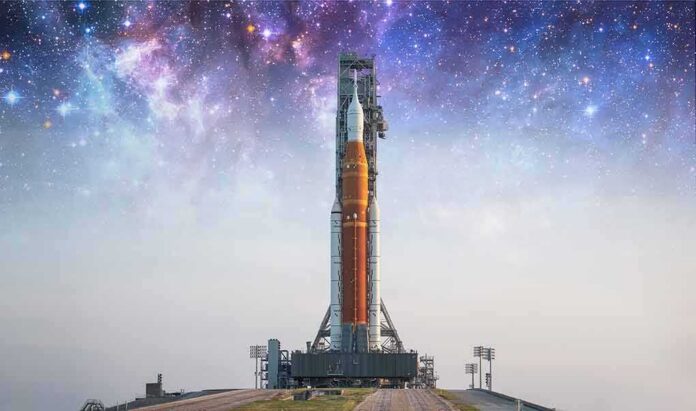
NASA’s Nancy Grace Roman Space Telescope is set to launch Sunday morning on a SpaceX Falcon Heavy, eight months ahead of schedule, to hunt for exoplanets and map dark energy.
Story Snapshot
- Launch is targeted for Aug. 30 at 7:26 a.m. Eastern from Kennedy Space Center’s Pad 39A on SpaceX’s Falcon Heavy.
- NASA says Roman remains ahead of schedule, a rare win for a major science mission.
- The mission will study dark energy, dark matter, and find exoplanets using infrared instruments.
- Prelaunch briefings and live coverage began Saturday to set expectations and weather odds.
Launch Plan And Timeline From NASA And SpaceX
NASA and SpaceX are targeting Sunday, Aug. 30, at 7:26 a.m. Eastern for liftoff from Launch Complex 39A at Kennedy Space Center in Florida. The rocket is SpaceX’s Falcon Heavy, which will carry the Roman Space Telescope to a Sun–Earth L2 orbit. NASA’s launch schedule and countdown page match SpaceX’s target time, and both note an early morning backup window on Monday if needed. NASA’s live coverage began at 6:20 a.m. Eastern on its streaming platform.
NASA posted that Roman remains ahead of schedule, with the agency moving to integrated launch operations in early August. The mission team set the no-earlier-than time at 7:26 a.m., and public-facing updates kept that target through the final briefings. Space-focused outlets tracking the campaign reported the same time and pad assignment, which supports the unified schedule picture many watchers seek before a flagship launch.
What The Roman Telescope Will Do In Space
The Nancy Grace Roman Space Telescope will scan the sky in infrared light. The goal is to measure dark energy by mapping how the universe expands over time, study dark matter through the structure of galaxies, and find exoplanets using several methods. NASA frames Roman as a wide-field partner that can complement other observatories. Public summaries highlight its ability to capture huge swaths of sky quickly, helping answer basic questions about how the cosmos works.
Beyond dark energy surveys, Roman will hunt for planets that are hard to spot from Earth. Its tools can detect brief light changes when a distant object passes in front of a star. Roman can also spot supernovae and track them to refine distance measurements across space. These data sets feed many research groups, including teams that study how stars form and how galaxies change. NASA says the mission will send back images and measurements over several years.
Why “Ahead Of Schedule” Matters For Taxpayers
Government watchdogs have warned for years that big space projects often slip on cost and time. The Government Accountability Office has documented how complex work and management gaps can swell budgets and schedules. Recent assessments show some improvement across NASA’s portfolio, but the dollars at stake remain large. In that context, Roman’s early schedule claim stands out as a positive signal on planning, contracting, and risk reserves compared with the usual trend lines.
@NASA officials hold a press conference following the successful launch of the Nancy Grace Roman Space Telescope aboard a @SpaceX Falcon Heavy rocket from the Kennedy Space Center in Florida.
— Lizzie ♿️ (@BefeJessica) August 31, 2026
NASA’s inspectors and auditors urge tight control of milestones and reserves on missions like Roman. They note that even small slips add up across the agency’s project list. Prelaunch briefings and public countdown pages are part of that discipline because they fix clear targets and force teams to meet them or explain changes. If Roman holds its window, it gives NASA a concrete win on delivery, while setting a bar that future science missions will be asked to match.
Sources:
youtube.com, science.nasa.gov, npr.org, en.wikipedia.org, kennedyspacecenter.com, space.com, spacepolicyonline.com, spacex.com, gao.gov
© patriotwise.com 2026. All rights reserved.