A Gaza City funeral for two Christian women killed in an Israeli strike has reignited a core dispute: who was targeted, and who paid the price.
Story Snapshot
- Israel says it hit Hamas commanders planning attacks; no target names were released.
- Gaza officials say civilians, including women and a child, were killed at the port area.
- The site is described as a cafe or tents for displaced people, not a clear military post.
- Reports on the death toll conflict across outlets, clouding accountability.
What Israel Says The Strike Was Aiming To Do
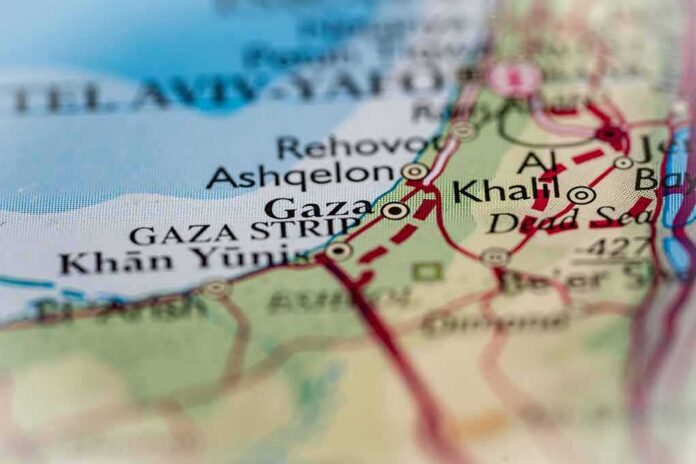
Israel’s military said it carried out a precise aerial strike near Gaza City’s port to remove a threat from several Hamas commanders. The military said those commanders were planning attacks on Israeli troops operating in Gaza and that steps were taken to limit harm to civilians. Some accounts added the group included Nukhba naval figures tied to the October 7 attack. Israel did not publish names or ranks in the public statements cited by media reports.
The government’s message fits a pattern it has used throughout the war: claim a lawful target, describe precautions, and frame the action as necessary defense. That narrative speaks to many Americans who want strong action against terror but still expect discipline in war. It also feeds a wider distrust on both left and right when key evidence, like target packets or battle-damage assessments, stays classified, leaving only spokesperson claims in public view.
What Witnesses And Gaza Officials Report From The Ground
Gaza health officials reported the strike killed at least six people at the port and wounded more. They said the area held tents for displaced people and described a child among the dead. Other outlets reported a crowded cafe at the fishing harbor, also pointing to a civilian-heavy site. These reports challenge the idea of a strike confined to a clean military location, and they raise questions about how risk to civilians was judged in that moment.
Palestinian and local media figures often release casualty details first in Gaza, but their tallies can differ as bodies are recovered. That happened here. Outlets cited five, six, seven, or eight dead, and injuries in the dozens. The mix of claims, fast updates, and graphic scenes creates confusion. It also erodes trust in officials on all sides. When facts change hour by hour, people suspect spin, and that fuels the shared belief that the powerful hide the full story.
The Funeral For Two Christian Women And The Unanswered Questions
Separate reporting said two Christian women in Gaza City, a lecturer and her mother, were killed by an Israeli airstrike on a residential building. A funeral in Gaza City honored them. The provided sources do not independently link those two deaths to the port strike, name the unit that launched the munition, or release forensic proof. That gap matters. Families want names, timelines, and records, not only statements. Without them, grief turns into lasting anger and wider doubt.
https://twitter.com/TheWorldCorresp/status/2106370433729568933
The split between a claimed commander meeting and a site full of civilians shows the core tension of this war. Urban combat mixes fighters with families, cafes, tents, and ports. Israel says it uses precision and precautions; Gaza officials count bodies and name children. Americans across the spectrum see echoes of a bigger problem: authorities demand trust while withholding files. A country built on accountability should expect verified facts, not only press lines, when lives are lost.
Sources:
youtube.com, english.ahram.org.eg, english.aawsat.com, timesofisrael.com, news.sbs.co.kr, middleeasteye.net, albawaba.com, anewz.tv
© patriotwise.com 2026. All rights reserved.