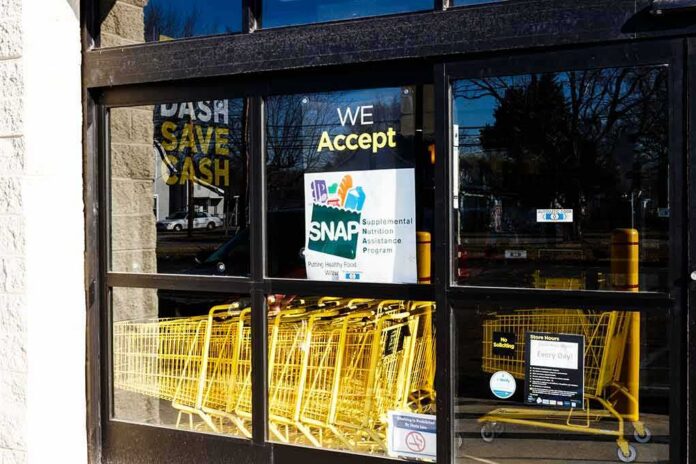
SNAP rules expanded under the One Big Beautiful Bill Act now require more adults to work or join programs to keep food aid, and that change is driving who stays on and who falls off the rolls.
Story Highlights
- Federal guidance expanded SNAP’s time-limit group to ages 18–64 and narrowed several exemptions.
- Covered adults must work or be in a qualifying program at least 80 hours per month or lose benefits after three months in three years.
- Maine added state-level steps like active JobLink accounts, increasing compliance hurdles for some applicants.
- Independent outlets report steep enrollment drops and warn many exits may reflect paperwork and rule changes, not higher incomes.
What Changed In Federal SNAP Rules
United States Department of Agriculture guidance shows the new law broadened who faces the time limit. Adults ages 18 through 64 are now covered unless they meet a listed exception. Past rules covered ages 18 through 54. The guidance also removed or narrowed several exceptions that had shielded groups such as veterans, young adults who aged out of foster care, and people experiencing homelessness. These shifts create a direct path to lower caseloads even if need has not changed.
The time-limit rule is separate from SNAP’s long-standing general work rules. For those under the time limit, the standard is concrete: at least 20 hours per week, averaged to 80 hours per month. If a covered adult does not meet that level and does not qualify for another exception, they can receive only three months of benefits in a 36-month window. That cap can trigger rapid exits once implementation begins in each state.
How States Are Implementing The Rules
Maine’s own policies layer on specific steps that can trip people up. The state says most adults must register for work, respond to job referrals, and not quit a job or cut hours below 30 per week without good cause. People who already work 30 hours a week or earn the same amount can be exempt from general work rules. These procedures are real screens that can reduce participation when people miss notices or fail to document status on time.
Maine’s administrative rule also requires some adults ages 16–59 in a household to open and maintain an active Maine JobLink account. The rule outlines how many hours a person can be assigned to workfare and sets limits on those hours. This creates added compliance steps: account setup, log-ins, and responses to agency messages. Each step can cause case closures if people do not complete them or if systems fail. That can lower enrollment without proving incomes rose.
Competing Claims About Why Enrollment Is Falling
Democratic lawmakers and several newsrooms say millions have left SNAP since the law passed and argue many are seniors, families with teens, veterans, and people who are homeless who lost exemptions. They point to large national declines and to state data snapshots. An NPR report said work requirements now reach veterans, people experiencing homelessness, young adults leaving foster care, parents of teens, and adults ages 55–64. It also cited Congressional Budget Office estimates of lower participation over time.
Supporters of the changes argue that the rules promote work and protect benefits for those most in need. But the federal materials do not show whether households who left found steady jobs or higher pay. The official guidance explains who is now subject to the time limit and how exemptions changed, not outcomes. That gap leaves room for both sides to claim the trend confirms their view. It also fuels public distrust that rules, not reality, decide who eats.
Why This Matters Beyond Partisan Lines
Working families, seniors near retirement age, and people with unstable hours live close to the edge. When the government adds paperwork or narrows exemptions, some people lose help even when they still qualify. Research and state rules show how administrative steps like job registration and online accounts can choke off aid. People on the right see waste and abuse; people on the left see cruelty and red tape. Many now agree the system serves itself first and citizens second.
What Data Would Settle The Debate
Clear answers need clear numbers. Federal and state agencies should publish monthly participation by age, exemption status, and reason for closure. They should match exits to wage records to show who found steady work and who reapplied within months. They should report error rates, appeal wins, and reinstatements after missed steps. Until then, a drop in the rolls is only an outcome, not proof of success or failure—especially when rules were rewritten to cover more people with stricter terms.
Sources:
thegatewaypundit.com, maine.gov, fna.usda.gov, usda.gov
© patriotwise.com 2026. All rights reserved.