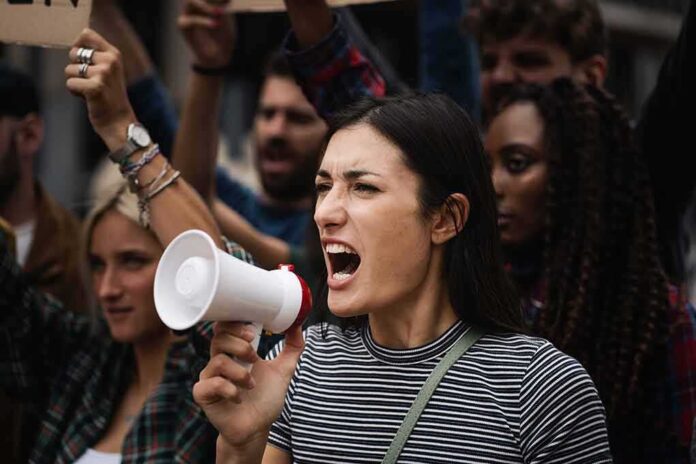
Thousands of Los Angeles students walked out of class to protest federal immigration raids, testing how the city balances free speech, safety, and trust in government.
Story Snapshot
- Students from many Los Angeles schools staged coordinated walkouts against immigration raids.
- Police and reporters described most events as peaceful, with a few scuffles and minor damage.
- Student groups led planning, while some established activists also provided support.
- The clash highlights shared worries about government power, public order, and who sets the agenda.
What Sparked the Student Walkouts
Local news outlets reported thousands of students from Los Angeles Unified schools walked out to protest immigration raids by Immigration and Customs Enforcement. Reporting placed the largest marches downtown and across neighborhoods with many immigrant families. Organizers asked students to wear white to signal peace and unity. Police and journalists on the scene said the protests were largely calm. One brief fight near a federal building drew attention but did not define the day’s events.
Student organizers said they wanted city and district leaders to add support centers on campuses and pressure federal officials to limit enforcement near schools. They framed the action as student-led and peaceful. Posts and flyers called for nonviolence, de-escalation, and disciplined routes. Several accounts said the aim was to protect families and the right to learn without fear. Police reports and broadcast segments noted traffic slowdowns, a few confrontations, and one case of bus damage.
Who Organized, and How
Coverage identified youth-led groups that formed over the past two years, with students from roughly twenty schools coordinating logistics, outreach, and safety roles. One profile named a teen co-founder who started a group to educate neighbors on their rights, support local vendors, and plan peaceful events. The story described a quick shift from spontaneous rallies to more structured tactics, including mapping march routes and training volunteers to keep crowds calm and focused.
Student statements said they sought help from established organizations for permits, legal observation, and communications. One campus media report said students contacted an outside advocacy group for support. That coordination does not, on its own, prove that outside groups controlled the action or pushed an anti-American program. It does show layered planning, which is common in modern protests that mix student leaders, community networks, unions, and nonprofits.
Peaceful Overall, With Flashpoints
Police statements and local reports converged on a similar picture: most marchers remained peaceful. There were scuffles with angry drivers stuck in traffic and an instance of bus vandalism. Downtown, a brief fight near a federal building broke out and ended. No report suggested that violence was the norm, but these moments raised alarms about crowd safety, property, and emergency access. They also fed a broader fight over who is to blame when tension spikes.
Research on protest safety finds that clear communication, visible leadership, and steady police contact can limit clashes. Studies also show that aggressive crowd control can turn a peaceful crowd tense and disorganized, which can increase the risk of harm. Cities that invest in planning and dialogue often see fewer injuries and arrests. These lessons matter when students are involved and when public trust is already thin across communities.
Shared Concerns Across the Political Divide
For many conservatives, the images evoke worries about order, blocked roads, and the sense that public schools are drifting into activism during school hours. For many liberals, the focus is on civil rights, family stability, and the fear that everyday life can be upended by a raid. Both sides share a deeper concern: leaders talk past each other, and bureaucracies fail to protect safety, dignity, and due process at the same time. These walkouts exposed that gap in plain view.
Teach thinking, not slogans. Los Angeles student anti-ICE protests raise questions about political influence. The claim that DSA organized these students remains unverified; matching signs alone are not proof. Kids deserve an education, not a script. pic.twitter.com/gOVAtGhUTy
— Migo (@ReiteConMig0) November 17, 2026
The facts show a layered movement: students led the walkouts, set a peaceful tone, and asked for concrete changes. Established activists provided help with logistics and legal support. Police and reporters described mostly calm marches with a few tense moments. Claims that the protests were a mask for a broader anti-American push are not proven by the record presented here. What is proven is a trust problem: people do not believe the system hears them, so they take to the streets.
What to Watch Next
Watch how the school district responds to demands for campus support centers and clear rules for enforcement near schools. Track whether city leaders set firm protest routes that protect free speech and keep emergency lanes open. Look for a joint plan between student leaders and police to reduce flashpoints at chokepoints and bus stops. These steps can protect rights and safety at once. If leaders stall, bigger walkouts and harder policing may both return—and deepen the divide.
Sources:
zerohedge.com, latimes.com, thelalocal.org, en.wikipedia.org, dailykos.com, jsonline.com
© patriotwise.com 2026. All rights reserved.