

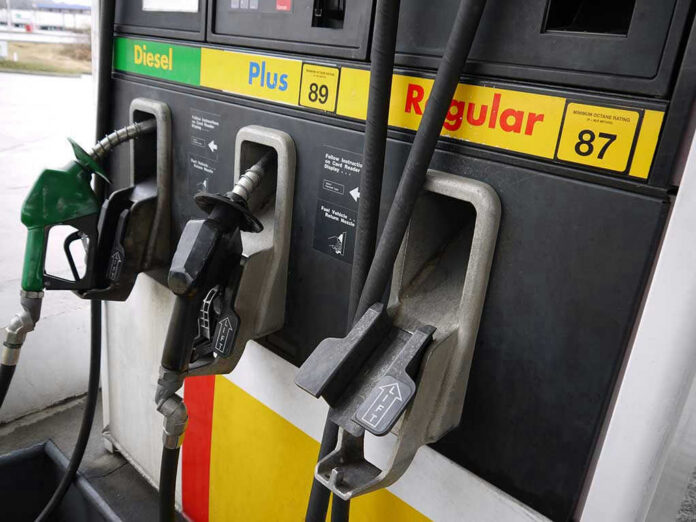
Gas prices are spiking so fast that even America’s record oil production can’t shield families from a Middle East war that is squeezing the pump—and everything tied to it.
Quick Take
- AAA data showed the national average climbing to about $3.20 a gallon by March 4, 2026, after a sharp overnight jump that analysts called the biggest daily rise since 2022.
- Reports tied the surge to the Iran War’s disruption risks, including heightened threats around the Strait of Hormuz, a major global oil transit chokepoint.
- Regional pain is severe: several states reportedly saw $7+ gasoline, while diesel in some areas neared $8—an immediate warning sign for shipping and food costs.
- The White House publicly played down the economic impact, while energy analysts warned the ripple effects extend to groceries, airfare, and consumer goods.
Pump Shock Hits as War Risk Premium Returns
AAA figures cited in coverage put the U.S. national average near $3.20 per gallon by March 4, 2026, after a jump that included an 11-cent overnight move to roughly $3.11 on March 3—described by analysts as the largest single-day rise since 2022. Several outlets also reported extreme state-level outcomes, with some markets posting $7+ gasoline. The immediate driver was not domestic scarcity alone, but global oil pricing reacting to conflict risk.
Reporting connected the surge to the Iran War’s escalation after U.S. and Israeli strikes on February 28, 2026, and the resulting market fear surrounding the Strait of Hormuz. Because oil prices are set globally, record U.S. production can’t fully insulate Americans when traders price in shipping disruption, rerouted tankers, and delays. Analysts also flagged rising maritime insurance costs, which can choke supply even without a formal shutdown—an underappreciated way conflict hits wallets.
Why the Strait of Hormuz Matters to Your Commute
Coverage emphasized that the Strait of Hormuz is a strategic chokepoint for a large share of global oil transit, so even partial disruption can amplify price swings far beyond the Gulf. Reports described a “de facto closure” or blockade-like conditions, with a naval standoff and higher risk premiums building into crude prices. For American drivers, that translates into sudden price board changes even if local refineries are operating, because replacement barrels and delivered fuel cost more.
Diesel’s spike is a particularly serious warning, with reporting indicating diesel neared $8 per gallon in some regions. Diesel is the fuel behind the supply chain: long-haul trucking, farm logistics, and a wide range of industrial shipping. When diesel rises sharply, families often feel it later at the grocery store and in household goods rather than only at the pump. That dynamic helps explain why analysts warned of broader inflation pressure if the conflict drags on.
Household Ripple Effects: Groceries, Airfare, and Everyday Goods
Economists quoted in coverage argued the pain won’t remain isolated to gasoline. Higher energy costs tend to show up in airline fuel bills, shipping surcharges, and the price of products that rely on petroleum inputs. Reporting pointed to jet-fuel pressure affecting airlines and to broader cost pass-through into groceries and consumer staples. Analysts also cited risks to manufacturing timelines when shipping slows and insurance costs jump—costs that can ultimately land on consumers.
White House Messaging vs. What the Data Shows
Public statements highlighted a split between political messaging and market signals. President Trump was quoted expressing confidence that prices would drop once the conflict ends, and the White House press operation insisted the economy could withstand a prolonged war. At the same time, the reported price movements were immediate and measurable, and analysts projected the national average could climb further—especially in the West—depending on how long elevated risk persists in global supply routes.
Surging Gas Prices: Americans Are Feeling the Price at the Pump Thanks to the Iran Warhttps://t.co/WYEjd72wcM
— Harry J. Kazianis (@GrecianFormula) March 6, 2026
For voters already exhausted by years of inflation and high living costs, the key reality is that war-driven energy shocks can hit fast and spread wide, regardless of domestic production headlines. The available reporting leaves some uncertainty—particularly around how long Hormuz disruptions last and whether price spikes fade quickly or linger into summer. But the data points described in multiple outlets agree on the near-term direction: higher fuel costs now, and growing pressure on prices across the economy if tensions persist.
Sources:
https://abcnews.com/Business/iran-war-impact-us-economy/story?id=130749101
https://www.axios.com/2026/03/04/iran-war-gas-prices-trump