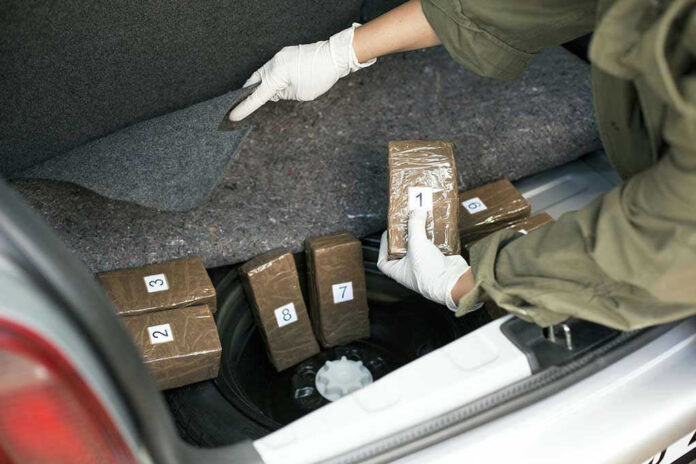
In the largest crackdown yet, over 600 individuals were arrested as the DEA—empowered by new Trump-era authorities—delivered a decisive blow against the Sinaloa cartel’s grip on American communities.
Story Highlights
- 617 people arrested in sweeping DEA operation targeting the Sinaloa cartel across 23 U.S. regions and seven foreign territories.
- Massive seizures included 480 kg of fentanyl powder, 714,000+ counterfeit pills, 2,209 kg of meth, 7,469 kg of cocaine, 420 firearms, and nearly $13 million in assets.
- Operation followed the Trump administration’s designation of the Sinaloa cartel as a foreign terrorist organization, expanding law enforcement powers.
- Authorities stress continued efforts to dismantle cartel networks, while experts warn of cartel resilience and potential for adaptation.
DEA’s Largest Cartel Takedown Marks New Era in U.S. Drug Enforcement
In late August 2025, the Drug Enforcement Administration (DEA) led a weeklong, multi-agency operation targeting the notorious Sinaloa drug cartel. This effort resulted in the arrest of 617 suspects across 23 U.S. field divisions and seven foreign regions, marking the largest coordinated action against the cartel in American history. Authorities seized unprecedented quantities of drugs—including 480 kilograms of fentanyl powder and over 714,000 counterfeit pills—as well as 2,209 kilograms of methamphetamine, 7,469 kilograms of cocaine, 16.5 kilograms of heroin, 420 firearms, and nearly $13 million in cash and assets.
The operation’s scale and timing reflect a major escalation in the federal government’s fight against transnational organized crime. Just months prior, the Trump administration designated the Sinaloa cartel and seven other criminal organizations as foreign terrorist entities, granting law enforcement expanded powers and facilitating broader international cooperation. This move came amid a worsening opioid and fentanyl crisis, with synthetic opioids fueling record overdose deaths across the country. The swift, coordinated enforcement actions from August 25–29, followed by a public announcement in early September, demonstrate a renewed resolve to confront one of the greatest threats to American families and communities.
The Sinaloa Cartel’s Enduring Threat and Evolution
The Sinaloa cartel, based in Mexico, remains one of the world’s most powerful and violent drug trafficking organizations. Its roots trace back to leaders like Joaquín “El Chapo” Guzmán, and despite high-profile arrests, the cartel’s operations have proven resilient and adaptable. For decades, the Sinaloa network has been responsible for large-scale trafficking of fentanyl, methamphetamine, cocaine, and heroin into the United States, fueling addiction, violence, and instability in countless communities. The cartel’s expansion into U.S. and global markets has challenged law enforcement at every level, making the latest crackdown a significant, if hard-won, victory.
Key to the operation’s success was the collaboration between the DEA, Department of Justice, local and state police, and international partners. The new foreign terrorist designation allowed agencies to leverage stronger legal tools, target financial networks, and disrupt the cartel’s transnational reach. While the arrests and seizures represent a major disruption, experts caution that cartel networks often adapt quickly, shifting tactics or spawning rival factions. Some analysts warn of potential power vacuums and increased violence as splinter groups compete for control, underscoring the need for sustained, multi-pronged strategies.
Implications for American Communities and Policy
The immediate impact of the operation is clear: dangerous drugs and weapons were removed from circulation, cartel finances were dealt a serious blow, and hundreds of suspects now face prosecution. For communities ravaged by opioid overdoses, the action offers hope for reduced violence and safer streets, at least in the short term. However, law enforcement and policy experts warn that enforcement alone cannot solve the opioid crisis. Long-term success will require continued intelligence gathering, relentless pressure on trafficking networks, and a renewed focus on demand reduction and community resilience.
600+ arrested in DEA operation targeting Sinaloa cartel https://t.co/ezylFga5GK
— The Hill (@thehill) September 9, 2025
Politically, the crackdown sends a strong message about the Trump administration’s commitment to law and order and the defense of American sovereignty. By treating the cartel as a terrorist threat, federal authorities have prioritized the security of U.S. citizens and reinforced the principle that criminal organizations exploiting open borders and weak enforcement will face the full weight of American justice. As ongoing investigations continue and new challenges emerge, the administration’s approach may serve as a blueprint for future action against transnational threats undermining the nation’s safety and conservative values.
Expert Perspectives and Ongoing Challenges
Law enforcement leaders, including DEA Administrator Terrance Cole, have emphasized that this operation is just one step in a larger campaign to fully dismantle cartel infrastructure. Drug policy scholars stress the importance of targeting not only street-level operatives but also financial enablers and supply chains. Some advocates argue for expanded public health interventions to complement enforcement, while others insist that high-profile operations and asset seizures produce a necessary deterrent effect. The consensus among credible sources is that sustained pressure—coupled with smart strategies—will be needed to secure lasting gains for American families and communities.
Sources:
DEA arrests over 600 people in massive operation against the Sinaloa drug cartel (ABC News)
Raids Sinaloa drug cartel, 600 arrested: DEA (CBS News)
Suspected Sinaloa cartel members apprehended in 23-state sweep: DEA (Fox News)