
Four men have been sentenced to hang for a Nigerian church massacre in a terrorism trial that many see as justice served, yet it also raises hard questions about secretive security states, religious violence, and how much proof the public ever really gets to see.
Story Snapshot
- A Nigerian federal court sentenced four Islamists to death for the 2022 Catholic church massacre in Owo, while acquitting a fifth defendant.
- The terrorism case relied on a web of confessions, survivor accounts, and digital forensics presented largely through security agencies.
- Victims’ families welcome a rare show of state resolve, yet casualty figures and opaque evidence fuel doubts about transparency and due process.
- The case highlights how global “war on terror” tools empower security elites while ordinary people, Christian and Muslim, keep paying the price.
What The Court Decided In The Owo Church Massacre Case
A Federal High Court in Abuja found four men guilty on nine terrorism counts tied to the June 5, 2022 attack on St. Francis Catholic Church in Owo, Ondo State, where dozens of worshippers were slaughtered during Pentecost Sunday Mass.[1][3] Justice Muhammad Idris ruled that the prosecution proved its case beyond reasonable doubt and sentenced the four—Idris Omeiza, Al-Qasim Idris, Jimoh Abu Malik, and Abdul Halim Idris Gani—to death by hanging.[1][3] A fifth defendant, Momoh Otohu Abubakar, was discharged and acquitted for lack of evidence.[1][2]
Prosecutors, led by Nigeria’s domestic intelligence service, the Department of State Services, charged the men not with a single murder count but with a sweeping terrorism indictment.[1][3] The nine counts included membership in the proscribed Islamist group Al-Shabaab, alleged links to the Islamic State West Africa Province network, conspiracy, kidnapping, hostage-taking, and killings during the church attack.[1][3] The court’s willingness to differentiate among defendants—convicting four while acquitting one—suggests at least some individualized assessment rather than a pure show trial.[1][2]
How The State Built Its Terrorism Case
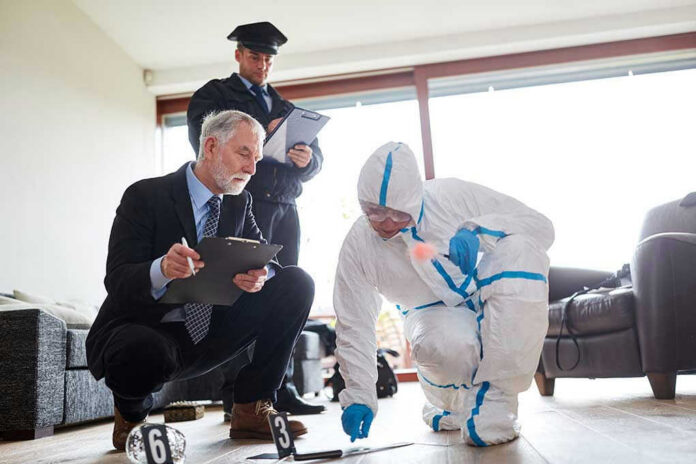
According to broadcast summaries of the trial, the prosecution called 11 witnesses and tendered 23 exhibits to tie the accused to the Owo massacre.[1] Witnesses reportedly included survivors, a Catholic priest from the parish, and investigators from both the regional Amotekun security network and the Department of State Services.[1] Exhibits were said to range from confessional statements to digital forensic reports, phone extraction records, call-detail and cell-tower data that allegedly mapped communications around the time and place of the attack.[1]
Publicly available coverage, however, only describes these building blocks in broad strokes, not with the detail Americans would expect in a published judicial opinion.[1][2][3] Reporters summarize that confessions were made, that phones were traced, that explosive materials and weapons were linked, but the underlying documents, chain-of-custody records, and cross-examination exchanges are not visible to the public.[1][3] Defense lawyers have announced plans to appeal, but their specific evidentiary challenges and alternative narrative have not yet been fully aired in open sources.[2]
Victims’ Push For Justice Versus Gaps In Public Proof
The Owo attack shocked Nigeria much as school shootings or church massacres shock Americans—families gunned down at worship, bodies on the floor, and a state that initially looked helpless.[3] Early counts put the dead at “at least 40,” with some estimates climbing toward 80, and more than 100 injured; even now, casualty figures vary by outlet, reflecting poor record-keeping and political spin.[3] For survivors and families, the death sentences look like long-delayed recognition that their loved ones mattered and that Islamist gunmen cannot kill Christians with impunity.[2]
Federal High Court Sentences Four Al-Shabaab Terrorists To Death Over Owo Catholic Church Massacre 🔗 Read the full story by clicking below 👇 https://t.co/bPKWUclqLz
— Paradise News (@TheParadiseNg) June 6, 2026
At the same time, the way this case has been framed will feel familiar to many Americans skeptical of their own “deep state.” Nigerian security services controlled most of the evidence pipeline, and television coverage has leaned heavily on a simple narrative: terrorist cell caught, case proved, justice done.[1][2] Without the full written judgment and trial transcripts, citizens cannot easily verify how each piece of intelligence was tested or whether any suspects were swept up simply to satisfy political pressure to “deliver results” after a national outrage.[1][3]
Why This Foreign Case Should Matter To American Readers
For conservatives who worry about porous borders, radical Islam, and weak responses to violence, the Owo judgment shows a government finally throwing the book at men accused of butchering churchgoers simply because they were Christians.[1][3] For liberals who worry about secret policing, capital punishment, and unequal protection for minorities, it shows another security-state trial where intelligence agencies dominate the narrative and the ultimate penalty is imposed without full public scrutiny.[1][2] Both instincts point to the same unease: ordinary people are asked to trust institutions that have repeatedly failed them.
American debates over the Patriot Act, secret watchlists, and warrantless surveillance echo in how Nigeria handles terrorism cases.[1][3] Whether in Washington or Abuja, the pattern is similar: a horrifying attack, a sprawling terrorism indictment, and a courtroom process that leans heavily on classified or technical evidence the public never sees.[1][3] When governments then demand maximum punishment—including death—on the basis of evidence that only insiders fully understand, it deepens the sense that a small circle of security and political elites holds life-and-death power far beyond meaningful democratic oversight.[1][2]
Faith, Security, And The Risk Of Weaponized Fear
The Owo massacre also highlights how religious fear can be harnessed by those in power. Nigerian authorities quickly pointed to Islamic State West Africa Province and related Islamist networks, which fit a real pattern of jihadist violence but also conveniently justify larger budgets and broader powers for security agencies.[3] Similar dynamics appear when Western politicians use every attack, abroad or at home, to argue for more surveillance at home, more foreign deployments, or more control over online speech—all in the name of protecting churches, synagogues, and schools.[3]
None of this means the four men condemned in Abuja are innocent; a federal judge, after hearing witnesses and reviewing dozens of exhibits, concluded the state met its burden, and one defendant was acquitted when the evidence did not.[1][2][3] It does mean citizens should insist on seeing how those conclusions were reached whenever the government claims the right to take a life in their name. Whether in Nigeria or the United States, justice worthy of a free people requires not only punishing brutal crimes, but exposing the process to daylight so that the “deep state” answer to someone other than itself.[1][3]
Sources:
[1] Web – 4 Islamists sentenced to death for Catholic church massacre in Nigeria
[2] YouTube – How Court Sentenced Four Defendants To Death By Hanging
[3] YouTube – Court sentences four culprits to death by Hanging
© patriotwise.com 2026. All rights reserved.