
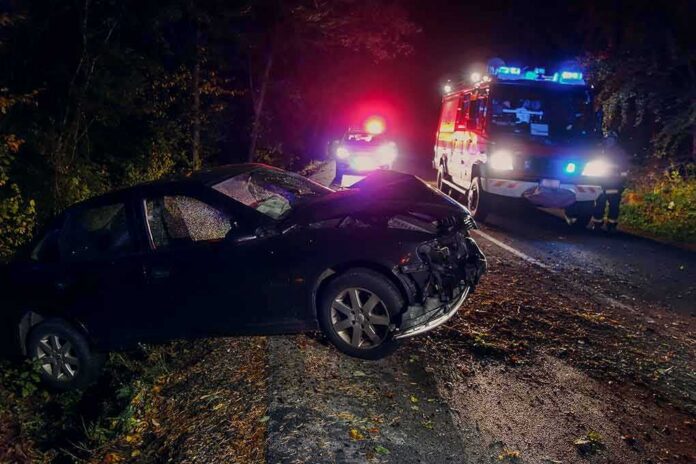
Heavy rain and unsafe speed turned I-15 near 12500 South into a four-car crash scene that sent seven people, including a toddler, to the hospital.
Story Snapshot
- Utah officials say heavy rain and speed triggered a four-vehicle chain reaction on I-15.
- Seven people were hospitalized; a 16-month-old suffered critical injuries, authorities reported.
- Investigators say a Range Rover lost control on the wet roadway and spun into traffic.
- Federal data show most weather-related crashes happen on wet pavement and during rainfall.
What Authorities Reported About the Crash
Utah’s Department of Public Safety said a four-vehicle crash occurred on northbound Interstate 15 near 12500 South at 8:14 p.m. on September 15, 2024. Officials said it was raining hard and the road was wet. Investigators reported a Range Rover was traveling too fast for the conditions, lost control, and spun. The spin triggered collisions with other vehicles and caused serious injuries, including to a 16-month-old child who was listed in critical condition, according to the state’s release.
A Utah Highway Patrol spokesperson told local outlets that seven people were taken to hospitals after the crash. The agency said early findings point to excessive speed on a rain-slick highway. The account matches what troopers often see during storms on high-speed roads. Wet pavement cuts tire grip and lengthens stopping distance. Drivers who keep their dry-weather speed in heavy rain leave little room to react, which can turn one loss of control into a chain crash.
How Weather and Speed Combine to Raise Risk
Federal Highway Administration data show that most weather-related crashes occur on wet pavement and during rainfall. Each year, about three out of four weather-related crashes happen on wet roads, and nearly half happen while it is raining. The National Highway Traffic Safety Administration found speeding was a factor for a higher share of fatal crashes on wet roads than on dry roads in 2023. These facts explain why storms so often precede multi-vehicle pileups on busy interstates.
Wet roads call for slower speeds, longer following distance, and gentler steering. Many drivers do not adjust enough. Surveys and crash research show that a large share of motorists keep near-normal speeds in rain, despite reduced traction and poorer visibility. That behavior narrows safety margins. One driver who hydroplanes or brakes late can set off a ripple that catches several cars in quick succession, especially in dense traffic near ramps or lane shifts. The Utah case fits that known pattern.
Why This Matters Beyond One Crash
This incident is not a one-off freak event. Utah troopers have linked other recent Interstate 15 crashes to speed and wet pavement, from rear-end collisions to spinouts that involve larger vehicles. Nationally, researchers tie rainfall to higher crash risk, which grows with heavier precipitation. When drivers, freight schedules, or navigation apps push for speed during storms, the result can be predictable harm for families who did nothing wrong except share the lane at the wrong moment.
People across the political spectrum are tired of systems that talk about safety but fail to deliver it on the ground. Drivers pay taxes and expect roads, signs, and enforcement that match real-world risk. Weather-aware speed management, visible warnings, and rapid lane closures can prevent chain reactions. Utah and other states already flag wet-weather hot spots and adjust tactics. Expanding proven steps could save lives without new culture wars or empty speeches.
What Can Change Now
State officials and city partners can deploy clearer storm alerts on highway signs, lower advisory speeds during heavy rain, and add high-friction pavement where skids recur. Troopers can focus on following distance and lane discipline near interchanges during storms. These are practical moves that do not depend on Congress or partisan fights. They rely on data and on the shared goal of getting families home safe, even when the weather turns fast and hard.
CHAIN REACTION CARNAGE ON I-15 🚗💥
Utah Highway Patrol troopers and medical personnel were already handling a rollover accident on I-15 when excessive speed and heavy rain triggered a brutal secondary crash into parked police cruisers.
Right after that initial impact, another…— Maria Mel (@Mariamelx58) August 24, 2026
Drivers also hold power. Slow down in rain, turn on headlights, leave at least four seconds of space, and watch for standing water. Replace worn tires before the first fall storm. These steps may sound simple, but they break the chain that leads to tragedy. The Utah crash shows how one spin on a wet road can change many lives in seconds. Slower, steadier choices in bad weather are not just smart; they are the difference between a scare and a disaster.
Sources:
facebook.com, upr.org, leadstory.com, gephardtdaily.com, ops.fhwa.dot.gov, ams.confex.com, highways.dot.gov
© patriotwise.com 2026. All rights reserved.