

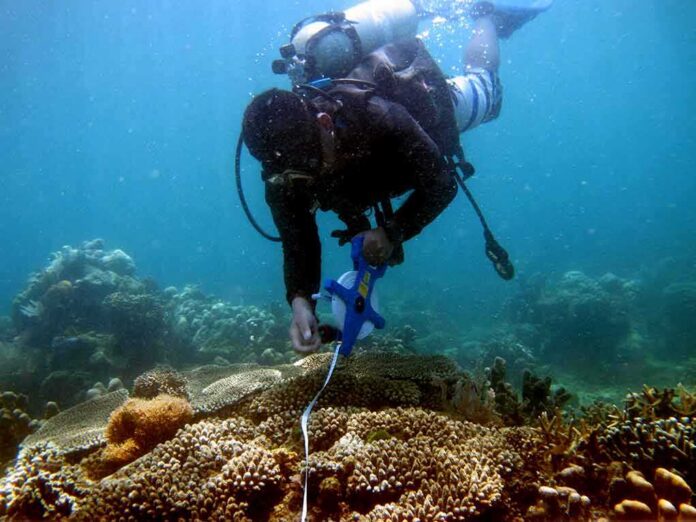
Scientists now classify 44% of assessed reef‑building coral species as threatened, with heat-driven bleaching the main risk to their survival.
Story Highlights
- A global reassessment found 340 of 774 assessed coral species are threatened.
- Climate change is the principal driver for species at highest risk.
- Projected heat stress over the next 30 years dominates risk for most high‑risk corals.
- Data used ended in 2020, before the 2023–2025 mass bleaching, so risk may be understated.
Global Reassessment Finds Widespread Threat
The International Union for Conservation of Nature (IUCN) updated its Red List for warm‑water reef‑building corals. Experts assessed 892 species and had enough data to classify 774. They found 340 species fall into threatened categories: Vulnerable, Endangered, or Critically Endangered, equal to 44% of those assessed. The share reflects relative extinction risk, not a forecast that these species will all vanish. The update marks a clear decline since the 2008 global coral assessment.
Scientists linked the rising risk to hotter oceans. Higher temperatures trigger coral bleaching. During bleaching, corals eject the algae that feed them. Repeated or severe bleaching can lead to death across large reef areas. The IUCN said climate change is the main threat for species at the highest risk levels. That conclusion holds across ocean regions, even as local stress from pollution or overfishing also plays roles.
Heat Stress Over The Next 30 Years Drives The Outlook
Researchers highlighted projected heat stress over the next three decades as the chief factor for most high‑risk species. They reported this single driver as the most important for 93% of those species. That metric connects rising temperatures to bleaching frequency and survival. Field records and satellite data show mass bleaching events have become more common and more severe over recent decades, aligning with the risk pattern shown in the Red List update.
The update’s timing matters. The assessments used data through 2020, before the fourth global bleaching event that spanned 2023–2025. University summaries note that the recent heat spike and widespread bleaching were not fully included. That means the current 44% figure could be conservative, though the reassessment does not quantify how much it might change with newer data.
Regional Studies Echo The Global Picture
A peer‑reviewed study of Atlantic shallow‑water reef‑building corals found similar results. About half of the assessed Atlantic species faced elevated extinction risk tied to climate stress and other pressures. The authors classified 39 species, or 45.88%, as threatened. Accounting for species with limited data, the estimated range ran from about 46% to 54%. The Atlantic pattern supports the global signal that heat stress is pushing corals across risk thresholds in many places.
44% of assessed reef-building coral species are threatened with extinction, up from about a third in 2008.
Corals face a faster rise in extinction risk than any other fully assessed group, a new study in @Nature study finds.https://t.co/ZciLWHnCyG#IUCNRedList @cordioea pic.twitter.com/6AGjPVbEiO
— IUCN (@IUCN) October 15, 2026
The IUCN also flagged uncertainty. One hundred eighteen species lacked enough data for a full call. If all those Data Deficient species are safe, the threatened share would be about 38%. If they are all at risk, the share would be about 51%. Even with that range, the trend line has moved in the wrong direction since 2008. That slide tracks with warming seas and more frequent bleaching alerts on reefs that support fisheries, tourism jobs, and coastal protection.
What This Means For People And Policy
Coastal communities depend on reefs for food, work, and storm buffers. When corals bleach and die, fish stocks drop, tourism shrinks, and shorelines erode. That hurts working families first. The findings point to two tracks of action. Governments can curb heat stress by cutting planet‑warming pollution, and local leaders can reduce extra stress from runoff, sewage, and destructive fishing. Both steps help reefs hold on when the next heat wave hits.
Sources:
youtube.com, iucn.org, port.ac.uk, iucn.nl, nhm.ac.uk, apnews.com
© patriotwise.com 2026. All rights reserved.