San Francisco police say a targeted blitz grabbed 25 suspected retail thieves in hours and hauled back piles of stolen gear.
Story Snapshot
- Police ran coordinated stings that led to 25 arrests and merchandise recovery.
- Officials link tougher felony filings for repeat theft to voter-backed Proposition 36.
- San Francisco secured $17 million to fund overtime and dedicated retail-theft prosecution.
- Critics warn arrests may not cut citywide theft and point to gaps in treatment and detention.
SFPD’s blitz and what officers report they found
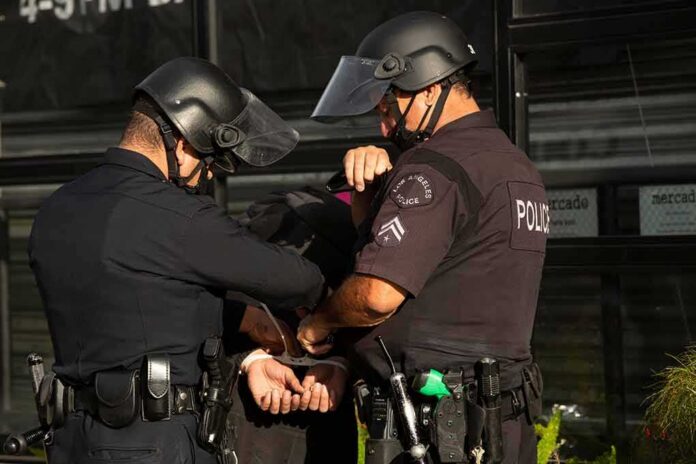
San Francisco Police Department leaders said their Organized Retail Crime Task Force ran intelligence-led stings across the city in June and July. Officers reported 25 arrests tied to thefts worth more than $8,000 and recovered stolen goods from targeted retail corridors. The department framed the push as part of a larger, repeated series of operations against retail theft networks, including rapid, same-day actions that netted multiple suspects within hours. The stated goal is to disrupt repeat crews and restore safety for workers and shoppers.
City officials said the crackdown is not a one-off sweep. They pointed to a stream of operations and arrests that aim to pressure repeat offenders and fences over time. Public communication from police highlights coordinated surveillance, quick vehicle stops, and store partnerships to identify suspects as they strike. These tactics mirror national guidance that stresses sharing information and teaming up with retailers to spot patterns and move fast on leads when theft crews hit high-demand goods.
How new felony tools change the courtroom
San Francisco’s District Attorney Brooke Jenkins said prosecutors are filing felony cases against repeat theft suspects under Penal Code section 666.1, which voters approved through Proposition 36 in 2024. She said the office has filed well over 100 such cases since the change took effect, using defendants’ prior theft convictions to elevate new charges. Supporters argue this closes a loophole that let serial shoplifters cycle through misdemeanor bookings, and they say it creates leverage to secure pleas or custody when patterns persist.
Prosecutors and business leaders have also cast the ballot measure as a clear mandate. They told a business forum that Proposition 36 raised consequences for repeat theft and signaled public support for stronger enforcement after years of frustration over shoplifting headlines. The city backed the legal shift with money. A state grant delivered $15 million for police overtime to run more stings and $2 million to add a dedicated prosecutor and an investigator for retail-theft cases, building infrastructure beyond ad hoc arrests.
Big funding, fast arrests — and the open questions
The city says the $17 million grant will expand stings and speed up case work so arrests translate into charges and court dates. That spending aligns with the enforcement-first strategy police describe: high-visibility operations, coordination with stores, and targeted stops of suspected crews. The approach answers a common complaint from both left and right: that government talks tough but does not act. Here, leaders can point to hours-long blitzes, people in cuffs, and carts of recovered goods.
SFPD’s Organized Retail Crime Task Force recently arrested multiple suspects targeting REI on Brannon Street. Retail theft raises costs and threatens our neighborhood businesses.
These operations send a clear message: retail theft will not be tolerated in San Francisco. Thank… https://t.co/zR5YQ76UBb
— Daniel Lurie 丹尼爾·羅偉 (@DanielLurie) August 27, 2026
Key limits remain. The public record shows arrests, filings, and funding, but not citywide proof of reduced retail theft yet. There is no before-and-after trend analysis tied to these stings, and officials have not released conviction, custody, or restitution outcomes for the 666.1 cases. Court rules on pretrial detention also constrain how long nonviolent suspects stay in jail before trial, which can blunt the visible impact of arrest-heavy tactics even when charges are filed.
Shared frustrations and what to watch next
Residents across the spectrum want stores to stay open, workers to feel safe, and prices to stop rising from losses. Many also fear that elites talk while neighborhoods suffer. This story reflects both sides of that tension. Police can now show swift action and bigger cases. Critics reply that without treatment capacity, faster courts, and steady detention tools, the same suspects will return, and small shops may still feel exposed. Data, not press releases, will settle that debate.
Sources:
nypost.com, sanfranciscopolice.org, cbsnews.com, sfchronicle.com, kron4.com
© patriotwise.com 2026. All rights reserved.