

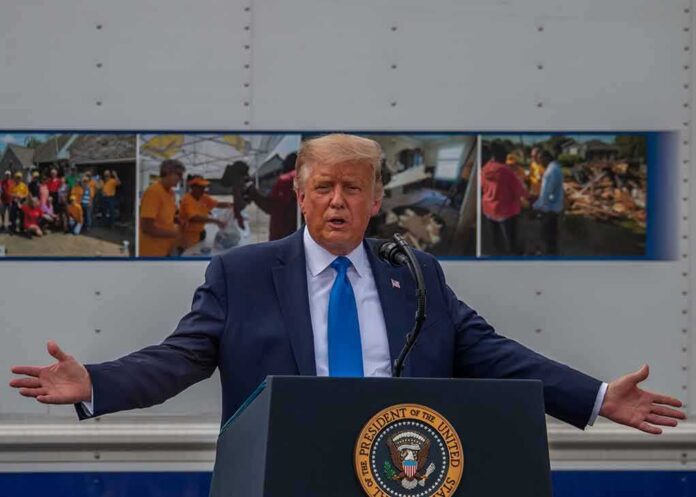
President Trump said he would make the Iran war decision again, even after Republicans lost the midterms because of it.
Story Snapshot
- Trump defended the Iran war as necessary to stop a nuclear weapon and said he would do it again.
- Vice President JD Vance blamed the war for Republican midterm losses and pressed the cost question.
- The White House signaled talks with Tehran and said renewed large attacks are “highly unlikely” if talks progress.
- Limited U.S. strikes and military steps continued while both parties argued over strategy and power.
What Trump Said On The Record
President Trump told CBS’s 60 Minutes that he would make the same call on the Iran war because “you can’t let Iran have a nuclear weapon.” He also pushed back on Vice President JD Vance’s viral post by saying Vance left out whether he would make the same decision again, and Trump’s answer was an “emphatic yes”. These remarks lock in the White House’s position: the costs are real, but the aim was to block a nuclear threat.
Trump also told reporters and interviewers that renewed heavy attacks on Iran are “highly unlikely” if talks show progress on Tehran’s nuclear program and reopening the Strait of Hormuz, repeating that point several times. He said negotiations are underway and that a deal “could happen,” suggesting a shift from full-scale operations toward pressure and bargaining with defined goals around shipping and nuclear limits.
What Vance Argued About The Political Price
Vice President JD Vance blamed the Iran war for the Republican Party’s midterm defeats and said “the reason we lost is the war.” He challenged backers of the conflict to say openly that losing the Senate for six years was worth it, and he listed voter anger over the war, the cost of living, and the U.S. relationship with Israel as key drivers of defections to Democrats, especially among 2024 Trump-Vance voters. This set up a rare public split inside the administration.
Trump did not deny the political cost but framed it as a hard tradeoff for national security. That stance mirrors past debates over preventive action. Presidents cite urgent nonproliferation needs while critics question whether military steps delay rather than end the threat. Congress has often pushed back using its war powers role, and that tug-of-war tends to intensify when a conflict drags on and voters focus on kitchen-table issues and fatigue from overseas fights.
What Is Happening On The Ground
The United States carried out limited strikes on Iranian targets during this period, including air defenses, while describing the actions as narrow and controlled. These steps came as Washington paired pressure with talks, and as Tehran warned against a return to broader war. The message from the White House was that military tools and diplomacy would run in tandem to keep leverage while trying to close a deal that reduces risk.
Trump meets Qatar today.
Strikes are still hitting Qeshm.
Ships are still burning in Hormuz.Is this war still in America's interest?#Trump #Iran #Qeshm #Hormuz #Rubio https://t.co/4mCWfN4inM
— Flight Deck lessons ® © ™ (@FDLBOOK) November 9, 2026
Central Command moves, like task force adjustments and interdictions, aimed to shape the battlefield and trade routes without escalating to a sweeping campaign. Trump’s public line that large-scale attacks are “highly unlikely” if progress holds suggests the next phase depends on measurable steps from Tehran. If talks stall, the administration has left the door open to tougher action, but it is now signaling patience to win relief on nuclear and shipping issues.
Why This Fight Hits Nerves On Left And Right
Many Americans dislike watching Washington make big choices without clear accountability. Conservatives see promises of “limited” wars grow, adding debt and risk abroad. Liberals see working families squeezed by higher costs while elites decide policy. Voters across parties believe leaders chase power more than solutions. This episode fits that fear: war choices, limited oversight, and election fallout. People want a plan that protects the nation without writing blank checks or ignoring the bill at home.
What To Watch Next
Watch three levers. First, negotiations: real steps on nuclear limits and safe shipping would lower tensions and prices. Second, congressional oversight: hearings on war powers could force more clarity on goals, timelines, and costs. Third, election maps: if voter fatigue deepens, both parties may recalibrate. For now, Trump owns the decision and says he would do it again, while Vance keeps asking what the price bought—and whether Americans will accept that trade in 2028.
Sources:
redstate.com, aljazeera.com, afp.com, cbsnews.com, seattletimes.com, defensa.gob.es, congress.gov
© patriotwise.com 2026. All rights reserved.