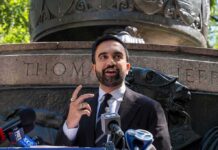

Dallas–Fort Worth International Airport halted plans for new Islamic washing stations only after Texas Governor Greg Abbott threatened to pull vital funding, underscoring a fresh fight over religion and government power.
Story Snapshot
- DFW canceled planned ablution stations after Abbott warned of grant reviews and possible revocations.
- Abbott said the plan gave unlawful, religion-based special treatment at a government-owned airport.
- Airport officials said the project was only under review and noted an existing chapel-area station since 2019.
- Public filings and reports described a $300,000 cost and framed safety and sanitation as key reasons.
What triggered the reversal at one of America’s busiest airports
On August 15, Dallas–Fort Worth International Airport abandoned a plan to add Islamic ablution basins in two Terminal D restrooms. The move followed Governor Greg Abbott’s warning that the state would reassess airport grants and refer the matter to the United States Department of Transportation. Abbott argued the plan illegally favored one religion at a government-owned airport. He sent letters to airport leaders urging the halt while state and federal reviews proceeded.
Public filings and news reports said the renovation would cost about $300,000 and place one basin in a men’s restroom and one in a women’s restroom in Terminal D. Reporting described the project as an expansion of existing accommodations rather than a brand-new service. Supporters cited practical aims: keep water off floors and counters when travelers wash before prayer. That reasoning framed the addition as a safety and cleanliness upgrade within busy restrooms.
Competing claims: favoritism or standard customer service
Abbott said government facilities cannot single out one faith for special benefits, calling the plan unlawful religious favoritism. He tied that claim to the airport’s public ownership and the use of public oversight. Airport officials pushed back on the framing. A spokesperson said the plan had not been finally approved and noted that Terminal D’s interfaith chapel already includes two ablution stations installed in 2019, with no reported problems since then.
The airport also described its review process. Leaders assess operational benefits, service impacts, risks, and costs before a project moves ahead. That defense suggested the idea came from normal facilities planning rather than a policy shift. While some reports and social posts labeled the work privately funded, a public radio report flagged uncertainty over that point, and the airport emphasized the project’s pending status at the time of the backlash.
Why this local fight hits a national nerve
Airports sit at a legal and cultural crossroads. They are government-owned, high-security spaces that must serve people of many beliefs. That mix often sparks disputes over where accommodation ends and favoritism begins. Longstanding legal guides on religion and public services show two steady pressures. One side warns that government must not endorse faith. The other side argues that denying routine religious needs can burden basic freedoms in shared spaces.
Texas Governor Greg Abbott is forcing the cancellation of an Islamic wudu washing station at DFW Airport, claiming it would be "religious discrimination" to build one. pic.twitter.com/9QTi8R4KK3
— Pubity (@pubity) August 15, 2026
This clash tracks with broader public frustration about how power is used. Many Americans, left and right, suspect officials bend rules for optics or politics. Here, state leaders moved fast to threaten funding, and a major airport reversed course overnight. Supporters call that accountability. Critics see top-down pressure on local service decisions. Both read the episode as proof that elite decision-makers do not level with the public until a fight erupts.
What to watch next: policy, process, and equal treatment
Key questions now focus on process and fairness. First, will Texas or federal reviews offer a clear test for when a faith-specific fixture counts as neutral safety design versus a religious privilege. Second, will the airport craft a standard that ties any fixture to general safety goals, like dry floors, rather than to one faith’s rites. Third, will any policy be applied evenly across beliefs to avoid claims of unequal treatment in public facilities.
The bottom line for travelers and taxpayers
Travelers want clean, safe bathrooms and simple rules. Taxpayers want neutral government and smart spending. This case shows how fast a facility tweak can become a constitutional fight. The record confirms three facts: the airport had an existing chapel-area setup since 2019, the new restroom basins were under review, and the plan died only after a funding threat. The lesson is plain: when leaders skip clear, even standards, trust erodes, and small fixes become big battles.
Sources:
thegatewaypundit.com, ksat.com, noticias.foxnews.com, dailysignal.com, chron.com, x.com, facebook.com, zabalist.com, nbcdfw.com, skypray.org, stainedglasstravel.com
© patriotwise.com 2026. All rights reserved.