

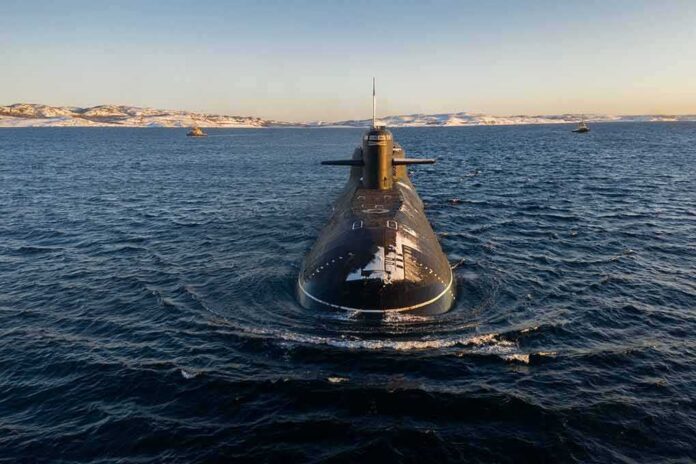
Canada just locked in the largest defence purchase in its history, betting up to 12 German-built submarines will secure its Arctic — and reshape its economy for decades.
Story Snapshot
- Canada picked Germany’s Thyssenkrupp Marine Systems (TKMS) to build up to 12 next-generation submarines, in a deal that could reach $100 billion over 30 years.
- The new fleet is meant to replace Canada’s trouble-plagued Victoria-class boats and finally give the country reliable under‑ice power in the Arctic.
- TKMS promises tens of thousands of jobs and a huge boost to Canada’s economy, while some regions fear they were cut out of the benefits.
- The choice of a European partner reflects wider worries about NATO, Arctic security, and the reliability of alliances in a tense global climate.
Canada’s Historic Submarine Deal: What Was Decided
Prime Minister Mark Carney announced that Canada has chosen German shipbuilder Thyssenkrupp Marine Systems as the preferred supplier for the Canadian Patrol Submarine Project. The plan calls for up to 12 conventionally powered submarines with under‑ice capability, replacing the Royal Canadian Navy’s four aging Victoria-class boats bought second‑hand from Britain in the late 1990s. This is now described as the largest defence procurement in Canadian history, with total lifetime costs—construction, support, and upgrades—potentially reaching around 100 billion Canadian dollars.
Canada and TKMS will now enter detailed talks to finalize the contract, with Ottawa aiming to conclude negotiations by the end of next year. Government statements and TKMS materials suggest the first submarine could arrive around 2033–2034, with three more following soon after, and the full fleet delivered by mid‑century. Carney framed the deal as a way to move “with speed and discipline” after years of delay, signalling that Canada’s window to replace the Victoria-class boats before they retire in the mid‑2030s is closing fast.
Why Canada Says It Needs These Submarines
Canadian leaders are tying this deal directly to national sovereignty, especially in the Arctic, where melting ice is opening new routes to rivals and allies alike. Officials say the new submarines will be able to operate under ice for long periods, watch foreign ships quietly, and help defend the world’s longest coastline. Defence experts note that Canada has often had only one working submarine at a time; this new fleet is expected to keep at least three boats reliably ready to deploy, a “massive increase” in real capability.
The decision also fits a pattern of rising pressure inside NATO for members to spend more on defence. European and Canadian commentators point out that closer ties to Germany’s defence industry could give Canada more options if relations with the United States become strained. In a world where many voters on both the right and the left feel their governments have failed basic security duties, this large, visible investment is being sold as proof that Ottawa is finally taking defence and Arctic security seriously, not just talking about it.
Jobs, Economic Promises, and Who Benefits
Beyond security, the government is heavily promoting the economic side of the deal. Before the announcement, briefings cited projections that the TKMS partnership and German government support could add about 86 billion Canadian dollars to Canada’s gross domestic product over the life of the program. Carney said the project will “directly create and sustain” an ecosystem of more than 100,000 well‑paid jobs across the country, and TKMS itself has advertised hundreds of thousands of “job‑years” in Canada tied to submarine work, support, and new infrastructure.
Still, not every region is cheering. In northern Ontario, defence analysts called the decision “unfortunate” for Algoma Steel and the Sault Ste. Marie area, which had hoped to win major submarine‑related work and new jobs. This disappointment speaks to a broader frustration many citizens feel: big federal projects often promise nationwide benefits but end up rewarding only select firms and regions. For Canadians who believe the system is tilted toward well‑connected elites, the way industrial benefits are divided in this deal will be a test of whether Ottawa shares prosperity or funnels it to a familiar few.
Long Delays, Old Mistakes, and New Risks
Canada’s submarine history is full of failed plans and long delays, and experts warn that this deal will not be immune to those risks. The country has not built a submarine at home since 1915, and past efforts to replace older fleets were cancelled or scaled back when costs rose or governments changed. The troubled Victoria-class boats themselves were bought used from Britain and have suffered accidents, long refits, and technical problems, leaving Canada with fragile underwater power for years.
Canada just selected TKMS to build 12 new submarines.
$20-30B contract. Up to $100B over 30 years.
BlackBerry QNX is already the named foundational software for every one of them.
Canada launched its Defence Industrial Strategy at BlackBerry's headquarters.
The thesis just got a…— Kan & B (@KanKanandB) July 7, 2026
Analysts say Ottawa’s rush now reflects the price of that history: years of deferral have turned replacement into an emergency. Even with TKMS selected, the contract is not yet signed, and any political shift, budget crunch, or industrial dispute could slow or reshape the plan. Citizens on both the right and left who already doubt the federal government’s ability to manage large projects will watch closely to see if this “historic” procurement delivers submarines on time—or becomes another symbol of elite promises that never quite reach ordinary people.
Sources:
realcleardefense.com, cbc.ca, canadiandefencereview.com, bloomberg.com, breakingdefense.com, team212cd.ca, facebook.com, youtube.com, canada.ca, reddit.com, instagram.com, pm.gc.ca, philippelagasse.substack.com
© patriotwise.com 2026. All rights reserved.