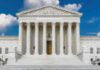
A federal judge shut down the Justice Department’s nationwide voter-roll sweep, saying Washington overstepped the law and must stop using states’ sensitive voter data.
Story Highlights
- A federal court vacated the Justice Department’s nationwide voter-list program as beyond its legal authority.
- The order blocks further use and sharing of already-obtained state voter files gathered for citizenship checks.
- The judge said Congress left voter eligibility and list upkeep with the states, not the federal government.
- The Justice Department says federal law allows access to statewide voter lists to enforce election rules.
What The Judge Ruled And Why It Matters
On October 9, 2026, U.S. District Judge Sparkle Sooknanan set aside the Justice Department’s nationwide voter-roll “list maintenance” policy. The court found that the Civil Rights Act of 1960, the National Voter Registration Act, and the Help America Vote Act did not authorize the program. The order bars the department from using files it already obtained or sharing them further, including for citizenship checks. The department is reviewing the decision and could appeal.
The ruling said Congress did not transfer core voter-eligibility authority from states to Washington. The court described the federal effort as trying to decide who gets to vote, a role our system assigns to states. That line hit a nerve across the spectrum. Voters who distrust federal power saw a check on mission creep. Voters who fear roll purges saw a brake on mistakes made by big data matching at national scale.
How The Program Worked And What Data Was Sought
The Justice Department sought unredacted statewide voter-registration lists, including names, birth dates, addresses, driver’s-license details, and parts of Social Security numbers. Reports describe a plan to compare those lists against federal citizenship databases to find possible noncitizens. The order blocks the department from using or sharing those lists, including with the Department of Homeland Security, which had been involved in the matching process.
Several courts around the country had already ruled against similar federal demands for unredacted state files. Reported outcomes mention cases in states like New Jersey, Georgia, Maryland, New York, Illinois, Connecticut, and Wisconsin. Together, they show broad judicial pushback to the scope and sensitivity of the requests, even though each case turned on specific state laws and facts.
The Competing Legal Arguments
The Justice Department argues federal law lets it request statewide voter lists to test whether states are following maintenance rules. Its Office of Legal Counsel said section 303 of the Civil Rights Act authorizes seeking those data. The department also claimed the National Voter Registration Act and the Help America Vote Act support its requests. The Oregon and Maine suits highlight this enforcement theory and the need for complete, unredacted files, according to department releases.
Opponents answer that federal law sets guardrails but leaves day-to-day list maintenance to states. They say forcing states to hand over sensitive personal data risks privacy and errors. The judge’s order echoed that view, finding no statute that gave Washington a green light to build a national verification regime. Reports also cite concern that citizenship databases can mislabel naturalized citizens, which can lead to improper challenges if used at scale.
Broader Stakes: Federal Power, Privacy, And Trust In Elections
This fight taps into a deeper question: who runs the voter list, and with what safeguards. Federal law expects accurate, statewide, computerized voter lists, but states manage them. People on the right and the left share a core worry that large systems in Washington often grow beyond their lane. When personal data like partial Social Security numbers move across agencies, trust falls without clear, lawful limits.
The White House says a review found about 278,000 noncitizens on voter rolls, a claim used to justify nationwide checks. The public record does not provide the full method or verified error rate behind that figure in these materials. The court’s order does not forbid states from keeping their lists accurate. It stops a federal program the judge found unlawful. Appeals could change the scope, but today’s ruling reins in Washington and returns the job to the states.
Sources:
cnn.com, democracydocket.com, aclu.org, washingtontimes.com, politico.com, whitehouse.gov, justice.gov, yahoo.com, govinfo.gov
© patriotwise.com 2026. All rights reserved.