
Washington’s headline crime drop is real, but city data show violent crime is roughly flat while property crime plunged, sharpening the fight over what actually worked.
Story Snapshot
- City police report a large year-over-year fall in total crime, driven by fewer property crimes.
- Motor vehicle theft and theft from autos saw the steepest declines in 2026.
- Analysts credit visible Guard patrols for opportunistic theft drops but see little change in violent crime.
- Reuters found Guard troops were cited in a tiny share of court cases, raising causation questions.
What the city’s numbers actually show
Metropolitan Police Department data show total crime in 2026 is down sharply from 2025. The largest gains sit in property categories. Motor vehicle theft fell by about half, and theft from autos dropped by more than a third. Robbery also declined, while burglary was about flat. Homicides were lower year over year, but overall violent crime was about four percent higher in the same comparison window, according to the city’s “District Crime Data at a Glance” tables.
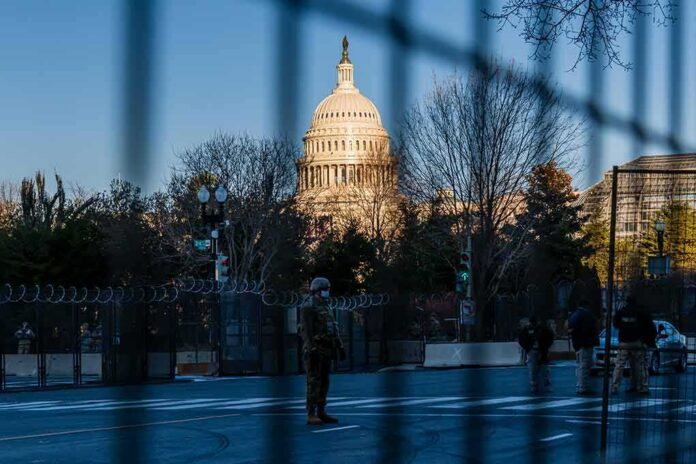
President Trump and his team point to these figures as proof that the National Guard deployment made the city safer. Their case leans on the visible drop in theft and car crime after troops arrived. Supporters argue a show of force deterred quick, opportunistic offenses and helped police reset hot spots. The clearest measured wins line up with crimes that fall when uniformed patrols are easy to see and hard to ignore, like auto theft and theft from cars.
What independent reviews say about causation
Niskanen Center researchers told National Public Radio and the Public Broadcasting Service that the Guard presence produced a real but narrow effect. They estimated about a 24 percent drop in opportunistic property crime in the first months after deployment. They saw little to no change in violent crime, which tends to respond less to static patrols and more to focused investigations and community work. Their view tracks with broader policing research on deterrence and theft patterns.
Reuters reviewed criminal charging documents to see how often Guard troops showed up in cases. The outlet reported soldiers were mentioned in about 1.3 percent of filings since the deployment began. That finding suggests the Guard played a small, direct role in arrests and day-to-day enforcement actions tied to prosecutions. It does not by itself disprove a deterrent effect, but it challenges simple claims that troops drove violent crime outcomes.
Why both sides feel validated—and misled
Supporters see safer streets and point to big, easy-to-grasp numbers: fewer stolen cars, fewer smash-and-grabs, less property loss. Those are wins that matter for seniors, workers, and small shops. Critics look at violent crime totals, which are roughly flat or slightly up depending on the window, and ask why such an expensive surge did not move the hardest problems. They also worry about mission creep, civil liberties, and whether leaders used a blunt tool to avoid deeper fixes.
Both groups share a deeper gripe: Washington’s response can feel like spectacle over strategy. People across the spectrum are tired of leaders chasing headlines while shootings, addiction, and repeat theft keep tearing at neighborhoods. The data show quick gains where simple visibility helps. They also show limits where guns, crews, and long-running disputes drive harm. Lasting progress needs targeted policing, steady community work, and courts that can move cases with speed and fairness.
Bottom line for readers
Two things can be true. First, crime is down overall, mainly because property crime fell a lot. Second, the clearest research ties the Guard presence to lowered opportunistic thefts, not to broad violent crime gains. If leaders claim credit for the hard part—reducing shootings and serious assaults—they should show evidence that matches that claim. If they do not, they risk losing trust from people who live with the results every day.
Sources:
reason.com, usatoday.com, washingtonpost.com, mpdc.dc.gov, washingtontimes.com, dailysignal.com, npr.org, reuters.com
© patriotwise.com 2026. All rights reserved.