

As the Tupac Shakur murder trial moves to closings, a retired detective told jurors he could not verify key parts of the state’s central interview.
Story Snapshot
- Jurors heard Duane “Keffe D” Davis describe giving a gun and naming his nephew as the shooter.
- A former Las Vegas detective said he could not corroborate Davis’s account from the old interview.
- Eyewitnesses and officers described a light-colored Cadillac pulling alongside Tupac’s car before shots were fired.
- Defense urged jurors to reject Davis’s own words as bragging without proof.
What Jurors Have Actually Heard Inside Court
Prosecutors played recordings where Duane “Keffe D” Davis walked police through the 1996 ambush. In the 2008 and 2009 interviews, Davis said his nephew Orlando Anderson fired the shots. He also described providing the gun used in the attack, which jurors heard as part of the state’s case. The state paired these statements with testimony that mapped the convoy leaving the casino area and moving toward Club 662, setting the stage for the roadside shooting.
Witness Malcolm Greenidge testified that he saw gunfire from the back seat of a light or white Cadillac next to Tupac Shakur’s car. Police witnesses described the vehicle flow and the immediate response at the Flamingo and Koval intersection. Together, these accounts support the prosecution’s vehicle-and-location timeline even if they do not name each person in the Cadillac by face. This narrative has been consistent across several trial days and outlets covering the proceedings.
The Verification Gap That Could Decide the Case
A former Las Vegas detective told jurors he could not independently verify core parts of Davis’s 2009 account. He said he lacked facts outside Davis’s words to confirm that Davis was in the Cadillac or that the gun story matched physical proof. That statement undercuts the prosecution’s most direct evidence and highlights the risk of a case built on old interviews and later retellings. Time weakens memories and raises fairness questions that jurors must weigh.
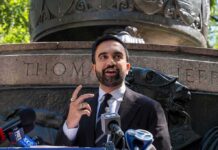
Defense attorney Michael Sanft pressed that theme in front of the jury. He argued the state’s case hangs on Davis’s voice, not on hard proof that places him at key points that night. He told jurors that Davis’s statements were bravado, not reliable admissions, and asked, “What facts do you have to support any of what Keffe D said?” The defense urged jurors to treat those statements with deep skepticism.
How This Fits a Wider Pattern In Late Cold-Case Trials
Many late prosecutions rely less on fresh forensics and more on prior statements and partial eyewitness views. That mix can secure a conviction if the words are trustworthy and the scene evidence lines up. But when corroboration is thin, courts and juries often focus on reliability and timing. Years-long gaps can strain memory and make confident claims sound polished rather than proven, raising the bar for the state to meet beyond a reasonable doubt.
Tupac Shakur murder trial: Prosecutors rest, putting Duane Davis' defense up next https://t.co/Pm4YOIXaoE
— ABC11 EyewitnessNews (@ABC11_WTVD) August 28, 2026
This case also touches a shared public worry about institutions. People on the right and left feel the system favors spectacle over truth. When a high-profile case leans on media interviews, jail calls, and YouTube clips, many see a justice system shaped by fame and delay, not by careful proof. Jurors will now decide whether Davis’s own words, plus the Cadillac timeline, clear that higher bar or whether the verification gap leaves reasonable doubt.
Sources:
independent.co.uk, rollingstone.com, npr.org, nbclosangeles.com, newsnationnow.com
© patriotwise.com 2026. All rights reserved.