The State Department pulled a taxpayer-funded embassy painting by Kehinde Wiley and is weighing whether it can sell it, turning cultural diplomacy into a front-line political test.
Story Snapshot
- The State Department removed Kehinde Wiley’s painting from the U.S. Embassy in the Dominican Republic.
- Officials called the work “very woke” and said they are exploring a legal path to sell it.
- The U.S. ambassador framed the move as rejecting “globalist and woke ideologies”.
- Records show Art in Embassies once honored Wiley and commissioned the Santo Domingo project.
What Happened at the Embassy
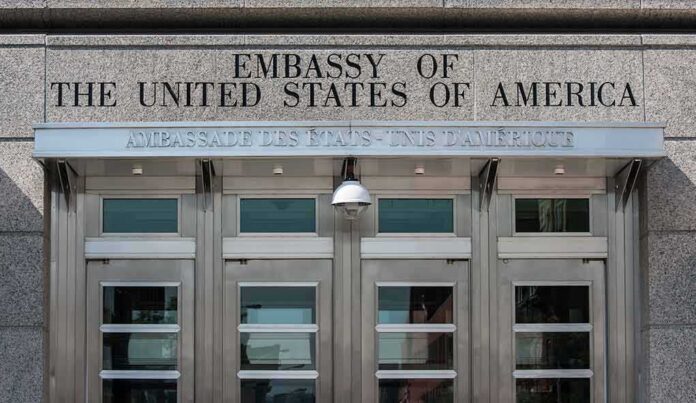
State Department officials removed Kehinde Wiley’s “Young Artists After Siamesas 1960” from the U.S. Embassy in Santo Domingo last week. Reports say staff first covered the piece with a large American flag tarp and then took it down. A Trump-appointed Art in Embassies leader described the work as “very woke” and “aesthetically terrifying,” language that drove headlines about the decision. The U.S. ambassador posted about the removal and tied it to a shift away from “globalist and woke ideologies”.
The State Department said the action reflected concern with the artist’s past words and images, not only the single painting. A spokesperson said art by someone with “violent and racist words and depictions” does not belong in today’s “America First” State Department, according to reporting on the agency’s stance. The department has custody of embassy art through its Art in Embassies program, which manages acquisition, placement, and storage of works at diplomatic sites.
The Push to Sell and Its Legal Questions
Officials are exploring whether the federal government can legally sell the Wiley painting. Reports say lawyers are reviewing rules that apply to property disposal and government-owned art. The public record available so far does not include the written removal order, chain-of-custody forms, or final legal analysis. That leaves open key details, like who signed off, what authority they cited, and where proceeds would go if a sale occurs.
Government manuals show the Art in Embassies office must approve art removals and that posts must document transfers and disposal actions, including on standard property forms. That framework suggests an internal paper trail should exist, even if it is not public yet. Without a clear release of those records, critics on both left and right can argue the decision looks driven by politics rather than policy, especially given the charged language used to justify the move.
How This Breaks With Past Practice
Art in Embassies previously promoted Wiley’s work as part of cultural outreach. Department materials and press accounts noted he was commissioned to create a major piece for the Santo Domingo embassy, including portraits of local students, and that the work would reflect the country’s diverse culture. The department also honored Wiley for his “substantive commitment” to cultural diplomacy, showing strong institutional support before the current shift.
Supporters of keeping the painting point to the program’s mission: use art to build ties and show respect for local culture. They say the work served visitors at the embassy and helped connect the mission to local art communities. Advocacy groups have also urged institutions not to pull Wiley’s work over controversy, arguing that removal is a blunt tool that can chill expression even when the government owns the display.
Why It Matters Across the Political Spectrum
This fight is not just about one canvas. It is about who controls the government’s cultural voice. Courts have often said the government can manage its own displays as government speech. That gives agencies leeway to add or remove art, but it also raises fear of viewpoint targeting when officials use ideological labels to justify action. When leaders celebrate removals as a win against “woke,” they invite charges of censorship from the other side.
LATEST: 🇺🇸 The U.S. State Department removed a painting by artist Kehinde Wiley from the American Embassy in the Dominican Republic after an official described it as “very woke” and “aesthetically terrifying.”
The ambassador publicly celebrated the removal. pic.twitter.com/zf7qHcxhIs
— Coinvo (@Coinvo) August 25, 2026
For conservatives, the move reads as a correction to elite tastes they believe ignored everyday values and wasted public money. For liberals, it reads as politics punishing artists and weakening cultural diplomacy. For many in the middle, the loudest message is different: the system looks ad hoc and opaque. If the State Department wants trust, it can publish the approval chain, the legal basis for any sale, and how it will handle future reviews, so policy, not politics, sets the course.
Sources:
feedpress.me, newser.com, ohio.binnews.com, yahoo.com, lanacion.com.ar, diariolibre.com, artincontext.org, greg.org, skny.com, artlyst.com, newrepublic.com, townandcountrymag.com, art.state.gov
© patriotwise.com 2026. All rights reserved.