
UNESCO says the Taliban have barred **2.4 million Afghan girls** from secondary education, leaving the country with one of the world’s starkest rights gaps.
Quick Take
- UNESCO says about 2.4 million Afghan girls are now shut out of secondary school.
- The agency says Afghanistan is still the only country that formally bans girls and women from education beyond primary school.
- UNESCO and other United Nations voices are calling for the immediate reopening of schools and universities.
- The count has shifted across reports, showing how the crisis depends on age bands and who is already out of school.
What UNESCO Says Is Happening
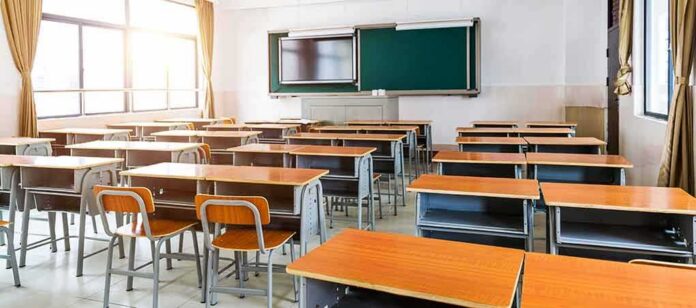
UNESCO said Tuesday that about 2.4 million Afghan girls are unable to attend secondary school five years after the Taliban returned to power. The agency says Afghanistan is the only country in the world that formally bars girls and women from education after primary school. Reuters and Associated Press reporting relayed the same UNESCO figures and said the exclusion remains a nationwide policy, not a short-term disruption.
The timing matters because UNESCO ties the ban to a long-term collapse in access, not a single school year lost. The agency says girls were first pushed out of secondary school in March 2022, and women were later blocked from universities in December 2022. UNESCO also says the restriction now leaves Afghanistan facing broader damage to school quality, workforce growth, and future earnings.
Why the Number Keeps Changing
The headline number has not stayed fixed because UNESCO has used different counts for different groups. In recent reports, it has cited 1.4 million girls banned from school, nearly 2.2 million adolescent girls shut out of classrooms, and 2.4 million girls excluded from secondary education. UNESCO also said in one review that 1.5 million young girls and women remained out of school as of 2025, which shows the figure depends on the age band and the baseline used.
That moving denominator does not erase the policy itself. It does, however, explain why public headlines can sound more precise than the underlying data allows. UNESCO says the broader education crisis also includes more than 2 million primary-aged children out of school, while natural disasters and mass returns have added strain to the system. In plain terms, the ban is clear, but the total human cost changes with the counting method.
What the Ban Means on the Ground
UNESCO says the ban is not only a rights issue. It is also a social and economic one. The agency warns that if the policy continues, nearly four million girls could be denied secondary education by 2030, and the loss of women’s higher education could cost Afghanistan up to 9.6 billion dollars by 2066. UNESCO and UNICEF have both pressed for the immediate and unconditional reopening of schools and universities.
UNESCO estimates 2.4 million Afghan girls have been excluded from secondary education since the Taliban took power in 2021, an increase of 200,000 from the previous school year https://t.co/fVwehhj54W pic.twitter.com/0D5SR5Av0T
— Reuters (@Reuters) August 11, 2026
For many readers, the larger issue goes beyond Afghanistan. The case feeds a wider frustration with governments that make life harder for ordinary families while claiming to protect tradition or stability. UNESCO’s record shows a system that strips girls of formal schooling, weakens the labor pool, and deepens dependence at a time when the country is already under severe strain. The available record does not include a Taliban decree that clearly explains the ban’s legal basis.
Sources:
© patriotwise.com 2026. All rights reserved.