NATO sent a large, mixed air package to fly near Russia’s Kaliningrad, signaling resolve and stoking fresh tension in an already crowded Baltic sky.
Story Highlights
- NATO ran a sizable air drill near Kaliningrad with U.S. and allied jets, support planes, and an electronic-warfare aircraft.
- Russian outlets tracked a NATO reconnaissance flight circling the region from Polish and Lithuanian airspace.
- Baltic Air Policing reports show frequent scrambles to identify Russian aircraft in the area.
- NATO recently condemned repeated airspace violations tied to Russia as risky and unacceptable.
What Happened Near Kaliningrad
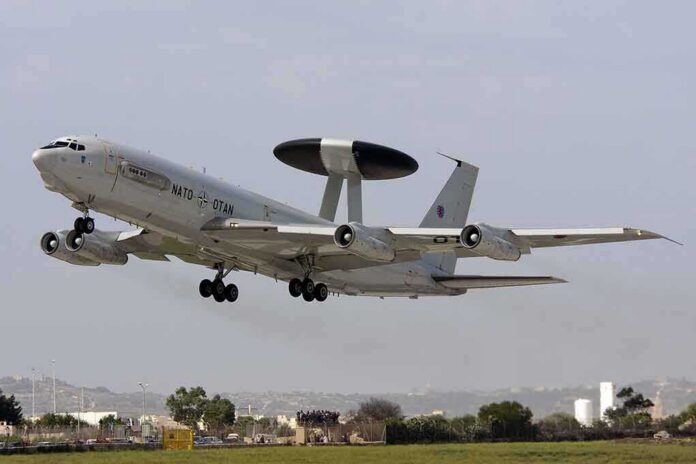
Poland’s Operational Command said NATO conducted a planned air exercise over northeastern Poland near Russia’s Kaliningrad region. The package included U.S. and Norwegian fighters, a NATO airborne warning and control plane, aerial refuelers, and a U.S. EA-37B electronic warfare aircraft. Poland stated the drill was coordinated by the alliance and not linked to Russian air force movements. The activity placed advanced aircraft close to a key Russian military hub on the Baltic coast.
Russian state media reported a NATO reconnaissance aircraft flying a route that circles Kaliningrad by staying within Polish and Lithuanian airspace. The outlet said this pattern “as a rule” completes a full ring around the exclave, while remaining outside neutral Baltic Sea waters. Such paths are common for surveillance flights that map signals, watch military movements, and test response times without crossing into Russian territory.
Why This Airspace Sees Constant Contact
NATO’s Baltic Air Policing mission exists to launch fighters fast to identify unknown aircraft near alliance borders. Lithuania’s defense ministry reported numerous scrambles in June 2024 to intercept Russian aircraft that did not follow flight rules while in international airspace over the Baltic Sea. These routine, short-notice launches show how often both sides operate near each other and how quickly small actions can force a reaction.
NATO officials have warned about increasing risk from repeated airspace violations and incidents tied to Russia. The alliance recently condemned these events as dangerous and unacceptable. The pattern raises the odds of a misread signal or a pilot’s mistake turning into a crisis. Each intercept, drone sighting, or unannounced drill adds friction in a narrow zone packed with radars, missiles, and fast jets.
How Each Side Frames the Flights
NATO frames the Polish-based drill as planned training designed to defend member states. The diverse aircraft mix suggests practice for coordination, refueling, surveillance, and electronic warfare tasks that matter in any high-end fight. Russian media portrays allied reconnaissance flights that ring Kaliningrad as provocative, even if they stay in allied airspace. Both views track a long-running cycle: each side says it is acting defensively while reading the other’s moves as pressure.
🔴 U.S. EA-37B electronic warfare jet operates near Kaliningrad for first time
A U.S. Air Force EA-37B Compass Call aircraft flew reconnaissance and jamming orbits in Polish airspace near Russia's Kaliningrad enclave on August 18, 2026, marking the first known deployment of the… pic.twitter.com/N2gY31Nswk
— NewsTongue (@NewsTongueX) August 19, 2026
For readers in the United States, the stakes are simple but serious. When American jets train near Kaliningrad, they show allies that Washington still backs the treaty. But every pass near a tense border carries risk and cost. Fuel, maintenance, and deployments strain budgets. A single error could also drag the alliance into a fast crisis. Clear rules, steady command control, and calm public messaging lower that risk while keeping deterrence credible.
What To Watch Next
Watch for more mixed NATO flights with early warning, tankers, and electronic-warfare planes. These packages suggest practice for complex missions that go beyond dogfights. Track Baltic Air Policing alerts for spikes in scrambles, which mark near-term pressure points. Follow alliance statements after incidents; tougher language hints at higher concern. Finally, note Russia’s public messaging about Kaliningrad, a core military outpost where narratives often foreshadow moves on the radar screen.
Sources:
feedpress.me, kam.lt, news.err.ee, ground.news, tvpworld.com
© patriotwise.com 2026. All rights reserved.