After 47 years, the United States has taken Syria off the terrorism sponsor list, opening the door to investment and a major shift in Middle East policy.
Story Snapshot
- Trump administration notified Congress on July 8, starting a 45-day clock for removal.
- Secretary of State Marco Rubio made the delisting official after the review window closed.
- Administration says the move aims to support Syria’s transition and unlock investment.
- Some experts still warn about foreign fighters and governance gaps in Syria.
What Changed And When
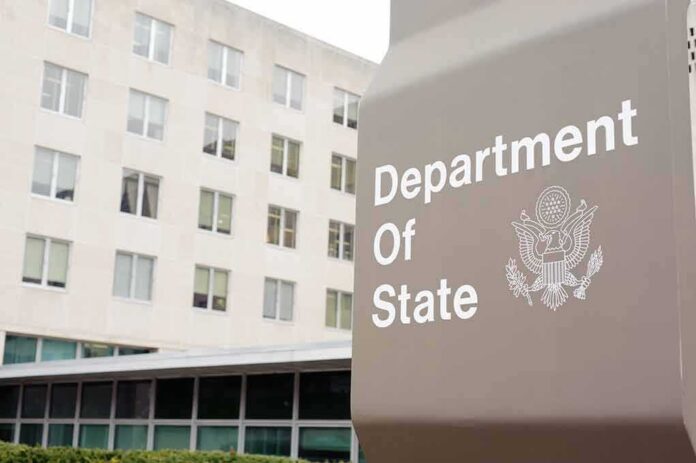
On July 8, 2026, the White House told Congress it would rescind Syria’s label as a State Sponsor of Terrorism, which began a required 45-day review period. The State Department later confirmed the final step. Secretary of State Marco Rubio stated the United States had formally lifted the designation after that period ended. The rare move followed the fall of Bashar al-Assad and the rise of a transitional government led by Ahmed al-Sharaa, which the administration cited as a key shift.
The State Department framed the change as a way to improve U.S. security and help stabilize the region. Officials also tied it to economic goals, saying removal would ease limits on trade and investment linked to the label. Reuters and others reported the administration sees the decision as a step toward Syria’s economic reopening, while warning that other sanctions and controls may still apply under separate laws.
How The Law Works And Why It’s Rare
Federal law allows removal from the list after the President and Secretary of State meet set conditions and notify Congress, including when leadership and policies have fundamentally changed. Over decades, only a handful of countries have been taken off, which shows how unusual this action is. The process requires a formal notice and a waiting period, which Congress can use to object. In this case, the 45-day window closed without Congress blocking the decision.
Before the final step, at least some bipartisan lawmakers urged the State Department to delist Syria. A letter from Senate Foreign Relations leaders and House partners pressed Secretary Rubio to remove the label in light of the transition in Damascus. That support signaled there was political backing beyond the White House. Even so, the public record does not include a detailed legal memo or an unclassified intelligence assessment that spells out every factor behind the decision.
What It Could Unlock—And What It Does Not Change
Ending the terrorism sponsor label can make it easier for banks, exporters, and investors to consider projects in Syria. The administration says this supports a path to peace and growth in the Middle East. Business groups often view removal as a green light to start due diligence. But many financial institutions move slowly when records are thin or risks are high. Other U.S. sanctions and compliance rules can still limit deals, even without the label.
People across the political spectrum have reasons to watch closely. Conservatives worry that past global deals helped elites while ignoring U.S. workers and security. Liberals worry that economic openings can widen gaps and leave rights unprotected. Both groups fear that Washington makes big calls without enough transparency. Those concerns fit here because the strongest public explanations stress policy goals and expected benefits, not detailed evidence released to the public.
Unanswered Questions And Practical Tests Ahead
Some experts and former officials caution that questions remain about foreign fighters inside Syria’s security forces and whether new leaders can govern well and curb threats to neighbors, including Israel. The Congressional Research Service notes that lawmakers want Syria’s transitional leaders to combat terrorism, protect minorities, and limit risky ties, including with Russia. These concerns do not dispute that delisting happened; they point to conditions that many will use to judge if the move was wise.
Syria is no longer on the United States’ list of State Sponsors of Terrorism, ending a designation that had remained in place since 1979 and removing what Washington says were major obstacles to private investment in the country. US Secretary of State Marco Rubio formally… pic.twitter.com/whoR2FVML1
— The Statesman (@TheStatesmanLtd) August 25, 2026
The next phase will show who benefits. Clear signs would include stronger anti-money-laundering controls, safer banking channels, and real projects that help Syrians, not corrupt networks. Congress could also push for more disclosure. Releasing the July 8 notice and a public summary of the legal and intelligence basis would build trust. Until then, Americans who feel shut out by the “deep state” will see another large decision made with limited sunlight—even if the law was followed.
Sources:
newarab.com, aljazeera.com, reuters.com, foreign.senate.gov, ntd.com, time.com, thehill.com, govinfo.gov
© patriotwise.com 2026. All rights reserved.