
Senate Majority Leader John Thune is drawing fire from conservatives who fear he may be retreating from crucial election integrity legislation that would require proof of citizenship for voter registration, raising alarms about Republican leadership’s commitment to securing America’s elections.
Story Snapshot
- Thune faces criticism for perceived hesitation on advancing the SAVE Act, which passed the House in April 2025
- The legislation would mandate documentary proof of U.S. citizenship for federal voter registration, closing loopholes exploited under Biden-era immigration policies
- President Trump has endorsed an enhanced version adding photo voter ID requirements, sponsored by Rep. Chip Roy and Sen. Mike Lee
- Despite Republican control of Congress, the bill faces uncertain prospects in the Senate with no action taken since House passage
SAVE Act Stalls Despite House Passage
The Safeguard American Voter Eligibility Act cleared the House on April 10, 2025, yet remains dormant in the Senate under Thune’s leadership. The legislation amends the National Voter Registration Act of 1993 to require documentary proof of U.S. citizenship for federal voter registration, addressing concerns that millions of illegal aliens granted driver’s licenses during the Biden administration could potentially register to vote. This legislative inaction comes at a critical moment when conservatives demand action on election integrity, particularly given the estimated ten million illegal border crossers who entered the country under previous policies.
Enhanced Version Adds Trump-Backed Voter ID
Representative Chip Roy and Senator Mike Lee have introduced the SAVE America Act, an enhanced version incorporating photo voter ID requirements alongside citizenship verification. President Trump publicly endorsed this strengthened approach, stating the nation must “make elections secure” and ensure only U.S. citizens decide American elections. Roy emphasized that Trump “rightly believes we should include Voter ID” in the legislation. This enhanced bill represents a comprehensive approach to election security, combining citizenship verification with identification requirements that polling shows 83 percent of Americans support, yet faces an uncertain path forward.
Constitutional Concerns Over Enforcement Gaps
The SAVE Act builds upon the 1996 Illegal Immigration Reform and Immigrant Responsibility Act, which already prohibits non-citizen voting but lacks robust enforcement mechanisms. Current law allows states considerable discretion in verifying voter eligibility, creating inconsistent standards nationwide. The proposed legislation would close this gap by mandating uniform documentation requirements and imposing penalties on election officials who fail to comply. This standardization is essential for protecting the integrity of federal elections, a core constitutional principle that ensures government derives its just powers from the consent of citizens, not foreign nationals who entered illegally.
Political Maneuvering Threatens Election Security
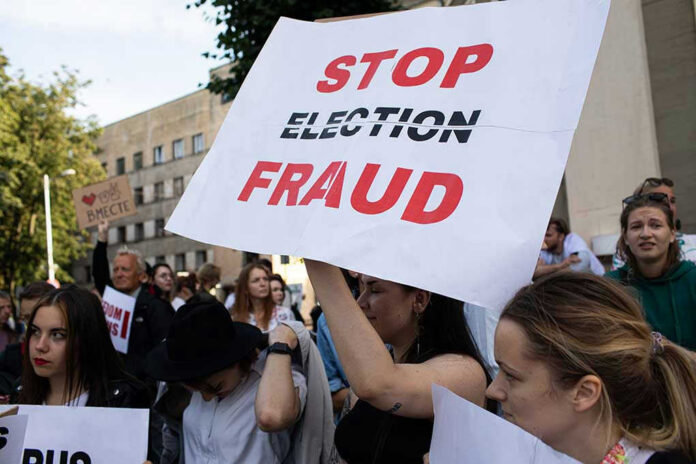
Senate dynamics reveal troubling priorities among Republican leadership. While House Republicans delivered on their election security promises, the Senate has produced no tangible progress despite GOP control. Democrats predictably oppose the measure, with Representative Joe Morelle claiming it would “rig the system” and “block millions,” though he provides no evidence of legitimate voters who lack citizenship documentation. The Bipartisan Policy Center acknowledges the goal of citizen-only voting is valid but suggests “easier, cost-effective ways” exist, without specifying what those alternatives might be. Meanwhile, conservative voters who delivered Republican majorities specifically to address election integrity watch their priorities languish without explanation from Senate leadership.
Disgusting! Majority Leader Thune Is Already Waffling and Backing Away from Passing SAVE Act for Secure US Elections (Video) https://t.co/V4L6ONzw22 #gatewaypundit via @gatewaypundit
— bill (@shortman5427) February 4, 2026
The legislation’s fate now rests with Thune, who must decide whether to prioritize the election security concerns that animate the Republican base or capitulate to procedural obstacles and Democratic resistance. With Trump in the White House backing the enhanced version and overwhelming public support for voter ID requirements, the absence of Senate action raises legitimate questions about whether Republican leadership shares the urgency that voters clearly expressed at the ballot box. The stakes extend beyond partisan politics to fundamental questions about whether American elections will be decided exclusively by American citizens.
Sources:
Rep. Roy, Senator Lee Launch SAVE America Act in Renewed Push for Election Integrity
H.R.22 – Safeguard American Voter Eligibility Act – 119th Congress
Five Things to Know About the SAVE Act
Republicans in Congress unveil election integrity bills backed by Trump
H.R.22 – Safeguard American Voter Eligibility Act – All Information