
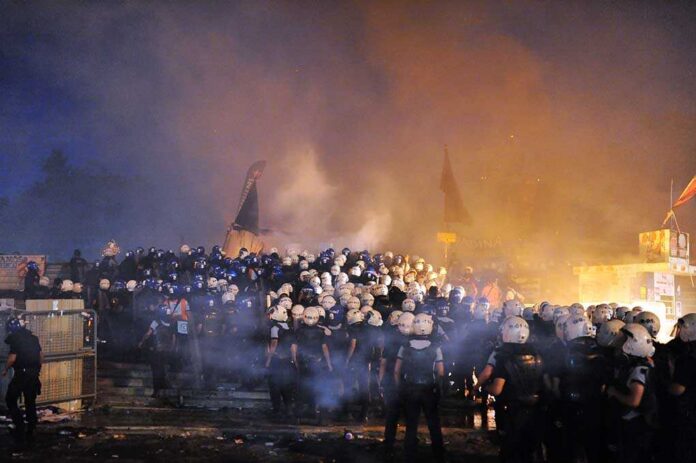
Police used water cannons and tear gas in Santiago as protests flared around a high-profile conservative forum featuring Presidents José Antonio Kast and Javier Milei.
Story Snapshot
- Protesters and police clashed in Chile’s capital during the Madrid Forum, hosted by President Kast.
- Police deployed water cannons and tear gas; several people were detained, according to wire reports.
- Argentina’s President Milei addressed the event and urged a cross-border conservative alliance.
- Clashes tap into Chile’s recent history of hard protest policing criticized by rights groups.
What Happened in Santiago
Chilean police and protesters clashed in downtown Santiago as the Madrid Forum convened with President José Antonio Kast hosting Argentina’s President Javier Milei. Wire reports said officers used water cannons and tear gas and detained several people as crowds rallied near the venue. A video segment from a global broadcaster also showed street confrontations outside the gathering. The unrest unfolded as leaders and supporters attended panels and speeches linked to the two-day conservative meeting.
Event organizers billed the Madrid Forum as a defense of national sovereignty and free markets. Reporting noted that President Milei addressed the forum and called for an international alliance to counter left-wing movements in the region. Those themes drew counter-protests from student and civic groups who oppose budget cuts, tougher security policies, and what they describe as far-right agendas. Demonstrators marched through central arteries and gathered at symbolic plazas before the clashes escalated.
Why the Forum Drew Protest
Student organizations and allied groups planned rallies against the forum days in advance, tying their demands to education funding, cost of living, and civil liberties. Outlets covering the marches reported thousands turning out, with organizers criticizing what they see as a harsher security model under President Kast. Marchers also said the forum’s message clashes with their vision for public services and social rights. Their mobilization shows how international political events can amplify domestic debates in Chile’s streets.
Police tactics became a central point of contention as officers moved to disperse crowds. Wire accounts cited water cannons, tear gas, and detentions near the forum site. That response fits a pattern that protesters expected and tried to document. Chile’s national police, known as Carabineros, face long-running scrutiny from rights groups over crowd control practices. That history helps explain why suspicion builds quickly when protests meet riot trucks in downtown Santiago.
The Deeper Context on Protest Policing
Amnesty International reported in 2020 that Chilean police committed serious rights violations during the 2019 protest wave, urging criminal inquiries into commanders’ roles. Human Rights Watch also found excessive force and abuses in detention during that period, noting thousands injured, including serious eye injuries from anti-riot projectiles. Those findings continue to shape how both sides view any new clashes. Protest leaders cite them to press for restraint, while police argue they must keep order when streets turn chaotic.
Police and protesters have clashed in Chile’s capital Santiago outside a summit of the far-right Madrid Forum. Argentina’s President Javier Milei addressed the controversial gathering. pic.twitter.com/LaEjvXHsgE
— Al Jazeera English (@AJEnglish) September 4, 2026
For readers in the United States watching from afar, the stakes feel familiar. People on the right and left worry that powerful leaders talk past everyday problems while police and crowds collide in the streets. Supporters of the forum say strong borders and freer markets lift workers. Opponents fear harsher crackdowns and cuts to services. The Santiago scenes show how fast global politics meets local anger when citizens feel left out of big decisions and doubt that institutions will hear them.
Sources:
infobae.com, cronicadigital.cl, yahoo.com, reuters.com, apnews.com, voz.us, eldesconcierto.cl, amnesty.org
© patriotwise.com 2026. All rights reserved.