
Federal prosecutors say a man on supervised release for past bank robberies struck again in Florida, twice, while disguised in a lifelike “old man” mask.
Story Snapshot
- Justice Department says two Tampa Bay banks were robbed weeks apart by a masked suspect.
- Investigators recovered a realistic mask, glasses, clothing, and a fake gun tied to the case.
- The accused was on supervised release for earlier bank robberies, raising public-safety questions.
- Police and the Federal Bureau of Investigation worked together to file a federal complaint.
DOJ Charges Describe Two Linked Bank Robberies
The United States Department of Justice (DOJ) announced a federal criminal complaint that ties two Tampa Bay bank robberies to the same suspect. The complaint says a man wearing a realistic “old man” mask demanded cash from a bank in Largo on August 24, 2026, and from a bank in St. Petersburg on September 15, 2026. In both cases, the robber told tellers not to include dye packs with the money, a detail agents flagged as a match point across incidents.
Investigators noted repeating features in the disguise across the two dates. Surveillance reports describe a straw hat, a sports jacket, gloves, and a facial covering in August, and a flat cap, glasses, a sports jacket, and a gray-haired “old man” mask in September. These shared items suggested a method, or “signature,” that helped link the two scenes for investigators working the timeline and suspect profile.
Search Finds Mask, Clothing, and Prop Weapon
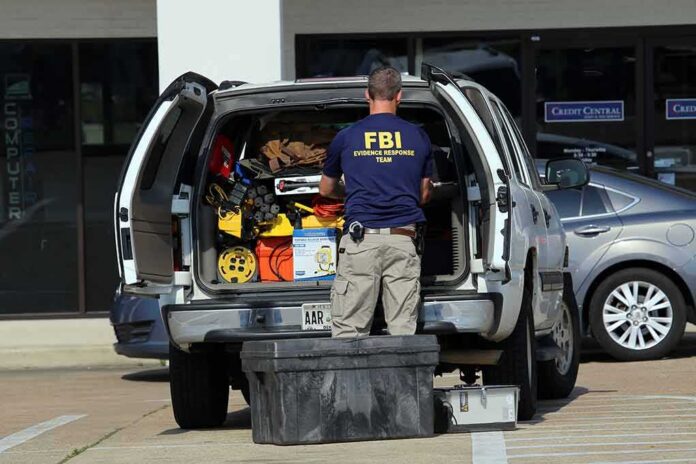
Agents and local police searched property tied to the accused after the September robbery. They reported finding a realistic “old man” mask with gray facial hair, glasses, clothing similar to what was seen on cameras, and a fake handgun. Prosecutors say these items line up with the witness reports and video stills from both banks. The Justice Department’s public account states these items were seized as part of the case record and underpin the probable-cause filing.
Officials say the case is a joint effort. The Federal Bureau of Investigation (FBI) worked with the Largo Police Department and the St. Petersburg Police Department. A named Assistant United States Attorney is assigned to prosecute the case in the Middle District of Florida. Multi-agency work like this is common in serial robbery probes because each agency brings local leads, video access, and lab routes that speed comparisons across events.
Supervised Release Status Raises Safety Concerns
The DOJ says the accused was on supervised release for prior bank-robbery convictions when the Florida robberies took place. Earlier reporting links those convictions to a series of Texas bank robberies from 2016. That history does not decide guilt in the new case, but it does explain why federal agents moved quickly once the disguise pattern emerged and why prosecutors pursued a federal complaint route rather than waiting on only local charges.
Bank-robbery cases often hinge on repeat methods. Research and federal data show that many bank robbers reuse a look, a note style, a route, or a getaway habit, which can lift clearance rates. The Federal Bureau of Investigation’s 2023 bank-crime report notes strong identification rates and warns that full disguises can block basic details such as race and sex, which is why distinctive gear and repeated behavior can be key to making a case.
What The Pattern Tells Us About Public Safety
The two Florida robberies share a tight window, a similar disguise, and a similar warning about dye packs. That pattern helps explain how investigators shaped a single suspect theory. The narrow gap between August and September increases the odds that the same person returned to a known method. The mask and clothing items recovered after searches give prosecutors physical anchors for that theory, even if a court will later judge the weight of that evidence.
Prosecutors say a man who served 10 years for five masked Texas bank robberies hit two Florida banks in an "old man" mask. Agents found a journal: "God's Best friend is a Bank Robber!" Charged, not convicted. Disguise or alter ego? pic.twitter.com/P8sTu9GjqG
— JackWorld (@JackWrld1738) October 22, 2026
This case also taps a broader worry many Americans share. People on the right and the left see a justice system that often talks tough but misses simple prevention. How does someone with prior robbery convictions, now on supervised release, move freely enough to hit two banks in three weeks? That question blends fear of crime with anger at government systems that feel slow, siloed, and reactive instead of focused on protecting ordinary people doing their jobs.
Why It Matters Beyond One Arrest
Bank tellers, customers, and nearby businesses carry the risk when a repeat pattern goes unchecked. The alleged use of a realistic mask shows how a person can hide in plain sight and exploit gaps in daily security. The joint work by the FBI and local police shows capability when agencies align, yet the supervised-release backdrop suggests a need to test how probation checks, monitoring, and quick alerts could stop a second hit before it happens.
Legal Status and Next Steps
The filing is a criminal complaint, not a conviction. The accused remains presumed innocent unless and until proven guilty in court. Prosecutors will present the mask, clothing, and other seized items to support probable cause, while the defense can question links between the items and the two bank scenes. A judge will weigh the evidence and set the path toward indictment, possible detention, and eventual trial or plea under federal rules.
Sources:
reddit.com, justice.gov, foxnews.com, yahoo.com
© patriotwise.com 2026. All rights reserved.