

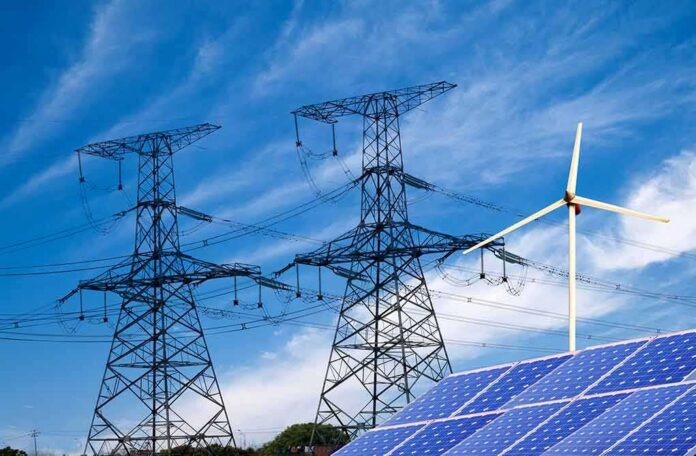
India’s power sector just pulled off a rare feat: clean energy met all new demand in 2025 while coal generation fell.
Story Snapshot
- Clean power met all incremental demand in 2025 as coal generation declined in India.
- Analysts say coal output fell about 3% in 2025, only the second full-year drop in decades.
- Wind, solar, and strong hydropower drove the shift during a softer demand year.
- Coal still supplies most electricity and new coal units are being built, tempering the shift.
What Happened in India’s Grid in 2025
Independent analysts report that India’s clean power growth absorbed all new electricity demand in 2025. Coal generation declined, breaking from recent years when coal met most demand growth. Ember’s India profile says every bit of incremental demand came from clean sources as coal output fell 2.9%. The Centre for Research on Energy and Clean Air estimates coal-fired generation dropped around 3% for the full year, a rare event in modern records. Together, the findings mark a notable pivot.
Ember’s global review describes a parallel trend across major markets, with fossil generation easing when renewables and hydro rise faster than use. In India, experts point to record additions of solar and wind and stronger hydropower. Those gains came during a milder demand year, which reduced pressure on coal plants. Analysts stress this was a demand-light period, so the balance can shift again in hotter or faster-growth years if clean additions do not keep pace.
Why It Matters for a Coal-Heavy System
India still leans on coal for the majority of its power. The International Energy Agency reported coal’s share near three-quarters in 2024, with a projected decline to about two-thirds by 2027 if current plans hold. That means the grid’s base is still fossil. Yet the 2025 dip shows that steady clean buildout can meet growth without raising coal burn. If that pattern repeats, coal’s share can fall while keeping lights on and factories running.
For families and small firms, the mix matters. More local solar and wind can help reduce fuel price shocks that hit power bills. Hydropower and battery projects can smooth output swings when sun or wind drop. The 2025 result suggests clean energy can scale fast when projects connect on time and grids manage peaks well. But reliability still depends on flexible backup and better wires. That is why planners focus on storage, transmission, and demand-side tools alongside new wind and solar.
Signals of Structural Change, with Real Limits
Researchers say the 2025 coal decline was only the second full-year fall in at least half a century, with the other tied to the 2020 pandemic shock. That makes last year unusual. It signals clean energy can outpace demand even without an emergency. But one year does not decide the long-term path. India is still adding coal capacity, including supercritical units now under construction, which can slow the fall in coal’s share if demand jumps.
NLC India to Scale Up Mining, Renewables
The Targets — By 2030
State-run NLC India (NLCIL) plans to nearly double its mining capacity to 104.35 MTPAExpand renewable energy capacity more than fivefold to over 10 GW by 2030
Scaling up both conventional and clean-energy… pic.twitter.com/4k8hwiDS5M
— The Cloaked Gaze 👀 (@gaze_observer) September 21, 2026
Policy and project delivery will decide what comes next. If solar, wind, hydro, and storage continue to expand at record speed, coal’s role may shrink while reliability improves. If grid upgrades lag or demand surges in heat waves, operators may lean back on coal to avoid blackouts. For now, the record shows clean power met all growth in 2025 and pushed coal lower, while coal remains the backbone that planners still reinforce.
Sources:
ember-energy.org, iea.blob.core.windows.net, downtoearth.org.in
© patriotwise.com 2026. All rights reserved.