
As American bombs keep falling on Iran and more strikes are rumored for this weekend, Washington is edging toward a war many voters on both the right and the left never actually signed up for.
Story Snapshot
- The U.S. has hit Iranian targets for 13 straight nights and CENTCOM says forces are ready for more waves of strikes.
- Officials say the goal is to stop Iran from attacking U.S. troops and threatening ships in the Strait of Hormuz.
- Military plans and deployments point to a conflict that could last weeks, not days, raising “forever war” fears.
- Both conservatives and liberals worry the deep state is driving another open-ended Middle East war with little public debate.
What the latest U.S. strikes on Iran look like on the ground
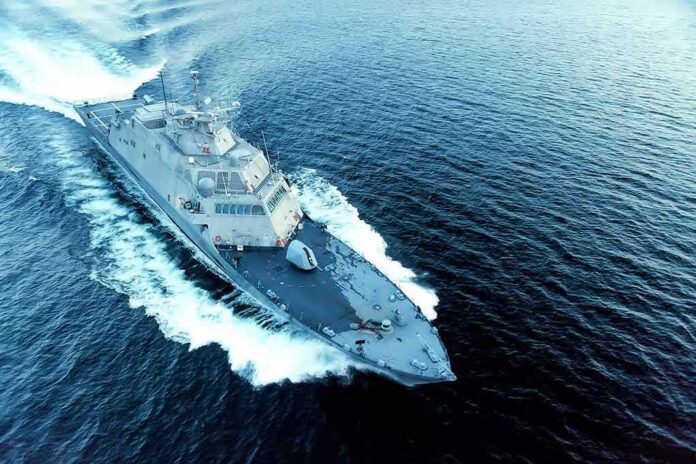
Over the past several weeks, U.S. Central Command has carried out repeated air and naval strikes on Iranian soil and nearby islands, often at night and often described as “heavy waves” of attacks. Military statements say American forces have hit Islamic Revolutionary Guard Corps command centers, missile and drone depots, coastal surveillance sites, and small military boats tied to attacks on shipping near the Strait of Hormuz. One major operation on Kharg Island alone reportedly destroyed more than 90 military targets while avoiding Iran’s key oil facilities.
Officials say many of these strikes came after Iranian forces tried to hit American troops or commercial ships, including an attempted surprise missile attack on U.S. forces based in the region and attacks on tankers moving through Hormuz. Central Command describes the operations as “self-defense strikes” meant to protect U.S. forces and civilian mariners, and to keep one of the world’s most important shipping lanes open. At the same time, Iran has warned that continued bombing could push it to target oil, gas, and economic sites across the Gulf, raising the risk that this fight spreads fast.
Why Washington says it is striking now — and why that worries many Americans
President Trump and Pentagon leaders have tied the Iran campaign to several big goals: protecting U.S. troops, stopping attacks on ships, preventing Iran from gaining nuclear and missile advantages, and deterring future aggression. Central Command says its latest waves aim to “degrade” Iran’s ability to threaten commercial vessels in the Strait of Hormuz, echoing a long-standing U.S. promise to defend freedom of navigation for global trade. Defense Secretary Pete Hegseth has also stressed that the United States can restart or scale up strikes quickly if diplomacy fails, saying U.S. stockpiles and capacity remain “fully equipped” for renewed operations.
But this layered message — shipping protection, troop defense, nuclear fears, and broader deterrence all at once — feels familiar to Americans who remember how reasons for past wars kept shifting. News outlets report that U.S. planners have prepared options for weeks-long bombing campaigns and even possible strikes on Iranian leaders and infrastructure, going far beyond a single retaliatory hit. To many citizens who already distrust the deep state and believe elites profit from endless conflict, talk of “robust” ability to restart operations sounds less like responsible readiness and more like an open-ended commitment to another Middle East war they will pay for with taxes, inflation, and their children’s lives.
Signals of a wider war: deployments, nights of bombing, and talk of “next waves”
Reports from Reuters, CNN, and other outlets describe a U.S. force posture that looks built for sustained conflict, not just a short exchange. Carrier strike groups, fighter jets, destroyers, tankers, and surveillance aircraft have been moved into position around Iran, and Central Command has already carried out 13 straight nights of strikes in some phases of the campaign. Internal planning discussed in media accounts includes a 10-to-14-day bombing option focused on Iran’s missile forces, a tempo that recalls earlier U.S. air wars that quietly stretched on for months.
Iran has not stood still either. Tehran has tested air defenses, promised to strike back at U.S. bases and ally infrastructure, and used threats against regional oil and gas sites as leverage. Each U.S. “message” strike invites an Iranian reply, which then becomes the stated reason for the next wave of American attacks, creating an escalation ladder that is very hard to climb down. For Americans watching from home — conservative or liberal — this tit-for-tat feels like the same pattern that turned limited missions in Iraq and Afghanistan into decade-long commitments, with little real say for ordinary voters.
Missing pieces: law, oversight, and what Americans are not being shown
So far, the public record is heavy on press releases and TV sound bites and light on hard documents. Central Command statements and White House remarks tell us what was hit and the broad reasons, but not the specific intelligence behind each target, the civilian risk reviews, or the full legal memos used to justify expanding strikes on Iranian soil. Media reporting leans heavily on unnamed officials to describe future options, including hitting bridges, power plants, and other dual-use infrastructure that could hurt regular Iranian families as much as the regime.
CNN: The United States is planning fresh strikes on Iran as soon as this weekend as President Donald Trump seeks a resolution to the war.
The precise scope of the strikes, and potential targets the US may go after, were not clear, and both officials cautioned the strikes could… pic.twitter.com/lXMdhBJ2Lb
— World Source News (@Worldsource24) July 31, 2026
Congress, for its part, has not yet held a major public vote that clearly authorizes this new phase of the Iran war, even as deployments grow and strikes deepen, leaving many to wonder who is really steering the ship. Legal experts are split, with some inside the administration citing self-defense and older war powers, and more than one hundred international law scholars calling the broader campaign a violation of the United Nations Charter. For millions of Americans who already believe the federal government serves entrenched elites more than citizens, that mix of secrecy, shifting rationales, and limited oversight looks less like careful leadership and more like another example of the system failing the people it claims to protect.
Sources:
feedpress.me, reuters.com, nytimes.com, cnbc.com, cbsnews.com, aljazeera.com, jpost.com, cnn.com, war.gov, youtube.com, thehill.com, ynetnews.com, en.wikipedia.org, bbc.com, usatoday.com, pbs.org, vox.com, theguardian.com, npr.org
© patriotwise.com 2026. All rights reserved.